How to Trust Your Gut as a Leader | Unbehaved
Have you ever ignored a gut feeling and then wished you hadn't? Nearly every extraordinary woman leader Meghan French Dunbar has interviewed cites intuition as central to their success — yet most of us have been trained to override it.
Intuition has been dismissed as a "soft skill" for so long that we've forgotten it's actually one of the sharpest tools any leader has. In this episode, host Meghan French Dunbar makes the case for why intuition is integral to leadership — and lays out how to actually develop it.
She opens with a story that women listening will feel in their bodies before they can name it: a 2017 encounter at Wisdom 2.0 where she suppressed her intuition to protect a grant opportunity — and ended up alone in her car with a stranger on the wrong side of the Golden Gate Bridge. Then she brings in the research (Malcolm Gladwell's rapid cognition, Gavin de Becker's work on how the body predicts danger), the voices of leaders like Stephanie Nadi Olson, Vicki Saunders, Susie Batiz, and Diana Propper de Callejon, and the specific practices for tapping into your intuition every day.
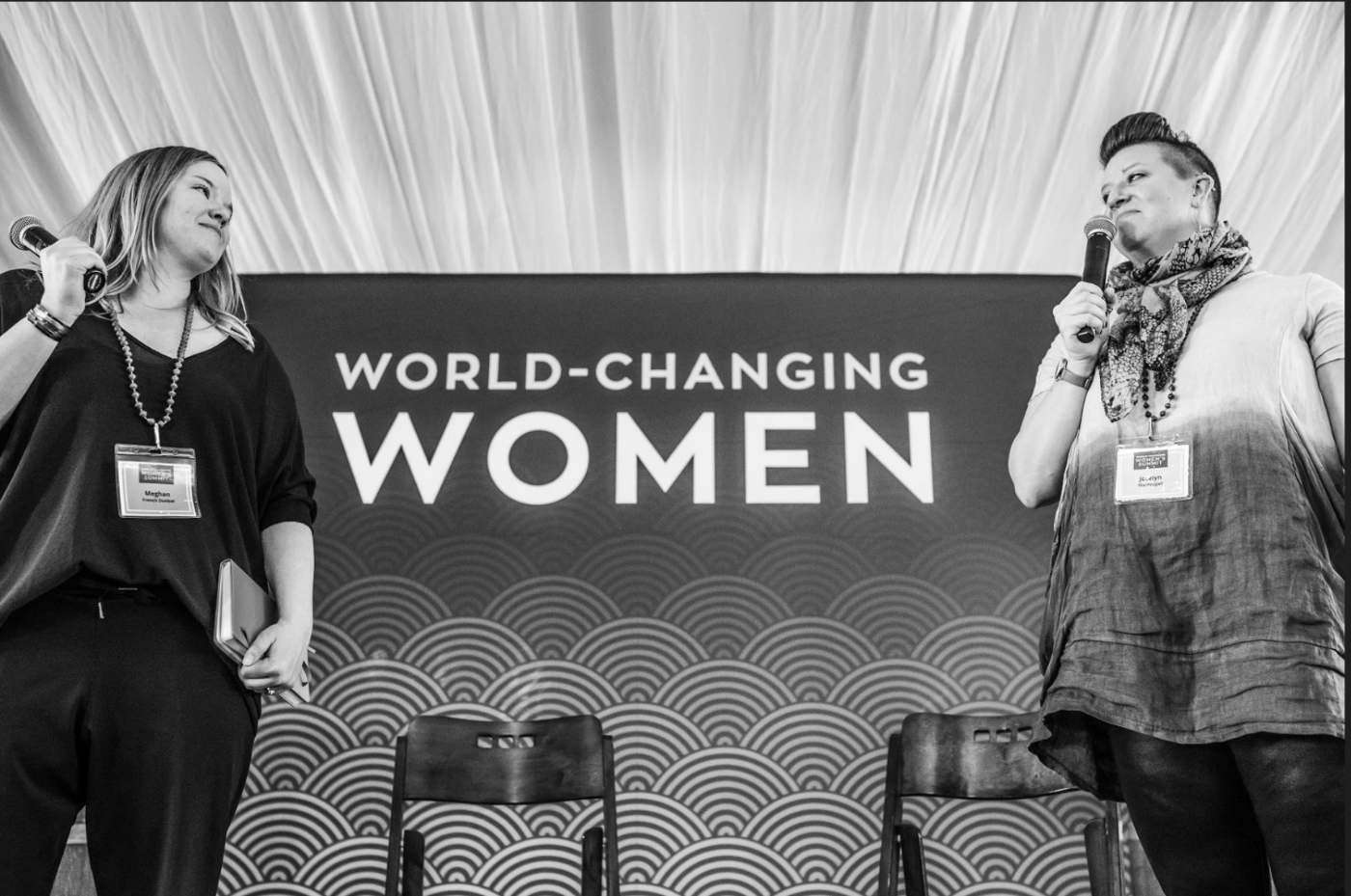
The episode closes with the story of the World Changing Women's Summit — an entire conference blueprint that arrived, whole, as an intuitive download while Meghan was petting her dog. Because when you get quiet enough to hear your gut, sometimes it hands you an entire venture in one sitting.
* [Editor's note: This episode originally aired under the show's former name, "Better Than This." The show is now "Unbehaved."]
WHAT WE COVER
The Wisdom 2.0 story — and the specific moments Meghan ignored her intuition, and where it took her
Why women have been conditioned to override our intuition to protect other people's comfort
Malcolm Gladwell's rapid cognition concept and Gavin de Becker's research on how the body detects danger faster than logic
The research on intuition and complex decision-making: better decisions, faster, and more accurate lie detection
Stephanie Nadi Olson (We Are Rosie) on making decisions by asking "which option gives me the most relief?"
Susie Batiz (Poo-Pourri) on the framework of resonance vs. dissonance she uses to make multi-million dollar decisions
Vicki Saunders and Diana Propper de Callejon on trusting their bodies and their gut as leaders
Three practices for developing your intuition:
Build in quiet time (walks, meditation, no-input space)
Pay attention to your body (the 5-senses grounding practice)
Reflect + follow the breadcrumbs
Why the same intuitive signal that keeps you safe is also the one that finds you your best ideas The World Changing Women's Summit story: how the entire blueprint downloaded to Meghan while she was petting her dog on the floor of her condo Why ignoring intuition creates dissonance in your body — and why honoring it puts you in flow
PULL QUOTES
"What you want to dismiss as coincidence or a gut feeling is in fact a cognitive process faster than we recognize — and far different from the familiar step-by-step thinking we rely on so willingly." — Gavin de Becker
"Nobody knows what you're capable of better than you. And if our goal is to change systems, to make them more equitable or to make our personal dreams come true, you've got to follow your own intuition on that." — Stephanie Nadi Olson, founder of We Are Rosie
"When you have to make a hard decision, think about the decisions that are in front of you and what's the one that gives you the most relief?" — Stephanie Nadi Olson
"Does this feel resonant? Does this feel easeful? If it feels crunchy, we pull back." — Susie Batiz, founder of Poo-Pourri
"My body's speaking to me. An inner wisdom, little red flag goes up. But I pushed through that because this is a huge opportunity. I'm not going to just base some random feeling I have and worry about pissing this guy off and potentially losing this grant."
"That has been the work I have been doing for so long as just speaking up and telling other people that they are impacting me in a negative way. It has been so hard and it is so rewarding."
"Your body is sending you intuitive messages all the time that it wants you to listen to."
"The entire blueprint for the conference just plunked into my brain. Here's the name. Here are the speakers. Here's exactly what we're going to do. I got up in the middle of a conversation with my husband, ran to the guest room, ripped out a piece of paper, and sketched it all down."
"Intuition isn't opposed to logic. It's a cognitive process. It's data. It belongs in the business world."
CHAPTERS
00:58 — Cold open: today's topic is intuition, and if you cringed, keep listening
01:30 — Why nearly every extraordinary woman leader Meghan has interviewed cites intuition as central
02:30 — The Wisdom 2.0 grant story: the foundation guy, the drive across the Golden Gate Bridge, the moment she should have stopped
09:00 — Why we override our intuition — especially when power dynamics are involved
11:00 — The research: Malcolm Gladwell's rapid cognition, Gavin de Becker's work on how the body predicts danger
13:00 — Why women get gaslit by our own brains into ignoring what our bodies are telling us
14:30 — The reframe: your comfort is worth as much as anyone else's
15:30 — The research on intuition + complex decision-making + lie detection
16:47 — Stephanie Nadi Olson on making decisions by asking "which option gives me relief?"
18:56 — Susie Batiz on resonance vs. dissonance as a decision framework
20:00 — Vicki Saunders + Diana Propper de Callejon on trusting their bodies as leaders
22:00 — Practice 1: Build in quiet time
23:00 — Practice 2: Pay attention to your body (the 5-senses grounding practice)
24:30 — Practice 3: Reflect + follow the breadcrumbs
27:00 — The World Changing Women's Summit download story
30:00 — Why ignoring intuition creates dissonance and honoring it puts you in flow
31:00 — Sign-off
RESOURCES MENTIONED
People + companies referenced:
Stephanie Nadi Olson — founder + former CEO of We Are Rosie
Susie Batiz — founder of Poo-Pourri; source of the resonance/dissonance framework
Vicki Saunders — founder of Coralus (formerly SheEO); trust-your-body leadership
Diana Propper de Callejon — listener of her body as a leader
Malcolm Gladwell — author of Blink; concept of rapid cognition
Gavin de Becker — author of The Gift of Fear; research on how the body predicts danger
Wisdom 2.0 — the San Francisco conference where the Golden Gate Bridge story happened
Books + frameworks referenced:
Blink by Malcolm Gladwell
The Gift of Fear by Gavin de Becker
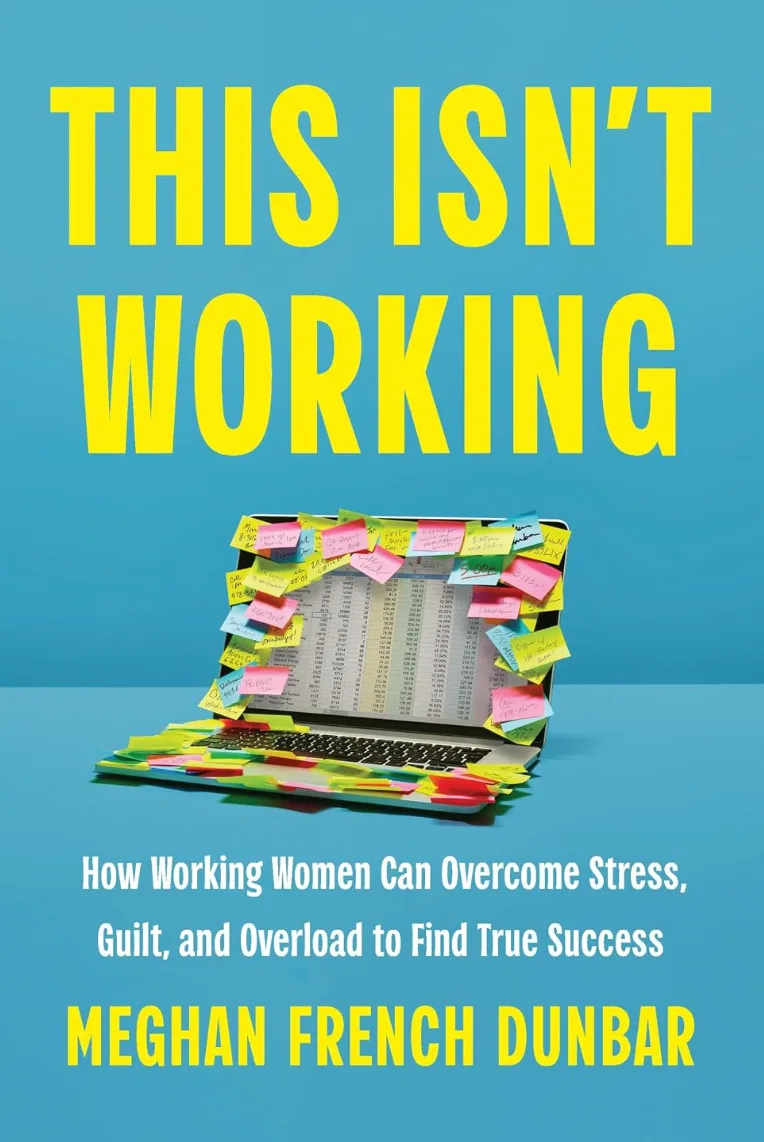
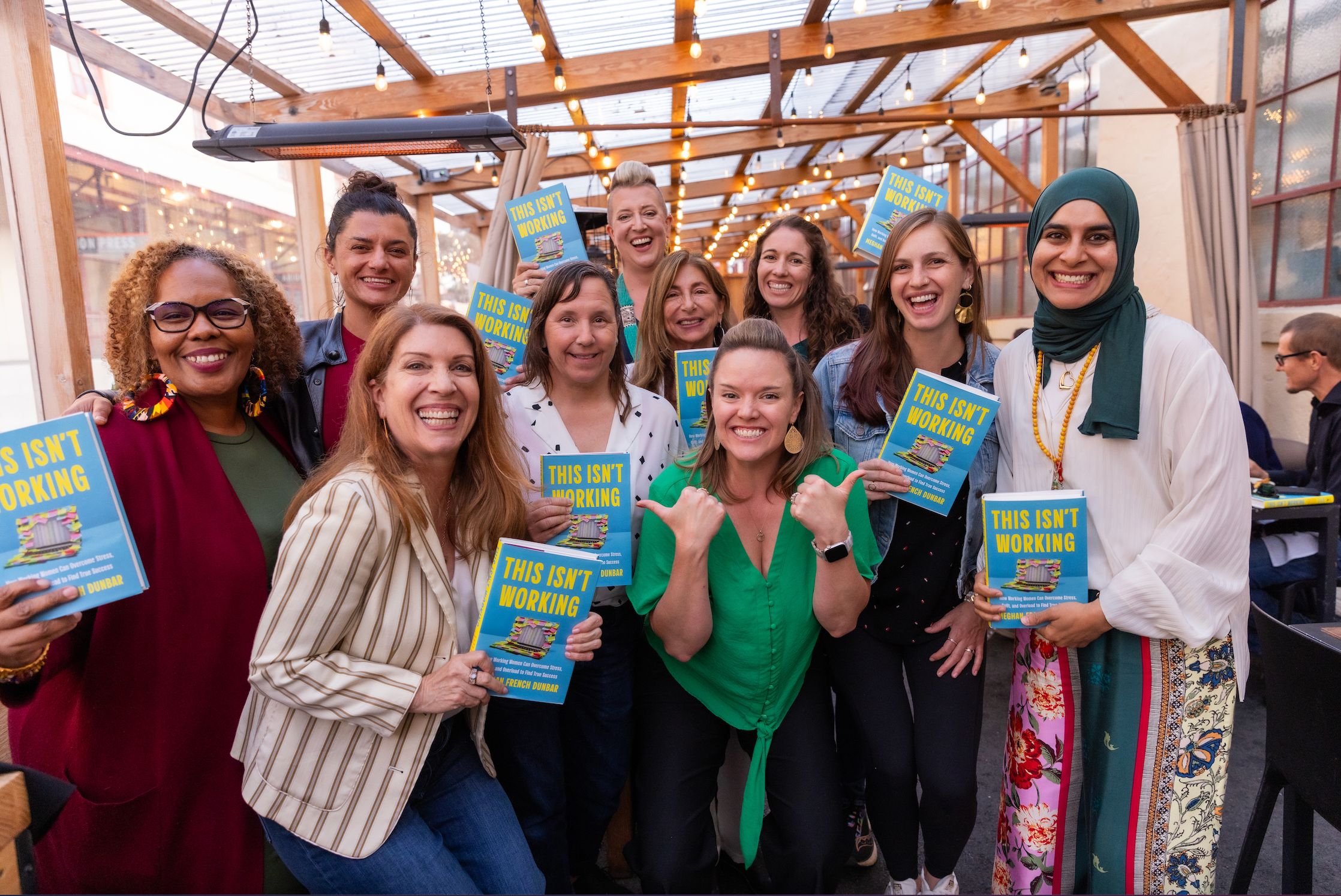
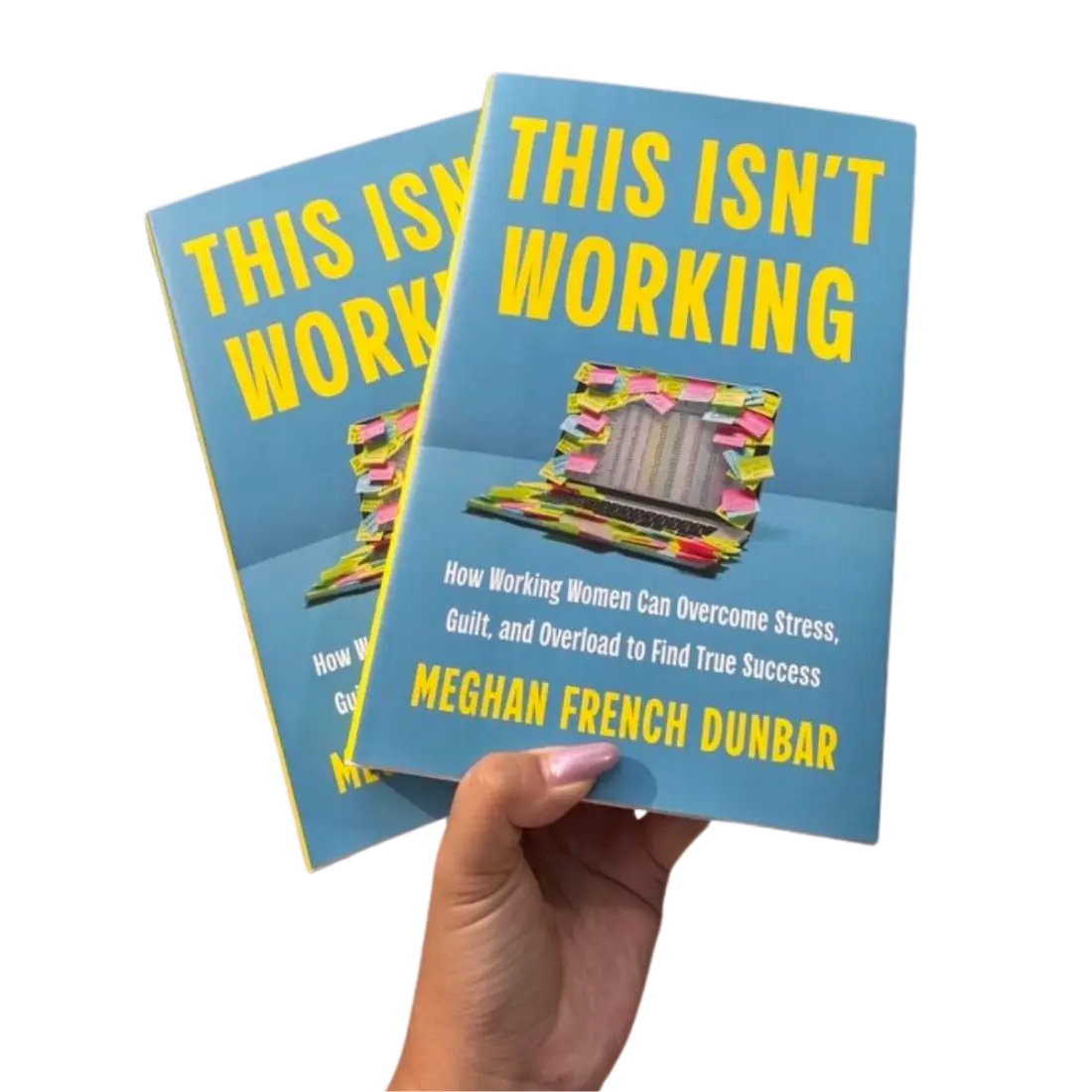
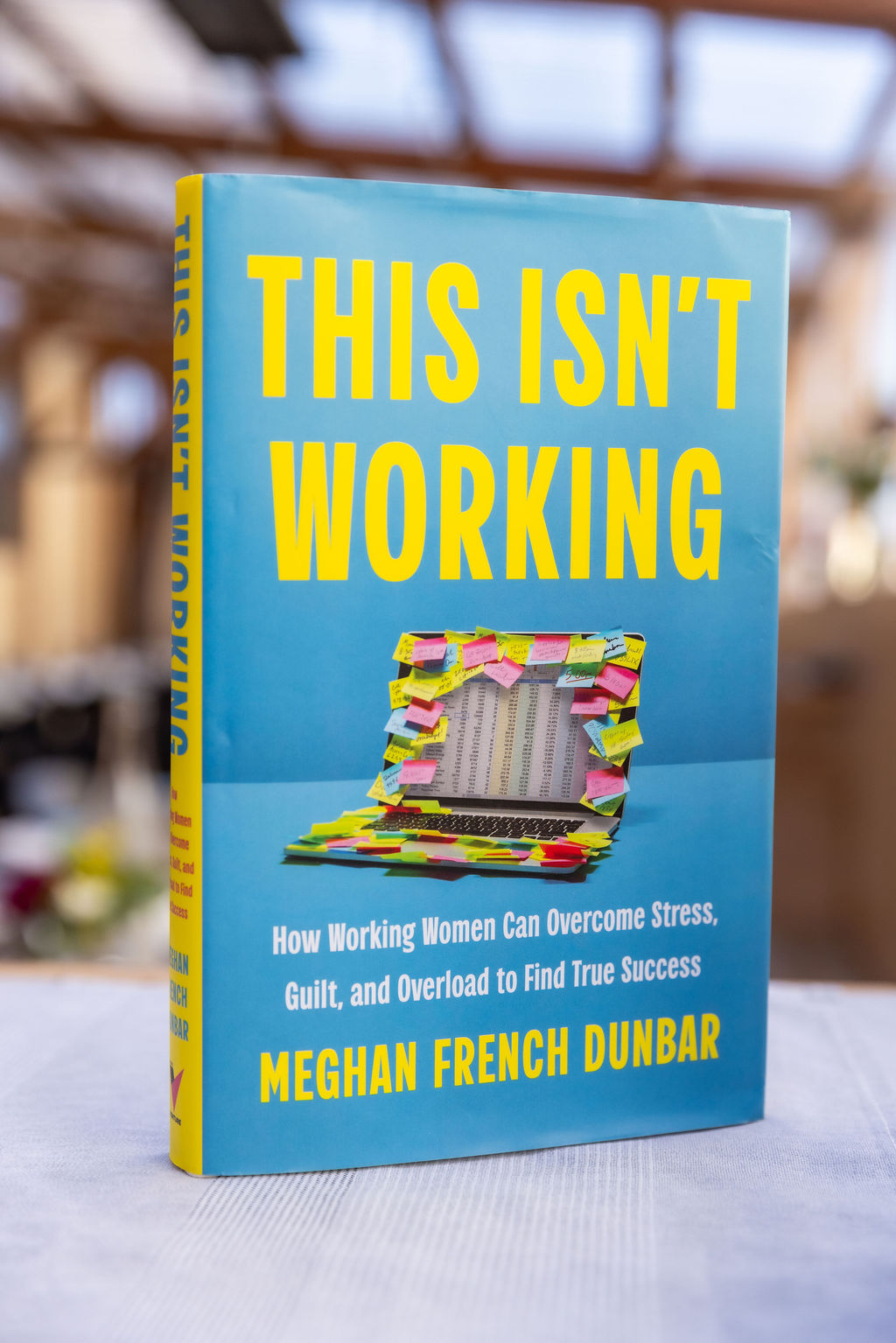
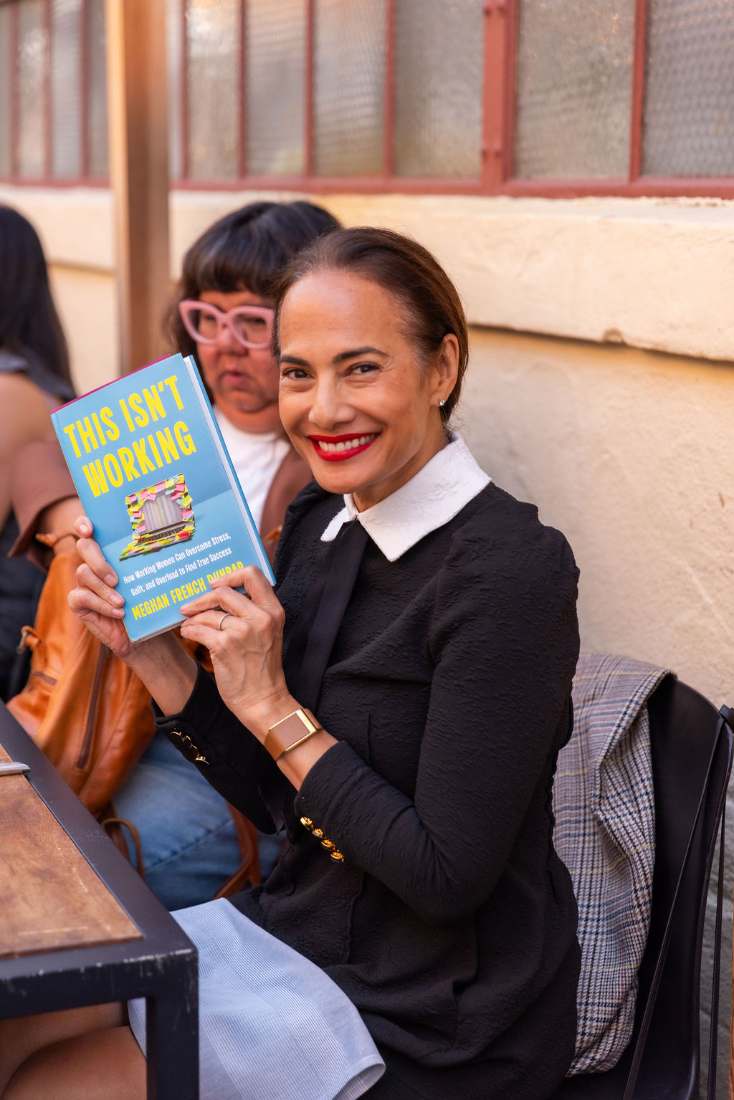
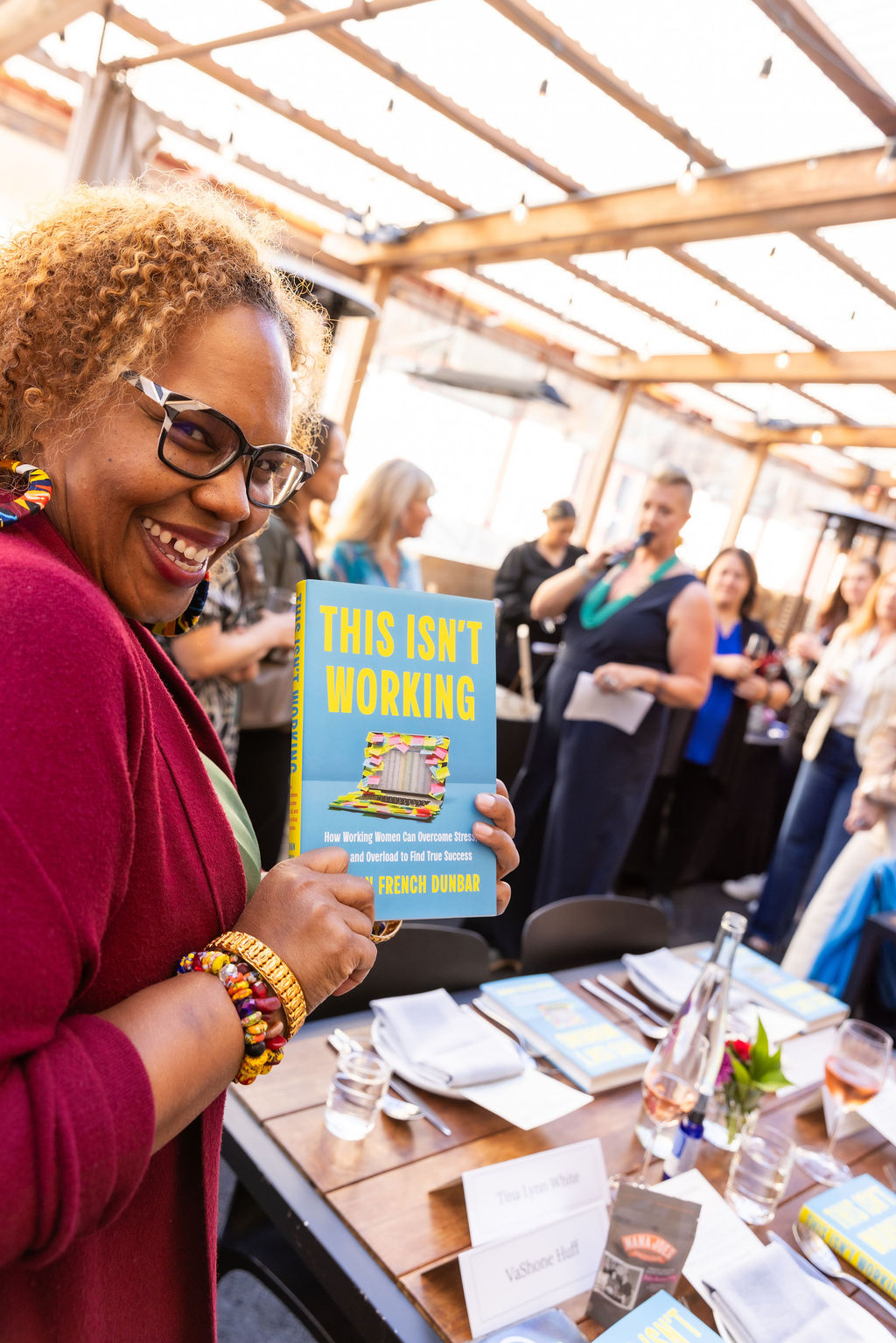
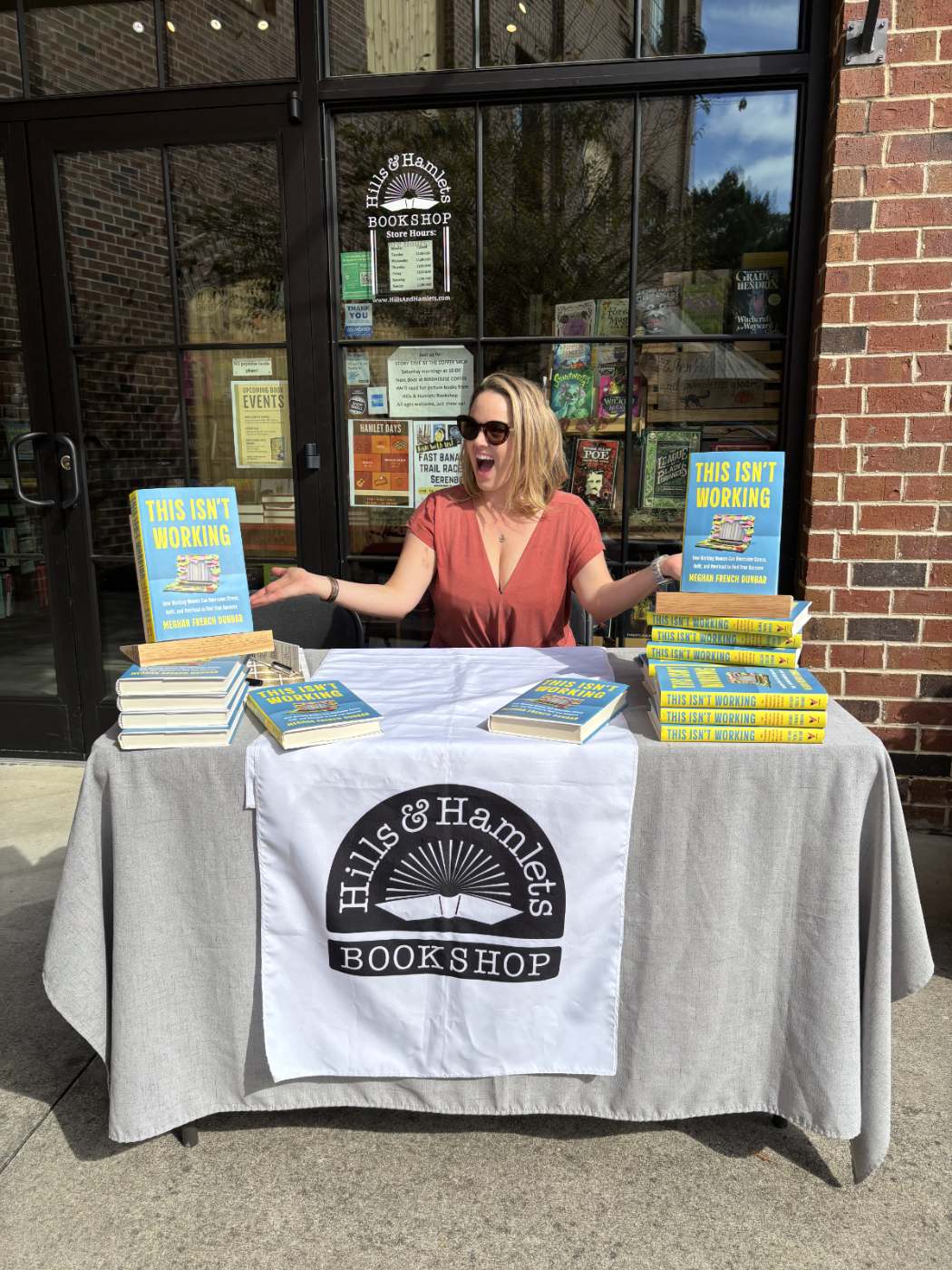
This Isn't Working by Meghan French Dunbar (Hachette, 2025)
Susie Batiz's resonance vs. dissonance framework
The 5-senses grounding practice
Breadcrumb-following as an intuitive practice
CONNECT WITH MEGHAN
Book: This Isn't Working — available wherever you buy books
Website: meghanfrenchdunbar.com
Substack: meghanfrenchdunbar.substack.com
FULL TRANSCRIPT
[Editor's note: Lightly cleaned for readability. Preserves original voice + delivery.]
Meghan French Dunbar (00:58): All right, friend.
Today we're going to talk about one particular "feminine trait" that often gets overlooked or relegated to a soft skill or dismissed entirely as not appropriate in the business world:
Intuition.
Yeah, for some of you, you might have cringed there. It has some woo-woo-esque associations. And it's a fantastic leadership skill. Quite literally, the vast majority of women leaders I've spoken to — who've had hugely successful careers and are thriving in their lives — nearly every single one of them mentioned the role intuition plays in their leadership.
So today: the role of intuition in leadership. What it means. How to develop it. Why you should begin paying attention to your own.
Meghan French Dunbar (~02:30): We'll start with a story of a time I did NOT do the thing I'm now telling us to do.
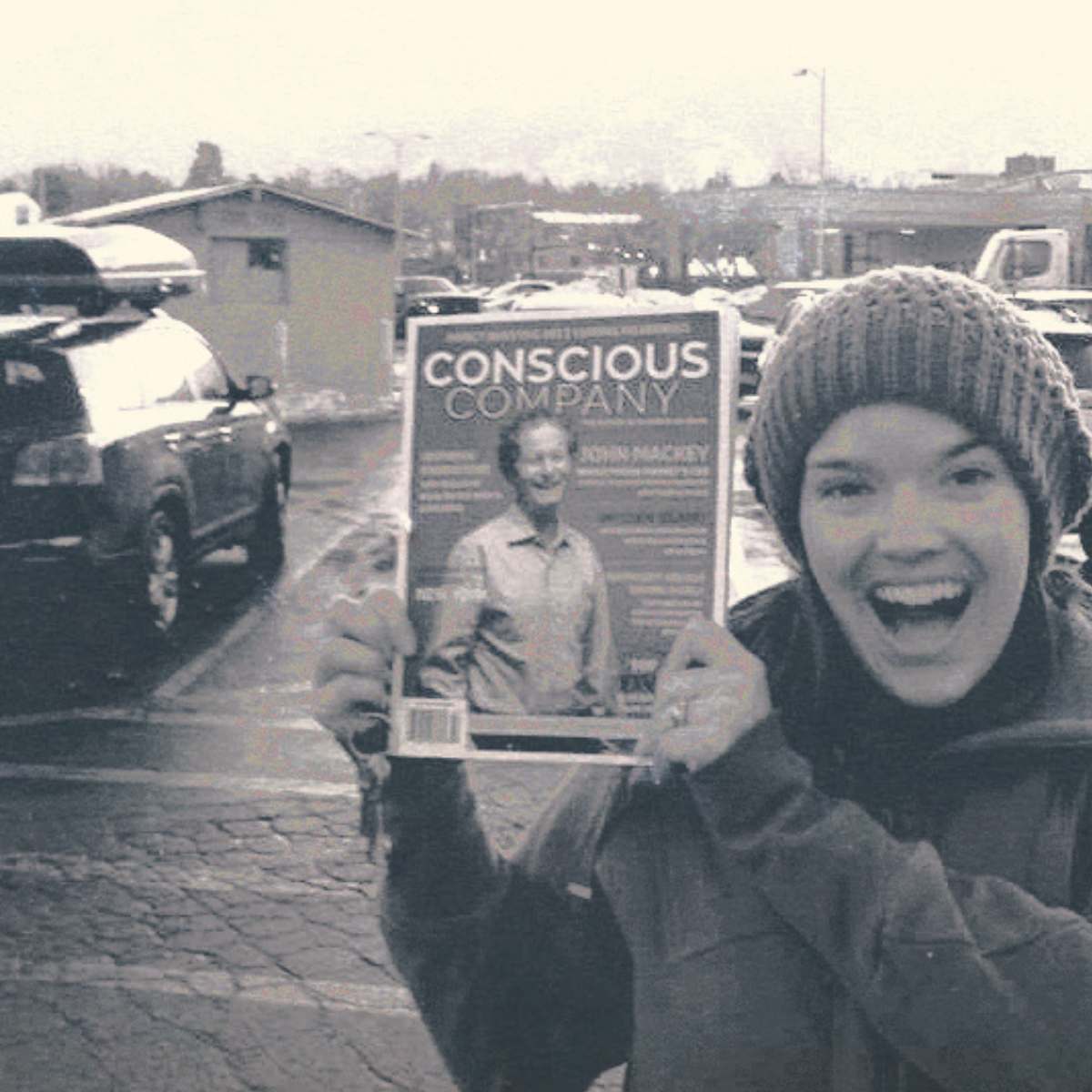
I'm CEO of Conscious Company Media. We had put in a proposal to a very large foundation for a grant that would sponsor a ton of content throughout the year. If we won, it would be a significant portion of our annual revenue. Huge. Would take crippling payroll pressure off me.
I attend Wisdom 2.0 in San Francisco. I have my little booth. One of my business partners finds out that a head of the foundation is at the conference — tracks him down, brings him over. I get some face time. Very nice. I try to razzle-dazzle. Hand him a magazine. Tell him about what we do. He's like "I've got another meeting — maybe I'll see you at the end of the conference."
Later that day, we're wrapping up. Conference is ending. I'm cleaning up my booth. This guy comes over and says "can I help you clean up?"
I'm like — wow, that's very kind. I say — "Hey, I'm going to go meet my business partner around the corner at this bar, want to come grab drinks with us?"
He says yes. I'm like — okay, this is going very well. Business development, crushing it.
I'm packing up. He says: "I'll just hop in the car with you."
Right there, my body speaks to me. Little red flag goes up. That's okay. I'm uncomfortable.
But I pushed through. This is a huge opportunity. I'm not going to base some random feeling on saying no — I don't want to piss this guy off and potentially lose this grant.
So I said — okay, hop in.
He helps me pack. We're in this little Subaru. Driving out of the parking lot. I say — "Hey, could you navigate us to the bar? I don't know where we're going."
He says: "Actually, I have a better idea. There's a place I want to show you."
Warning, warning. My intuition is escalating. He tells me to take a specific exit. If you're familiar with San Francisco — when you come out of the Presidio onto the highway, there are no more exits until you get to the other side of the Golden Gate Bridge.
All of a sudden we're on the Golden Gate Bridge heading OUT of the city. I'm starting to get panicky. I start talking about my husband. How much I love him. How VERY married I am.
We get across the bridge. He says — "Let's take this exit." We're in no-man's land. I'm thinking — "is he about to harm me?" I am quite literally at the point where I'm considering pulling the emergency brake and jumping out.
I don't do the tuck-and-roll. We end up in Sausalito. He says we're going to a bar at Cavallo Point. Gorgeous view of the city. That's what he wanted to show me.
I'm like — okay. Maybe I'm overreacting.
If you identify as a woman, you know what happened next. I began gaslighting myself. Convincing myself I'd misread the situation. That he was just a little socially awkward. That I needed to be kind and not make him uncomfortable — because that would jeopardize the grant.
At the bar I say — "I told my business partner we'd meet him. Let's see the view and then I need to head back."
He says: "No, I really want to get a drink and enjoy this."
Oh my god.
I reluctantly get him back in my car. Say — "Okay. I'll drop you at the bar. I'm going to my hotel to drop off my stuff."
He says: "No, I don't want you to be unsafe walking around. I'll come to your hotel with you."
We're in the middle of the Golden Gate Bridge again. Can't tuck-and-roll off a bridge. I drive to my hotel. Pull in.
He gets out. I say — "I'm here. I'm fine. Can you sit on that bench? I'll take this stuff up."
He walks over. Pulls my glasses off my face. Says: "I think I would like to kiss you."
I'm like — NOPE. Here we're done. Hard line. It took THAT for me to finally say no.
He leaves.
Lo and behold — we don't get the grant.
Meghan French Dunbar (~09:00): This is one of many examples of when I ignored my intuition — especially in professional contexts, especially when power dynamics were at play.
That's the basis of what we're going to talk about. Why listening to your intuition matters. How to tap into it. How to use it as a leadership skill.
Meghan French Dunbar (~11:00): Some people find intuition a little woo-woo. There's a lot of research on how important it is.
Your intuition isn't based on logic. It uses unconscious signals from your brain and your body. Malcolm Gladwell describes it as rapid cognition.
Gavin de Becker — a world-renowned expert on predicting danger — explains it this way: "What you want to dismiss as coincidence or a gut feeling is in fact a cognitive process faster than we recognize — and far different from the familiar step-by-step thinking we rely on so willingly."
Those gut feelings — the ones trying to warn you, protect you, guide you toward better decision-making, help you find inspiration — are a cognitive process. We need to start paying attention to them instead of dismissing them as illogical and inappropriate for the business world.
Many women I know ignore their intuition — especially when it comes to making someone else uncomfortable. We've been conditioned since we were young girls to be nice. Not rock the boat. Prioritize others' feelings over ours. Be seen and not heard. Gentle and quiet.
So we grow up as adults where when something inside us is screaming that something's wrong — if it might make someone in power uncomfortable, we ignore it.
Especially hard in professional contexts, when there are power dynamics, revenue, sales, or career progression on the line. We don't want to blow a sale because we had a bad feeling.
Has this happened in your life? Some inner knowing you ignored. Later, something bad happens. You beat yourself up. "Why didn't I listen? Why didn't I pay attention?"
We don't need to keep doing that.
Meghan French Dunbar (~14:30): For a lot of us, our intuition is speaking up like mine was with the foundation guy — to protect us. It is our work to divorce ourselves from the idea that our comfort isn't worth as much as someone else's.
That has been the work I have been doing for so long. Speaking up. Telling other people they're impacting me negatively. So hard. So rewarding.
Meghan French Dunbar (~15:30): Beyond protection — intuition is a proven way to make better decisions.
Research shows intuition benefits complex decision-making. It helps people perceive deception more accurately. De Becker: it enables us to make quicker AND often more accurate decisions.
Many leaders I know lean on intuition to make MAJOR business decisions.
Stephanie Nadi Olson (16:47): [Stephanie, founder of We Are Rosie] Once I ripped the band-aid off and said — I'm going to do this bat-shit-crazy thing nobody expects — a couple things happened. People rallied around me. I attracted the ones who believed in the vision. I kept them close. And I just kept my head down and did the next thing that felt really good.
When you have to make a hard decision — think about the options in front of you and ask which one gives you the most relief. Which one makes you feel the best AFTER you make it? "If I do this, I will feel relief. If I do this, I'll feel anxious."
I kept choosing ease and relief and the things that felt natural. The frictionless path. And the road kept unfolding.
Nobody knows what you're capable of better than you. If our goal is to change systems or to make our personal dreams come true — you've got to follow your own intuition. There were times I defaulted to someone else's opinion — "well, they know better than me" — and it would feel icky. Wrong. I had to find my own voice. Get used to disappointing people. Be willing to defend something unusual that others didn't understand.
Meghan French Dunbar (18:56): As Stephanie talked about — feeling that sense of relief.
I was at a women's leadership retreat a while back and heard Susie Batiz — founder of Poo-Pourri — talk about the same thing. She calls it resonance vs. dissonance.
If you know sound waves: when they're resonant, they come together into a gorgeous wave. When they're dissonant, they contradict each other. She pays attention to decisions that feel resonant. Her entire team asks: "Does this feel resonant? Does this feel easeful?"
If it feels dissonant — hard, crunchy, forced — they pull back. She uses resonance/dissonance to make team-wide decisions for a multi-multi-million dollar organization.
You can bring this into your work too. Does this feel right? Easeful? Resonant? When you feel like you're forcing it — can you step back? What would feel easeful?
Meghan French Dunbar (~20:00): Intuition doesn't just protect us. It guides us to the best decision possible. The way to tap into it is to pay attention and value your intuitive wisdom.
Practice 1: Build quiet time into your day. Walk. Meditate. 10 minutes. Any time you don't have inputs going into your brain to just listen for what's coming up. What feelings. What ideas. What thoughts. Quiet space is one of the best ways to actually notice your intuition.
Practice 2: Pay attention to your body. Diana Propper de Callejon talked about learning to listen to her body earlier in her career.
One of the best practices I've come across is the 5-senses grounding practice. Sit down, get quiet, even five minutes. Ask yourself: What do I hear? What do I smell? What do I see? What can I feel physically? What can I taste? These questions get you quiet and help you listen. Your body sends you intuitive messages all the time.
Practice 3: Reflection. Daily, weekly, whatever works. Gratitude journaling for compassion and joy. And an intuitive journaling practice — just paying attention. What came up this week? Who came to mind? What experiences? What ideas?
For me it's almost like following the breadcrumbs. Not always about making a decision or avoiding harm. Sometimes about finding inspiration. If someone's name or work comes up two or three times in a week or two — I pay attention. That means I'm supposed to reach out. If someone comes to mind on my morning walk — I text them right away. "Hey, thinking of you. What's going on?"
Following your intuitive interests will inevitably lead to some of the coolest things.
Meghan French Dunbar (~27:00): One of the most incredible intuitive downloads I ever had:
I'd been paying attention — women, ideas, all the things — for about a year. 2017. I'm sitting on the floor of our condo. Petting our dog. Thinking about how I really wish I felt a deeper sense of connection with the women entrepreneurs I know.
And the entire blueprint for a conference just plunked into my brain.
The name. World Changing Women's Summit. The speakers. Exactly what we would do. What it would look like. Handed to me.
I got up mid-conversation with my husband. Ran to the guest room. Ripped out a piece of paper. Sketched it all down.
I've talked to other people who describe these downloads or lightning strikes as extraordinary things that happen the more they pay attention.
We brought the conference to life in 2018. For three years running, we brought hundreds of women together for extraordinarily powerful conferences. To this day I still meet people who say "I was at World Changing Women 2019 or 2020 — I made THIS connection, I met my business partner, I had this insight..." — because I got quiet, paid attention, and didn't immediately dismiss the intuitive download as "not realistic."
Has this happened to you? A fantastic idea handed to you — and you convinced yourself it wasn't possible? Your rational brain telling you your intuitive wisdom didn't count?
We are conditioned in business to value the rational, analytical brain. As women, we're conditioned to think our intuitive feelings should be ignored.
Meghan French Dunbar (~30:00): Quick recap.
Intuition helps you make better decisions. What feels right, good, easeful, resonant. It protects you when something is wrong — and you can value your own comfort as much as anyone else's. You tap into it by getting quiet, listening to your body, reflecting, following the breadcrumbs.
When you actively ignore your intuition, you feel dissonance. Something feels wrong. When you honor it — you feel like you're in flow.
Hopefully intuition becomes something you pay a little more attention to. Bring it into your professional life. Your personal life. Find it as valuable as all the other leadership skills we've put on a pedestal for so long.
For today, that's all we've got. See you next time.