Authentic Leadership | Unbehaved
Ever feel like you have to change yourself to succeed at work? Then this episode's for you.
And it's a "do as I say, not as I do" episode of Unbehaved*, because host Meghan French Dunbar opens by confessing that she just spent six months trying to jam her personal website into someone else's mold and got exactly nowhere. Then she uses that miss to unpack why so many of us — especially women — struggle to lead from who we actually are, and what to do about it.
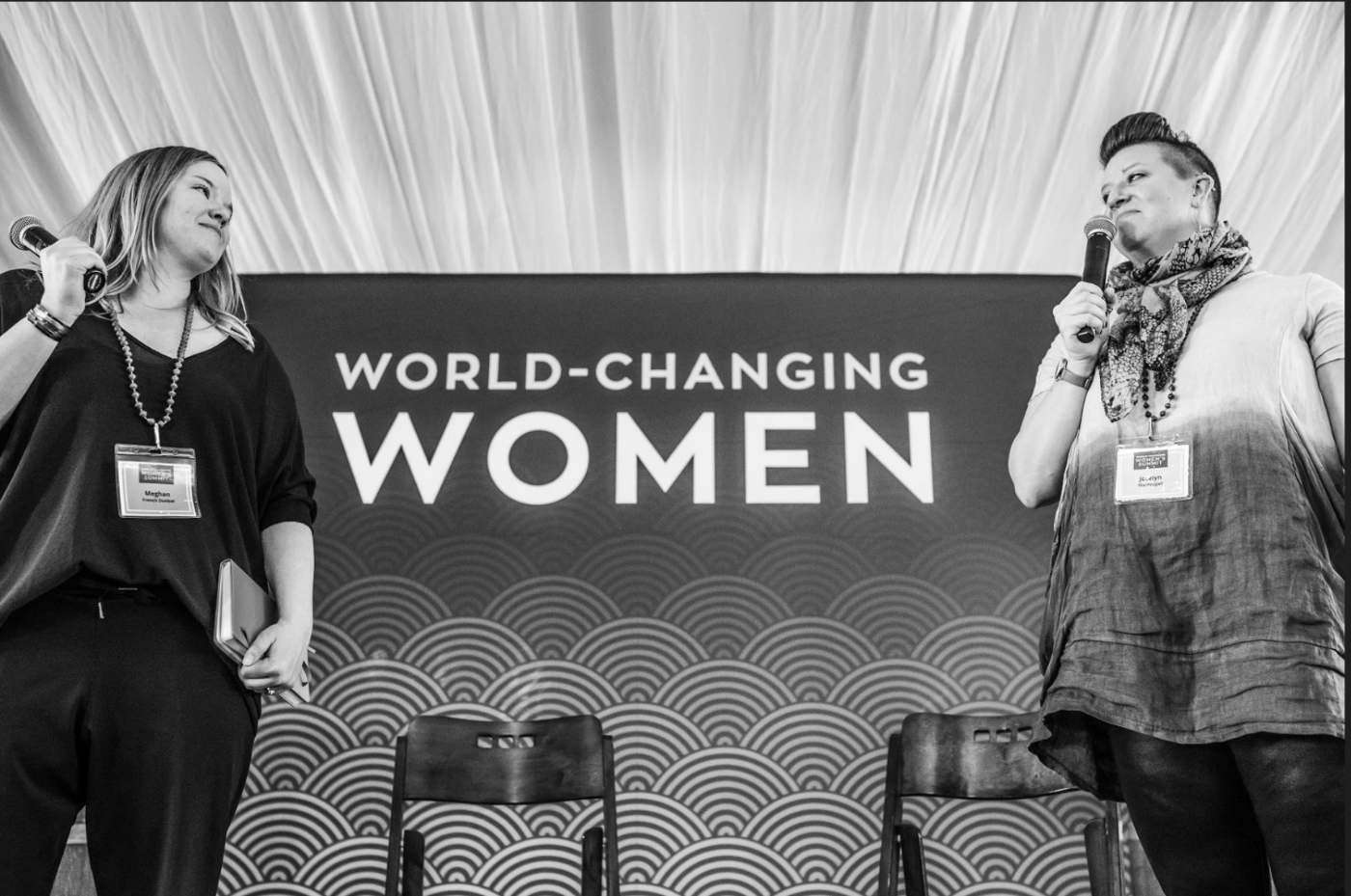
At the center of the episode is the story of Jocelyn McDougall — a facilitator who arrived at a business conference in a silk dress, Birkenstocks, and gold earrings, belting out Nina Simone's "Feeling Good."
Meghan's first thought was "this poor woman is going to get eaten alive." But by day three, every single person at the conference had fallen in love with her, and Jocelyn had become the most in-demand facilitator in the room. That moment cracked open Meghan's understanding of what authentic leadership actually is — and why it's a competitive advantage, not a professional liability.
In this episode, we cover the research showing authentic leaders create more positive emotions, better retention, and higher trust in their orgs. The Gabor Maté framework of two competing human needs (belonging vs. authenticity) that puts women in a perpetual lose-lose. Three concrete mindset shifts for cultivating authentic leadership — including the values exercise Meghan keeps taped to her desk, Alfa Demmellash's "What is uniquely mine to say right now?" question, and the Melanie Dulbecco story of running Torani Syrups on a foundation of questioning the status quo.
If you’ve ever felt like you have to act a certain way to be taken seriously at work — more polished, more professional, more together— this episode is for you. It’s about reclaiming yourself at work, in life, and in every room you walk into.
*[Editor's note: This episode originally aired under the show's former name, "Better Than This." The show is now "Unbehaved."]
WHAT WE COVER
- The website confession: how Meghan spent 6 months trying to make her site look like "big-name author" websites and produced 100 versions she hated
- The Jocelyn McDougall arrival: silk dress, mohawk, Birkenstocks, Nina Simone — and how the woman Meghan thought would get "eaten alive" became the most sought-after facilitator at the conference
- What authentic leadership actually is (beyond the buzzword) — and why it can be dialed up gradually rather than flipped as a switch
- Why women disproportionately struggle with authentic leadership: entering a dominant business culture as minority participants and being expected to assimilate
- The Marshall's power suit — Meghan's peplum "sausage casing" purchase before her first CEO conference
- Gabor Maté's framework of two competing human needs: belonging vs. authenticity — and why they're in constant contradiction in most workplaces
- The research: authentic leaders create more positive emotions in the people around them, inspire creativity, and increase retention and trust
- Mindset shift 1: Look to your values, not to others, to inform how you show up
- The windsock/sandbag metaphor for why values matter
- The 6 men at the conference table — and the question ("what was your most joyful moment this year?") that cracked the whole table open
- Mindset shift 2: Honor your truth regardless of who's in the room
- Alfa Demmellash's question: "What is uniquely mine to say right now?"
- Mindset shift 3: Regularly question the status quo — and why it's the foundation of innovation
- Melanie Dulbecco of Torani Syrups — 34 years, 20%+ year-over-year growth, and a leader who refuses to accept "the way it's always been done"
PULL QUOTES
— "I 100% just took the old playbook and tried to force myself into it, even though it didn't feel right. That, in fact, didn't work. Surprising probably nobody."
— "Oh my gosh. This poor woman. Doesn't she know this is a business conference? Look at all of us professional humans out here. Why is she singing? Birkenstocks? Earrings? She's going to get eaten alive because she's so different."
~ Meghan's first thought about Jocelyn McDougall
— "Every single human being at that conference fell madly in love with Jocelyn McDougall. She was the best facilitator I had ever seen in my life."
— "Gabor and Daniel Maté describe two inherent human needs. Belonging — our hunter-gatherer survival instinct. Don't get kicked out of the tribe or you'll die. We need to feel included. Authenticity — expressing our individuality. Being our real self." ~ on Gabor and Daniel Maté, The Myth of Normal
— "One of the core predictors of disease on Earth is excessive concern about social acceptability."
— "Your values are the sandbags tied to the bottom of your windsock. They hold you to the ground. They keep the prevailing winds — which are often fierce — from whipping you around to the point where you can't function."
— "What is uniquely mine to say right now?" ~ Alfa Demmellash, co-founder of Rising Tide Capital
— "The odds you exist as a human being are staggering. You are the only you that will ever exist. You have a unique perspective in your brain that no other human alive has."
— "Meg. Deep breath. Do we change who we are based on the room we're walking into?" ~Jocelyn, before a fashion company meeting in New York
CHAPTERS
- 00:58 — The website confession: 100 versions and none of them right
- 02:30 — The realization: I abandoned my own playbook to try to fit someone else's
- 04:00 — 2017, Cortez Island, Hollyhock Leadership Institute: the Jocelyn McDougall arrival
- 08:00 — Meeting Jocelyn, super-friending her, and how the friendship became eight years of shared work
- 10:07 — What authentic leadership actually is (not just wearing what you want to the office)
- 11:30 — Why authenticity can be dialed up gradually — the 2% rule
- 13:00 — Real talk: if your workplace isn't safe for you to be fully yourself, that's real and valid
- 14:23 — Who is YOUR Jocelyn? And why is it so much harder for women to be one?
- 16:00 — The historical context: business grew up under patriarchy; women came in as a minority population
- 17:30 — The Marshall's power suit ("sausage casing with peplum")
- 19:00 — The Gabor Maté framework: belonging vs. authenticity as competing human needs
- 21:00 — Why concern about social acceptability is a top predictor of disease
- 22:00 — The research: why authentic leadership is more effective (more positive emotions, more retention, more trust)
- 24:00 — Mindset shift 1: Look to your values, not to others
- 26:00 — Nathan Havey's values exercise; Meghan's values (impact, exploration, love, joy, authenticity)
- 27:30 — The windsock/sandbag metaphor
- 29:00 — The 6 men at the conference table — and the "most joyful moment" question
- 31:00 — Where to keep your values: phone, spreadsheet, sticky note by the desk
- 32:00 — Mindset shift 2: Honor your truth regardless of the room
- 33:00 — Alfa Demmellash: "What is uniquely mine to say right now?"
- 34:30 — Jocelyn's hotel-room reminder before the New York fashion meeting
- 36:00 — Mindset shift 3: Question the status quo
- 37:00 — Melanie Dulbecco at Torani Syrups: 34 years, 20%+ YoY growth, and a refusal to accept the way it's always been done
- 39:00 — Recap: values → truth → questioning the norm
- 40:00 — Sign-off
RESOURCES MENTIONED
People + companies referenced:
- Jocelyn McDougall — facilitator, Meghan's business partner and best friend; the Hollyhock arrival
- Alfa Demmellash — co-founder of Rising Tide Capital; source of the "What is uniquely mine to say right now?" question
- Melanie Dulbecco — CEO of Torani Syrups; 35 years at the helm, 20%+ YoY growth
- Nathan Havey — the values exercise that changed how Meghan operates
- Dr. Gabor Maté + Daniel Maté — The Myth of Normal; the belonging vs. authenticity framework
- Kathy Bolhous — CEO of Charter Next Generation; keeps her values on her phone
- Ayla Schlosser — Meghan's friend; keeps her values in a Friday-check spreadsheet
- Stephanie Nadi Olson — founder + former CEO of We Are Rosie; referenced for her assimilation story
- Coach + Kate Spade — Women's ERG workshops Meghan does with Jocelyn
- Hollyhock Leadership Institute — Cortez Island, BC; site of the Jocelyn arrival
- Social Venture Institute — the conference where it all started
Books + frameworks referenced:
- The Myth of Normal by Gabor + Daniel Maté
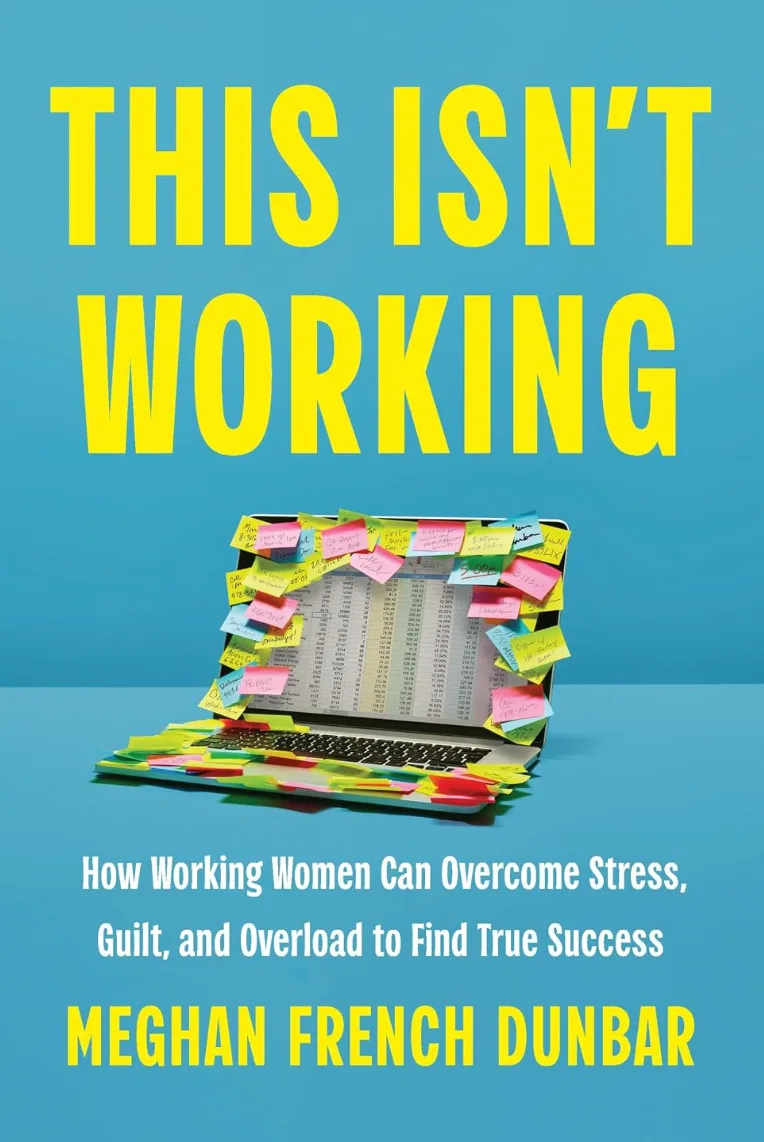
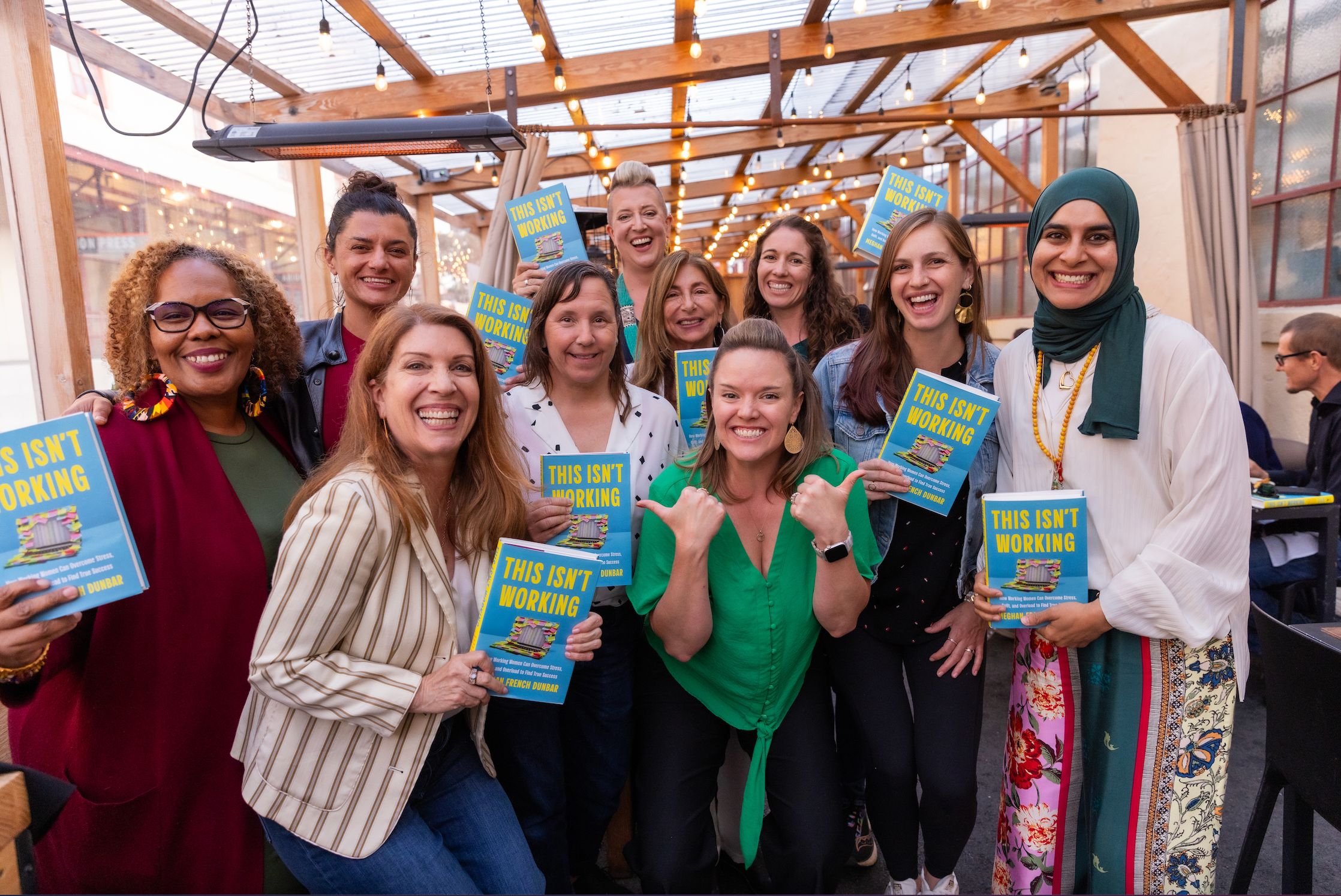
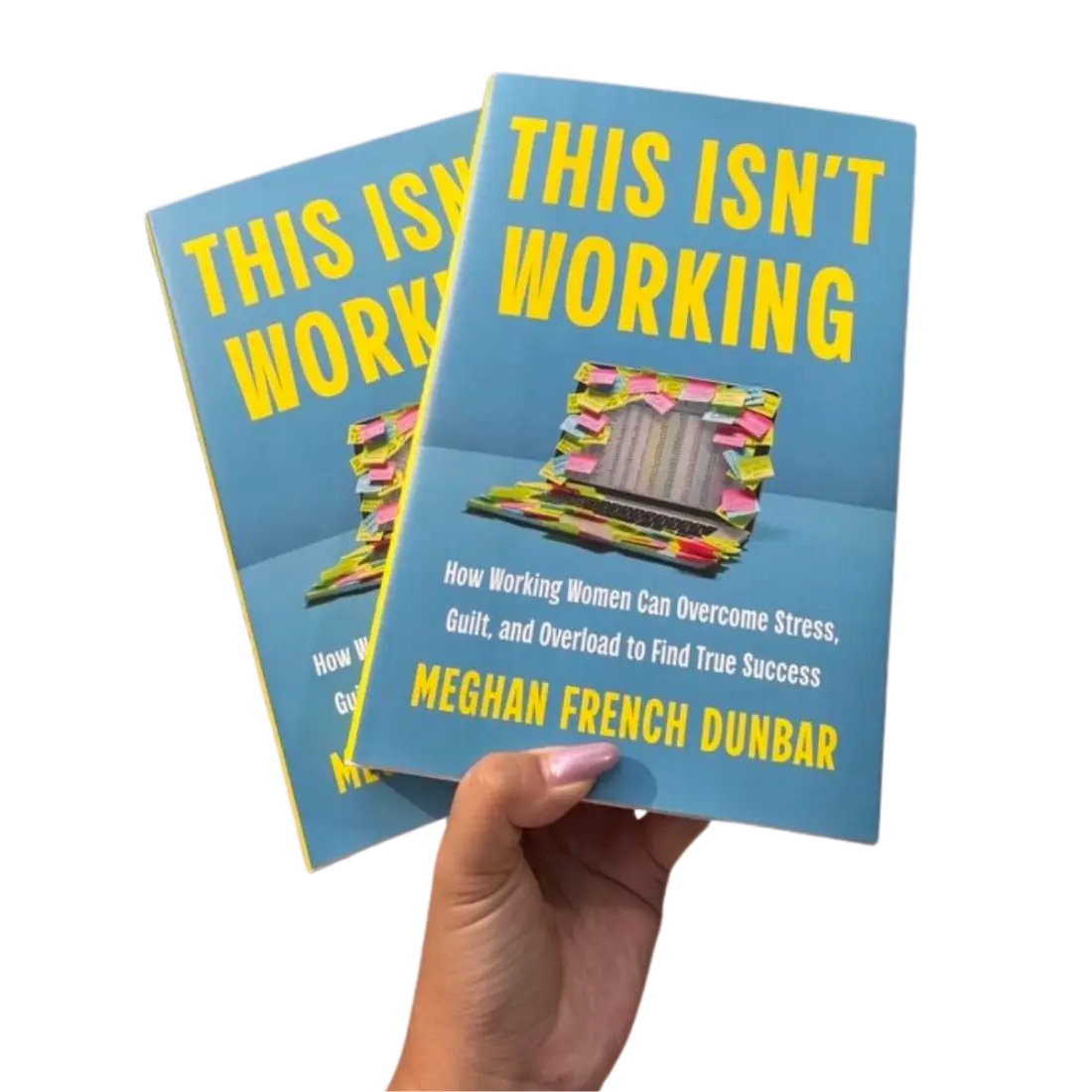
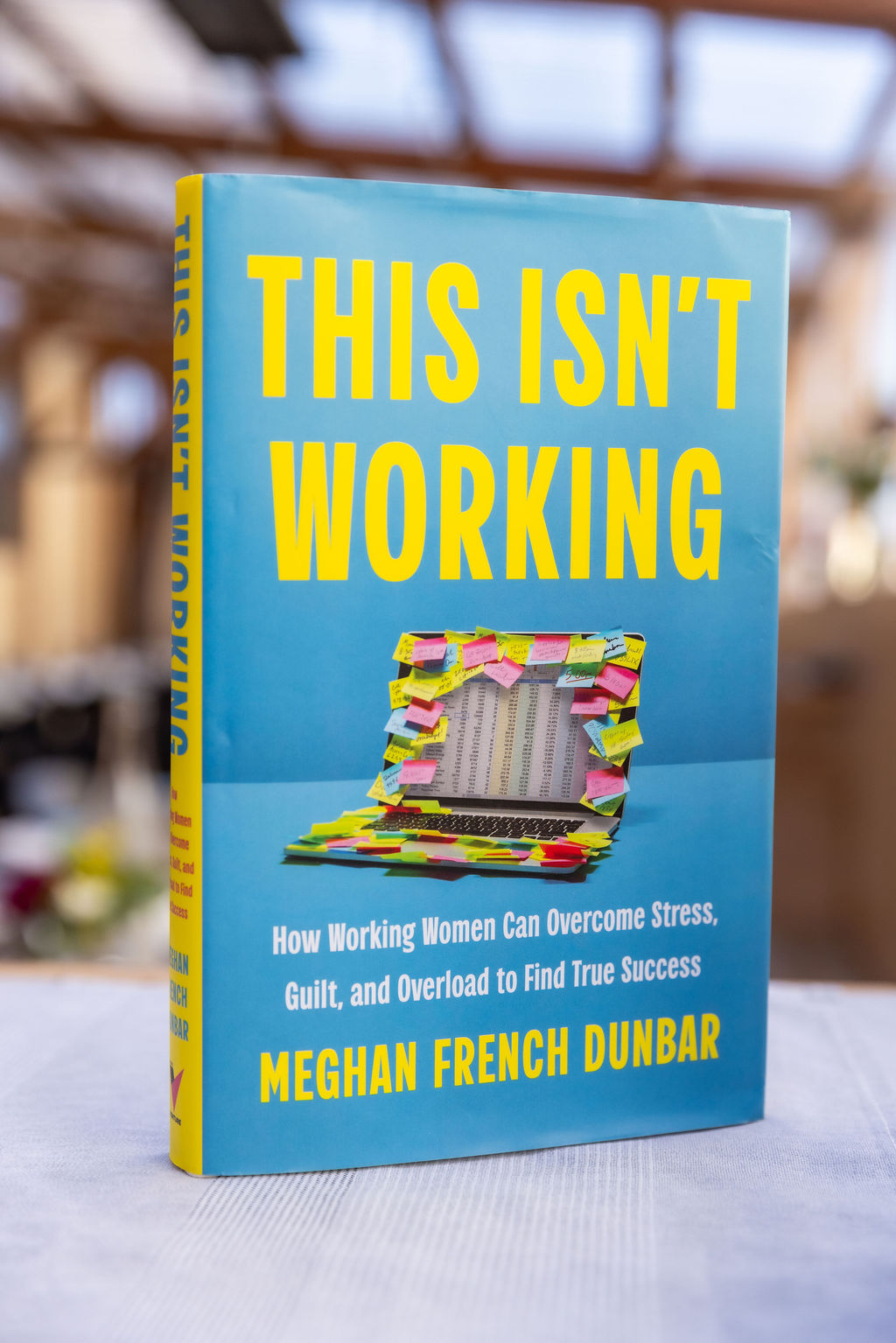
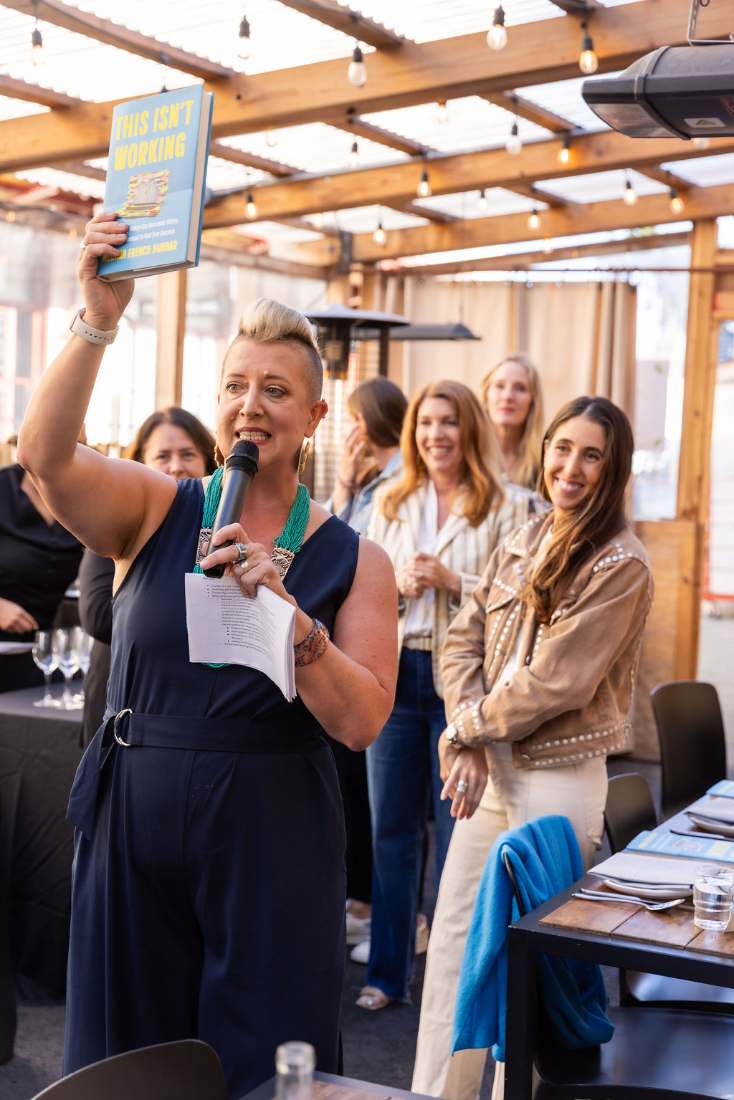
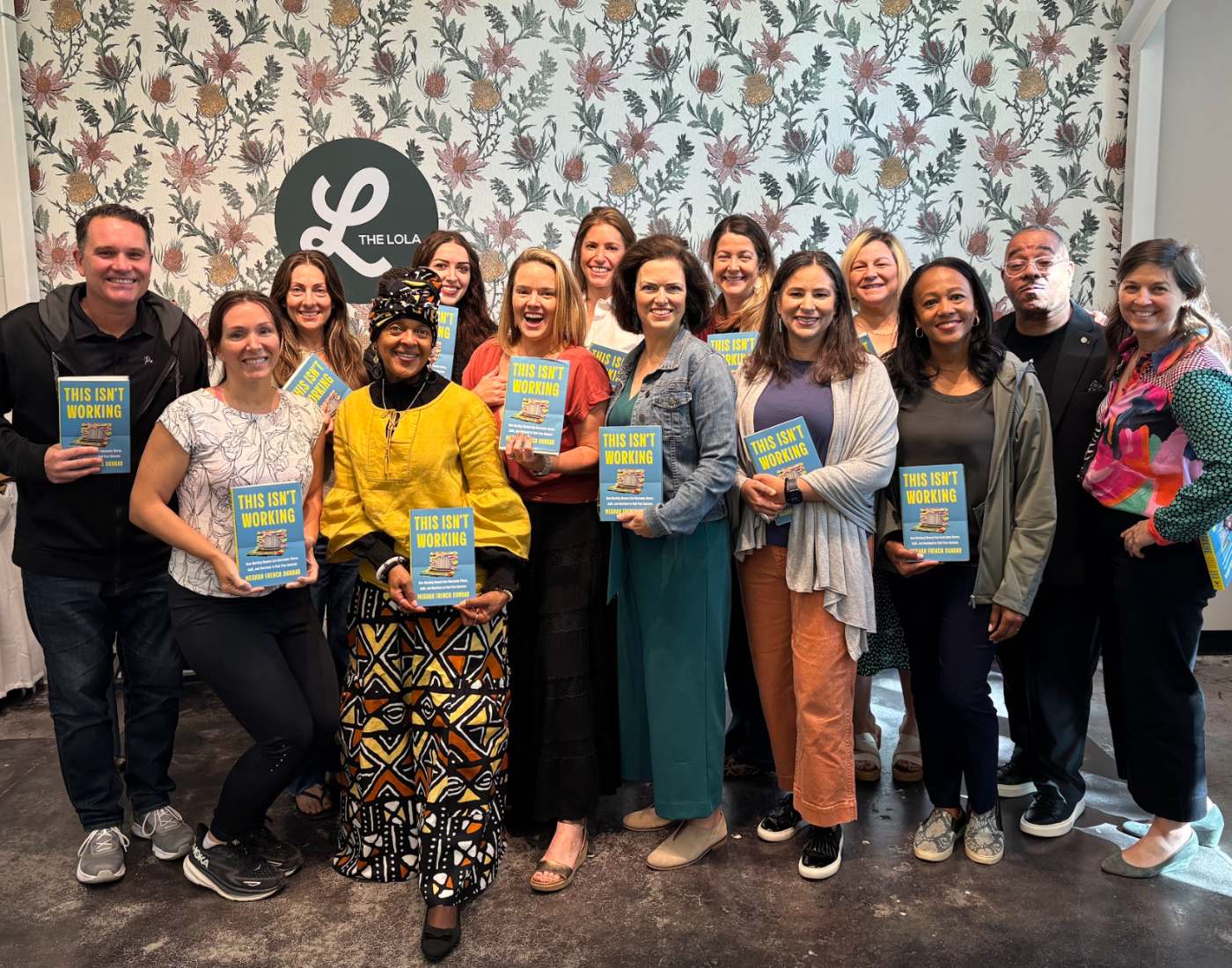
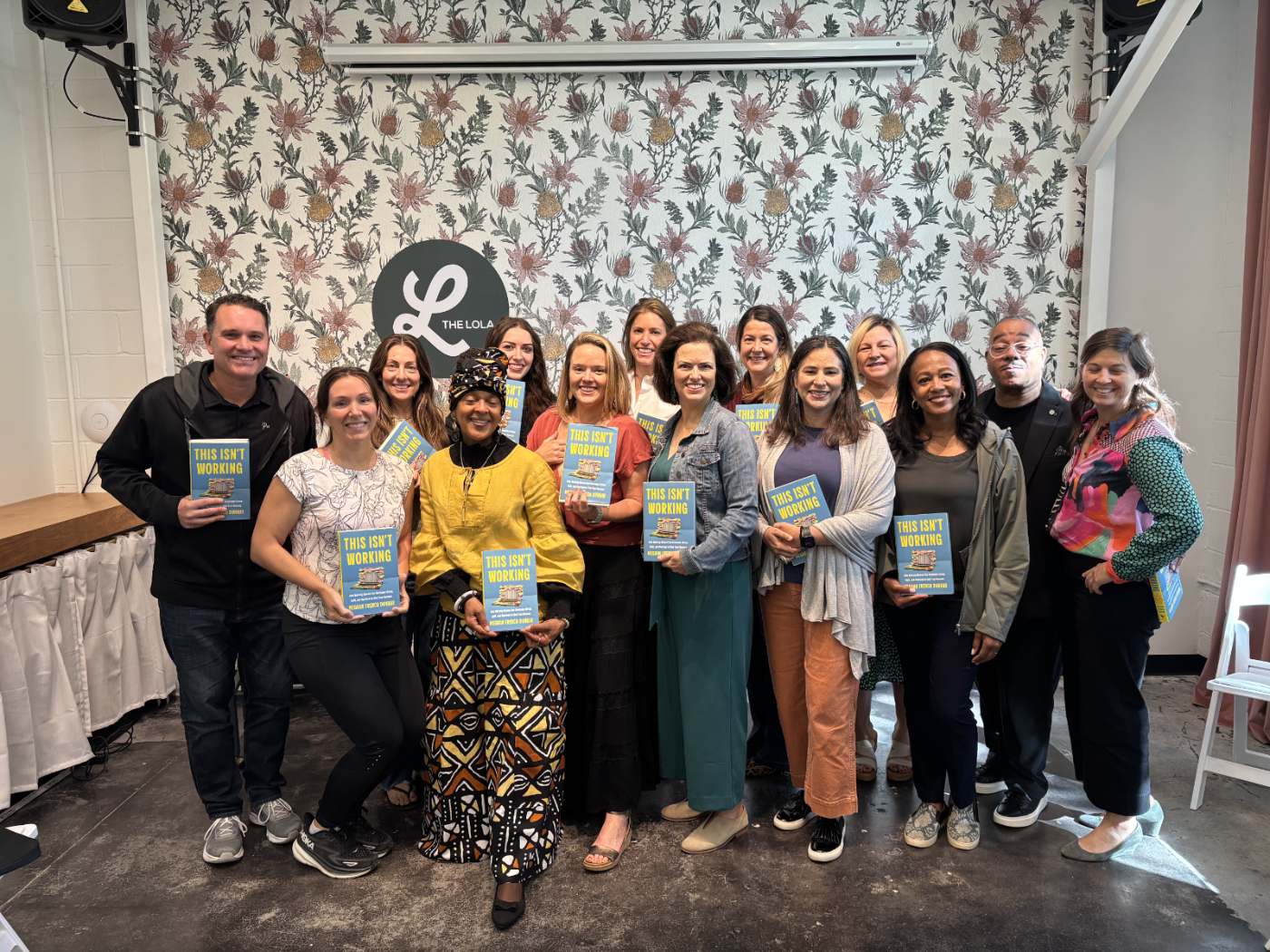
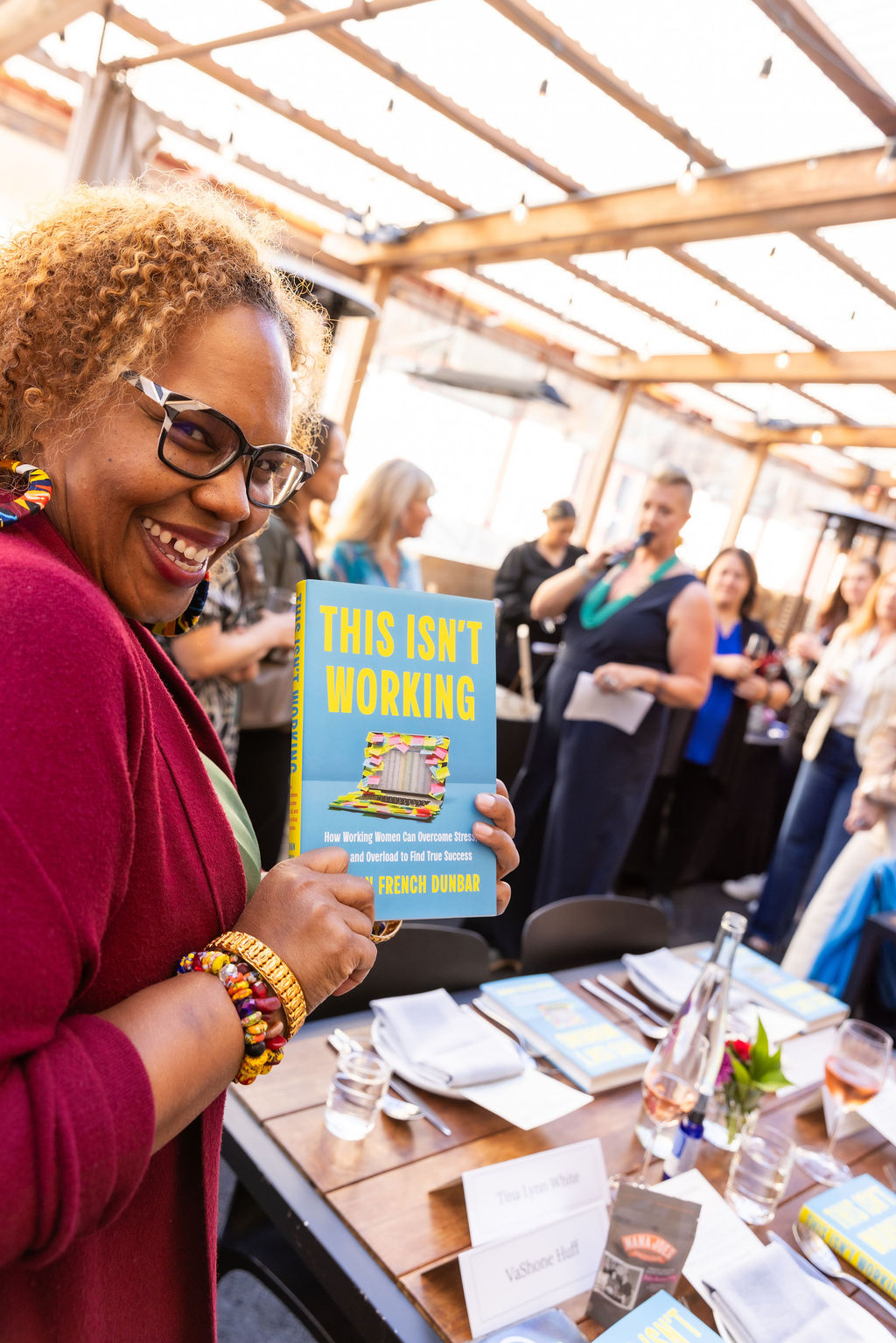
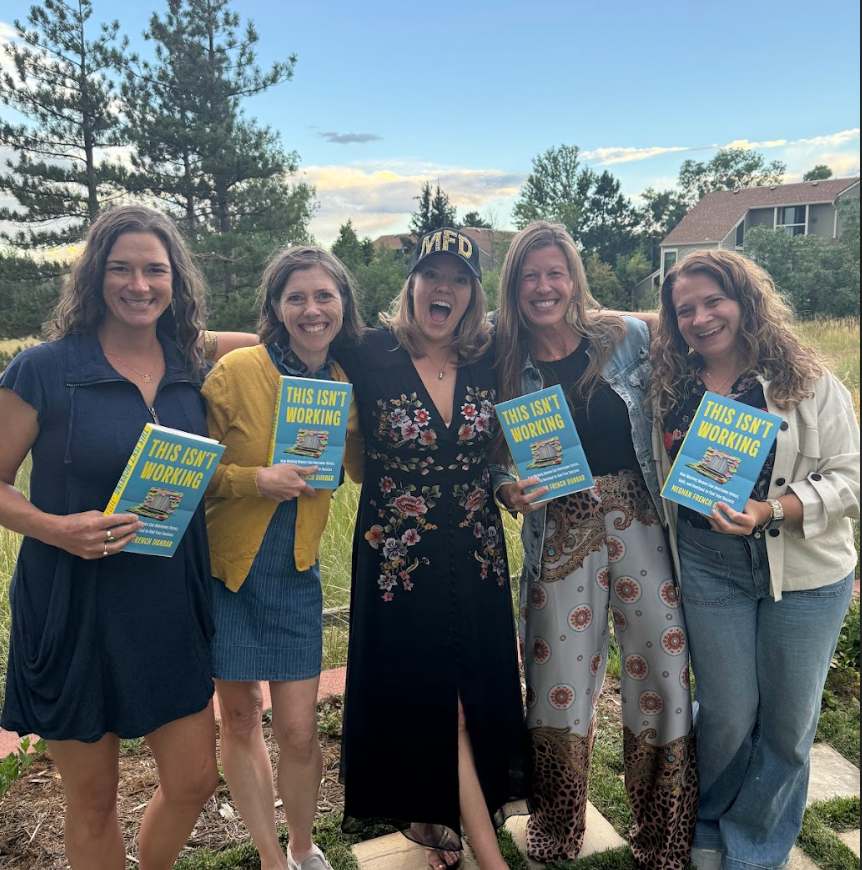
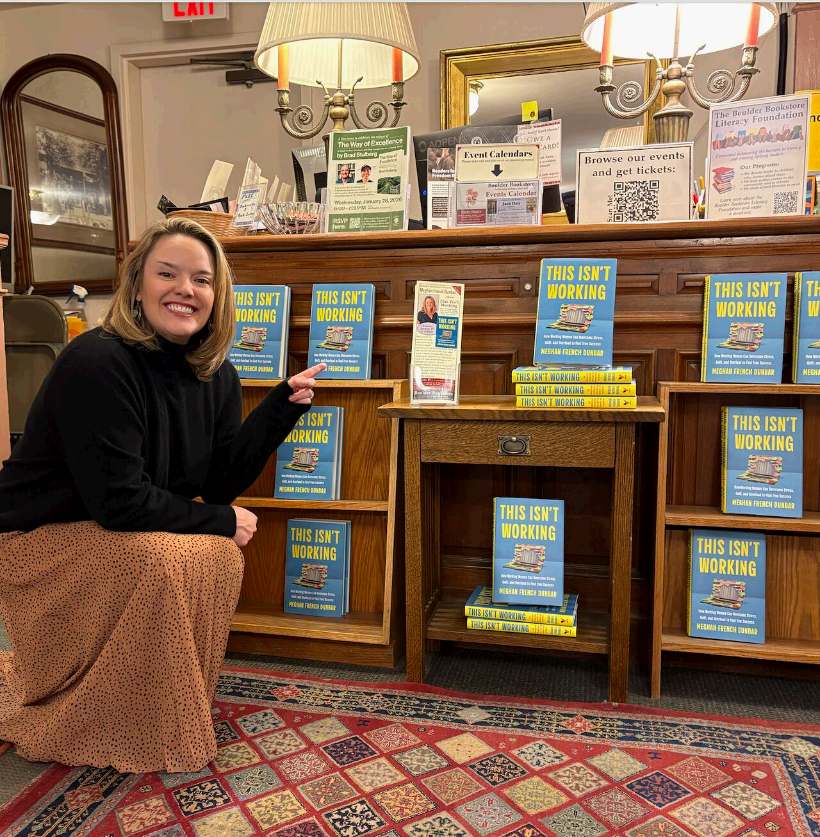
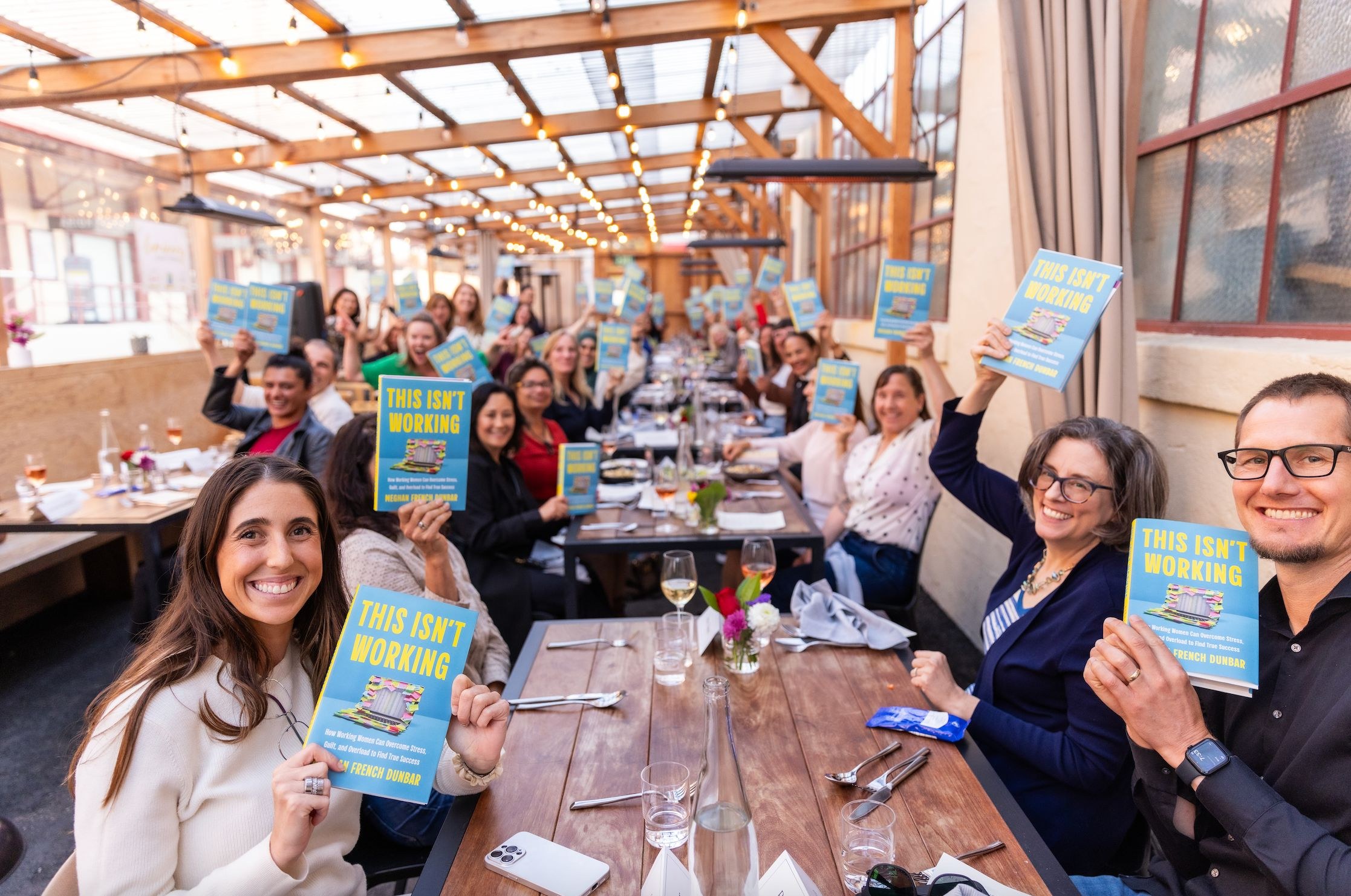
- This Isn't Working by Meghan French Dunbar (Hachette, 2025)
- Nathan Havey's values-identification exercise
- The 2% rule — dial up authenticity incrementally
- Research on authentic leadership + retention + positive emotional response
CONNECT WITH MEGHAN
- Book: This Isn't Working (https://meghanfrenchdunbar.com/book) & available wherever you buy books
- Website: meghanfrenchdunbar.com
- Substack: https://meghanfrenchdunbar.substack.com
---
FULL TRANSCRIPT
[Editor's note: Lightly cleaned for readability. Preserves original voice + delivery.]
Meghan French Dunbar (00:58): Today's episode is a whole do as I say, not as I do situation — because it's inspired by me making a big old mistake based on something I regularly talk about: authentic leadership.
Many months ago, I had a professional consultant come in, audit my online persona, and tell me: "You need to drastically update your personal website. It's not professional enough. Here's a whole bunch of examples of fancy big-name authors you should try to emulate."
I was like — okay, I'll do this. I want to be a big fancy name. So I'm going to DIY it. I'm going to come up with my brand promises and my taglines and my buzzwords, try to design it and put it on the backend, and jam my personal website into exactly the mold I've been told I need to fit.
I have — for the last six months — conservatively gone through 100 versions of my website. Changing out the taglines. They never feel right. I settle on something at night and wake up the next day and I hate it. It's awful. It's garbage.
Last week it finally dawned on me. I had completely abandoned my own authentic viewpoint.
I'm not a marketing person. I'm not a website person. And I felt uncomfortable doing this entire professionalization — instead of looking inward and asking "what would I want to say? What is uniquely mine to say here? What is the authentic version of this for me?" — I 100% just took the old playbook and tried to force myself into it, even though it didn't feel right.
That, in fact, didn't work. Surprising probably nobody.
So — today we're going into authentic leadership. Because it's not just about wasting hours trying to make a website cool. It's about how you show up every day at work — which impacts everyone around you AND your own mental health.
What is authentic leadership? Why does it work? Three mindset shifts to cultivate it. Let's go.
Meghan French Dunbar (~04:00): 2017. I'm invited to speak on an island off the coast of Canada.
I fly to Vancouver. Get on a float plane. Fly to Cortez Island. Middle of effing nowhere. Get off my little float plane onto this adorable island — gorgeous mountains, ocean — at Hollyhock Leadership Institute. I'm there for the Social Venture Institute.
I arrive. I don't know a single soul. Probably 100 people at this conference. We're all outside on a gorgeous lawn under gorgeous trees. I feel like a middle school person at lunch with no one to sit with. Just sitting at my table, looking around, hoping I'll see a friendly face. I don't know what to do with my arms.
Out of nowhere, I hear someone singing Nina Simone's Feeling Good.
I would sing it right now but it would be the worst.
This gorgeous voice — singing about birds flying high and you know how I feel. I look up. This woman walks down the path. Flowy silk dress. Pompadour-esque mohawk hairdo. Big gold earrings. Birkenstocks. She is BELTING out this song.
I'm like — who is this queen? I'm obsessed immediately.
She stops singing. Introduces herself. "I'm Jocelyn McDougall and I will be your host and facilitator for the conference over the next three days."
And a part of me is looking around like — "oh my gosh. This poor woman. Doesn't she know this is a business conference? Look at all of us professional humans out here. Why is she singing? Birkenstocks? Earrings? She's going to get eaten alive because she's so different."
That was the old-playbook, very buttoned-up, insecure version of me having those thoughts.
I watch over the next three days. And I mean it when I say every single human being at that conference fell madly in love with Jocelyn McDougall. She was the best facilitator I had ever seen in my life. She held challenging conversations with grace and levity. There was so much humor in the space. Everyone felt encouraged to be a braver, brighter version of themselves as a result of her.
On the last day, I was so inspired I did what she now describes as "super friending." At lunch, I walked up to her, introduced myself, and said:
"I think we're supposed to be friends for the rest of our lives."
Playing it cool. Nailed it.
She very gracefully did not immediately reject me. Later that year we Skype-called. Later still, I had an idea for a big women's conference and she popped into my head — I called her, invited her to come co-host, she did, and thus began an eight-year lifelong friendship and working partnership. We've done conferences around the country. Workshops. I'm literally leaving next week to do one at Coach and Kate Spade with her.
I was not wrong when I told her we were meant to be best friends for the rest of our lives.
And it all started at Hollyhock, where I watched her show up as her full authentic self.
That, for me, is the embodiment of why authentic leadership works. Why showing up as gorgeous and as large as you want to in your own skin — speaking from your own truth, being yourself — absolutely sets you apart. Jocelyn endeared herself to the entire community and got booked again and again. It became a huge professional opportunity for her because she just showed up as herself.
Meghan French Dunbar (10:07): Let's kick this off by talking about what authentic leadership actually is.
I used to have a shallow version of it in my head — someone brave enough to wear whatever they want and say whatever they want. That can be a PART of it. But authentic leadership really means leading from a place that is true to who you are — as your highest and best self. Going down into your deeper values, your deeper truth, your inner wisdom. Challenging the status quo. Having emotional regulation. There are lots of components that pull together to make someone a genuinely authentic leader.
The thing I didn't understand: this can be honed over time. It can be stepped into gradually.
When I talked to Jocelyn about her own journey — you'd meet her now and imagine she came out of the womb like this. She said no. In her early twenties, she wore kitten heels and a power suit. She showed up as a very polished version of herself, conforming so she'd be accepted.
She noticed later in her twenties and early thirties: the more she dialed up her authentic leadership — spoke her truth, showed up as truer to herself — the more positive response she got. It was setting her apart. So she just took the dial and kept gradually turning it up.
Good point for me to understand: this doesn't have to be an overnight flip. Even eight years in, I'm still contending with it.
The other critical piece — I'm not shaming anyone who cannot show up in their full authentic leadership right now. Especially if you're at a workplace where you don't feel safe. Where you don't feel included. Where your job security might be on the line. Where a manager doesn't accept you for who you are. This is tied to your livelihood, your financial stability, your sense of self-worth. If you're feeling "I can't do this," that fear is very real and 100% valid.
One leader I talked to called it the 2% rule — try to get 2% better at something every week or every month. Gradual progression. Not a switch.
Not all workspaces are safe. That is heavy. Acknowledge it. And if you can't step into your full authentic leadership right now, there is no shame. There is zero shame.
Meghan French Dunbar (14:23): Who is YOUR Jocelyn? Have you ever been around someone in a professional setting who shows up wholly authentically — no matter the room they're in — who doesn't deviate, doesn't change, isn't wearing a mask? How do you feel when you're around those people? What do they make you feel about yourself?
For me, Jocelyn inspired me to lean into my own authentic leadership. It became more of the norm than the exception in the vast majority of spaces I show up in now. Still working on it — because it's really effing hard. Especially for women.
Here's why. Going back to episode 2: business as a social construct has been around for thousands of years. Only in the last 50 has women started entering the workforce in earnest. Meaning men have shaped the business world for nearly the entire time it's existed. When women started entering in the 1970s, we were a minority population entering a dominant culture — white, straight, male, able-bodied. That's still the dominant culture in business.
When you have a minority identity entering a dominant culture — like immigrants — you try to adopt the norms in hopes of being accepted. The same is true for women and other people with marginalized identities. We feel we have to dress more masculinely. Have masculine traits coming out of the wazoo. Can't show emotion. Anti-femininity everywhere.
This was especially true for the older generations — women now in their 60s and 70s who were the first in their offices, under microscopes, forced to over-assimilate.
We are still doing this today. My first CEO conference in 2016 — 80% male CEOs. I ran to Marshall's the day before to get a freaking power suit. Found one in the JUNIOR SECTION. Chintzy — I can still feel the fabric — like a sausage casing with peplum. Wore high heels even though I've had three knee surgeries. In my brain: "if I have any chance of succeeding here, I have to show up like that. Not like me."
I have to become someone else to be included.
Meghan French Dunbar (~19:00): Here's the really hard part. Belonging is one of our core human needs.
From The Myth of Normal, Gabor and Daniel Maté describe two inherent human needs:
Belonging. Our hunter-gatherer survival instinct — don't get kicked out of the tribe or you'll die. We need to feel included.
Authenticity. Expressing our individuality. Being our real self.
When you head into a workplace with established cultural norms, you feel like you have to suck it up and become the picture of what everyone else is doing so you can belong. Which is the core need. Also how you feel you'll succeed. Stakes are high — your livelihood, career, success.
So you convince yourself you have to be a certain way.
But your other core human need is to be authentic. They're in direct contradiction. Butting heads constantly. Damned if you do. Damned if you don't. One of them is going to have to suffer — and we almost always err toward belonging.
So we suppress our authenticity.
Feeling out of alignment with your values is one of the six key predictors of burnout. It stresses us to constantly wear a mask. And the Matés also found: one of the core predictors of disease on Earth is excessive concern about social acceptability. Which is what women are constantly navigating.
And here's the more effed-up part: so many times, even after we've bent and molded and changed ourselves to fit in — we're still not accepted. The good old boys club still isn't opening up. And in the cases where you ARE included, they're not actually including the real you. They're including a faux version of you that isn't a real entity.
Meghan French Dunbar (~22:00): The answer: authentic leadership. Much easier said than done. I've studied this for years, written about it, and I STILL got sucked into the comparison vortex six months ago and popped out having assimilated right on in.
The practice is: begin again. Be compassionate. Re-step into authenticity as soon as you realize you've fallen off.
The research keeps showing authentic leadership is more effective. Authentic leaders inspire more positive emotional response in the people around them. Those positive emotions inspire creativity and inspire people to be a better version of themselves. Authentic leadership also reinforces workers' emotional connection to their organization — improving trust, loyalty, retention.
And the impact on YOURSELF is incredible. Think about the people in your life you get to be your entire full self with — friends, family. Those are the moments you light up. Feel aligned. Feel accepted. That doesn't have to be relegated to a few people on an occasional trip. It can be an everyday occurrence — at work — where you're accepted for your full self.
Three mindset shifts.
Meghan French Dunbar (~24:00): Mindset shift 1: Look to your values, not to others.
The old playbook tells us to look to others to cue us in on how to behave. Take social cues. Norms and behaviors of people around us tell us how to show up.
The new playbook: look to YOUR VALUES to inform how you show up.
Used to be, if you'd asked me "what are your values?" I'd have said "family?" I didn't really know them. Then my friend Nathan Havey walked us through a values exercise for my company — and told us to take it home and do our personal values too.
I went home. Identified my values. I still keep mine right here by my desk, inside a beautiful little flower my son Jack drew for me: Impact. Exploration. Love. Joy. Authenticity. Five values. I recommend five for everyone.
Here's a visual I use to explain why this matters. Each of us is like one of those flailing windsock people outside a used-car lot — going all over the place. The wind is all the pressure and social expectations and challenges of life constantly blowing us around.
Your values are the sandbags tied to the bottom of your windsock. They hold you to the ground. They keep the prevailing winds — which are often fierce — from whipping you around to the point where you can't function.
Here's an example. I was at a conference a couple years ago. Sat down at a table where there were six men — all in their 60s and 70s, all knew each other, all on a board together. Insecurities all over the place. I almost picked up my plate and left. I was starting to think — I'll just eat my veggie burger in silence for an hour.
Deep breath. Reviewed my values. What could my values inspire here? Thinking about joy and love and curiosity — I lobbed a question in.
"Could each of you tell me about a moment in the last year that was just your most joyful moment?"
A few seconds later, one of them answered — his daughter's wedding. Another jumped in about a trip with his wife. All of a sudden, all of them were sharing the most beautiful and meaningful moments of the last year of their lives. It cracked us all open. Instead of being silent for an hour, I inspired us all to have a really gorgeous conversation — and connected with those men in a different way.
Where do you keep your values? Kathy Bullhouse (CEO of Charter Next Generation) keeps hers on her phone. My friend Ayla Schlosser keeps hers on a Friday-check-in spreadsheet. Spreadsheet, phone, sticky note — however works for you. Come back to them regularly.
One good way to think about your values: how do you want people to talk about you when you're not in the room? When you leave this earth, how do you hope people remember you? What character traits are non-negotiable for you?
Meghan French Dunbar (~32:00): Mindset shift 2: Honor your truth regardless of the room.
The old playbook tells us our opinion, perspective, and truth vary in value based on who's in the room. There are rooms where you feel open to speak your truth because you have the title. There are rooms where you withhold your truth because there are people of "higher status" and you feel less-than.
The new playbook: honor your truth regardless of the room.
This is hard, especially for women trained to be docile, sweet, not make people uncomfortable, be quiet. Speaking your truth and believing it's as valuable as everyone else's — regardless of their title — is a key element of authentic leadership.
Full pep talk, buckle up: the odds you exist as a human being are staggering. Of all the planets. Of all the conditions that had to be right for life. Of all the hundreds of thousands of years humans have existed. Of all the ancestors who survived disease and war so that eventually YOU could be born in this moment in time.
You are the only you that will ever exist. No other human has your specific mix of experiences, education, generational trauma, generational wisdom. You have a unique perspective in your brain that no other human alive has.
So when I invite you to offer your truth, it's from that inner knowing: what you have to say is valuable regardless of your title, age, or any identifier.
Alfa Demmellash — co-founder of Rising Tide Capital, one of the most authentic leaders I've ever known — offered me a nugget of gold. Before she walks into big meetings, or if she's in an uncomfortable room, she asks herself one question:
"What is uniquely mine to say right now?"
Not what other people want her to say. What is UNIQUELY hers to say.
Try it before your next hard room.
I had a big gig last year in New York. I live in Boulder — I'm not a fashion person, I live in athleisure. We were going into a fashion company. Night before, I was in Jocelyn's hotel room trying on outfits, freaking out. She takes me and says: "Meg. Deep breath. Do we change who we are based on the room we're walking into?"
I was like — "yes. No. No, we don't, Jocelyn. We don't."
So I didn't.
Meghan French Dunbar (~36:00): Mindset shift 3: Question the norm.
The old playbook: don't question the status quo. People came before us and set it there for a reason. To succeed, play by the rule book. Never question.
The new playbook: regularly question the status quo — especially when it contradicts your values or your truth.
Rather than talk this one through — let me give you one of my favorite CEOs in the country as the example. Melanie Dulbecco — CEO of Torani Syrups. For 34 years at the helm, they have grown 20%+ year over year. Staggering. So much of that comes down to the fact that she does not accept the status quo as the way she's supposed to do things. She takes the given playbook into consideration and then questions it from a place of curiosity: "Is this the right way to do it?"
She's one of the most authentic leaders I've ever met. And the proof is in the pudding. Or the syrup. Sorry, bad joke. It's a more effective way to lead.
Meghan French Dunbar (~39:00): Recap.
Values. Look to your values, not to others, to inform your behavior.
Truth. Honor your truth, remember it's a gift, value it as much as anyone else's — regardless of who's in the room.
Norm. Regularly question the status quo. Stay curious.
These three practices will help you on your journey toward becoming a more authentic leader. Which is better for you, better for the people around you, and better for the business community at large. The more of us who step into our wholeness and bring our entire selves to the workplace, the more we inspire others to do the same. The more we do this, the better the workplace becomes.
That's all for today. Thanks so much.