The Perfectionism Trap | Unbehaved
Has perfectionism ever kept you from applying for the job, launching the thing, saying the thought out loud, or making the leap you know you want to make? This episode is going to change how you think about failure.
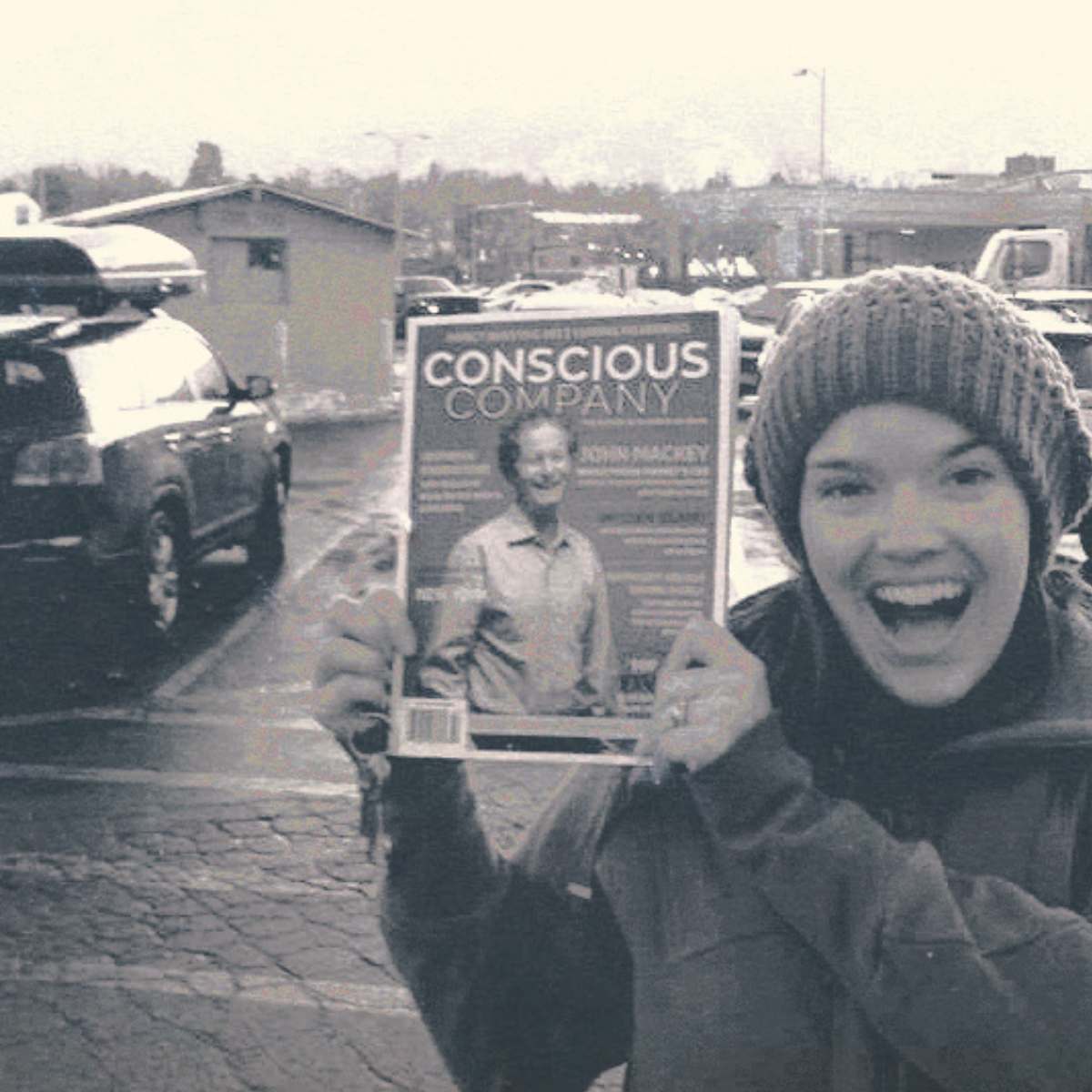
Unbehaved* host Meghan French Dunbar opens with the story of her failed Kickstarter campaign to launch Conscious Company Magazine — how she watched a public countdown clock tick to zero on a very public failure, cried in her co-founder's living room, went home to sob with her husband, then dusted herself off, launched a second crowdfunding campaign, and ended up in every Whole Foods in the country by January 1st.
In this episode, she breaks down why perfectionism is a trap that specifically holds high-achieving women back (spoiler: it's not a personal flaw — it's socialized) and lays out three concrete mindset shifts + practices for putting yourself out there anyway. Including Erin Wade's story of walking away from a corporate law career to open Homeroom Restaurant, Carol Dweck's research on performance goals vs. learning goals, and Meghan's own coined framework — EFWO: "Everything Fcking Works Out."
* [Editor's note: This episode originally aired under the show's former name, "Better Than This." The show is now "Unbehaved."]
WHAT WE COVER
- The failed Kickstarter that started everything: watching a $50K crowdfunding campaign tick down to zero in front of family, friends, and the whole internet — and what happened next
- Why high-achieving women disproportionately struggle with perfectionism: socialization + performance pressure + being held to higher standards at work
- The research: women have higher rates of perfectionism, lower self-esteem, and higher stress about performance
- The famous stat you've heard: women don't apply for roles unless they're 100% qualified; men apply at 50%
- How perfectionism keeps you playing small: the friend who wouldn't launch her business idea because "I don't have any risk tolerance" — and the mediocre life that decision built
- Erin Wade's story: getting fired from a corporate law firm, opening Homeroom Restaurant, and the friend who asked her the question that unlocked everything
- Mindset shift 1: Normalize the fear + play it out to worst-case scenario. Neuroscience shows your brain can't tell the difference between social threats and physical threats. Once you know that, you can start noticing when it's your adorable brain trying to "protect" you from something that's not actually dangerous.
- Mindset shift 2: Reframe performance goals as learning goals. Carol Dweck's research on growth mindset — and how one friend put "learning goal" on a Post-it behind her computer and eliminated her MBA-accounting stress overnight
- Mindset shift 3: EFWO — Everything Fcking Works Out. Meghan's coined framework. Every apparent failure is actually a stepping stone. Jane Wurwand's dot-to-dot analogy for why.
- Meghan's book journey as an EFWO case study: the fired-from-a-job moment that produced the magazine idea, the small-publisher rejection that led to the Hachette deal
- The question to sit with: "If you removed the fear of failure from your life, what would you pursue?"
PULL QUOTES
"It's not that I've completely overcome my perfectionism. It's that I have a lot of practice with these things — and I have some tools that have helped me."
"Being a perfectionist and having this incessant fear of failure often gives us the illusion of safety — but we're actually just playing small."
"Every single one of the women I know who are thriving, running businesses they love, writing books, out public speaking, living the life that's setting their soul on fire — there is not one of them who didn't have to put herself out there and risk failing multiple times."
"Well, Erin — what would you do if that happened?"
"Well, I guess I'd just be a lawyer again."
"So then why would you literally settle for what your worst-case scenario is if you failed as an entrepreneur? Why would you immediately go to the worst-case scenario?"
— Erin Wade on the conversation that unlocked her decision to walk away from law
"It's literally my adorable little brain trying to protect me."
— on the neuroscience of fear
"Especially if what you find is 'I would be embarrassed' — that's not a good enough reason not to do something."
"Whatever is meant for me won't pass me by."
"In the growth mindset, failure can be a painful experience, but it doesn't define you. It's a problem to be faced, dealt with, and learned from. The other thing exceptional people seem to have is a special talent for converting life's setbacks into future successes."
— Carol Dweck
"Everything is happening for you, not to you."
— the foundation of EFWO
"You can't see what that dot-to-dot puzzle is until you start filling in the space between the dots. The dots were all there all the time. But you can't see what the hell it is until you start making the journey."
— Jane Wurwand, co-founder of Dermalogica
CHAPTERS
- 00:00 — Cold open: what this show is for
- 00:58 — The conversation with Maddie that sparked the episode
- 02:00 — The Kickstarter story: $50K public goal + a countdown clock ticking to zero
- 06:00 — Dusting off, launching an Indiegogo, and ending up in every Whole Foods in the country
- 08:00 — Why so many high-achieving women struggle with perfectionism
- 10:11 — The research: higher perfectionism, lower self-esteem, more stress about performance
- 12:30 — The friend who wouldn't launch her business because "I don't have any risk tolerance"
- 14:00 — Why the "illusion of safety" that perfectionism gives you is actually shrinking your life
- 15:30 — Erin Wade's story: law firm → getting fired → opening Homeroom Restaurant
- 19:00 — Mindset shift 1: Normalizing fear + playing it out to worst-case scenario
- 21:24 — Erin Wade on the friend who asked her "What would you do if that happened?"
- 24:53 — Mindset shift 2: Performance goals vs. learning goals (Carol Dweck)
- 26:30 — The friend Katie who put "learning goal" on a Post-it and eliminated her MBA-accounting stress
- 30:00 — Meghan's book journey as a learning-goal case study
- 34:13 — Mindset shift 3: EFWO — Everything Fcking Works Out
- 35:11 — Jane Wurwand's dot-to-dot analogy for how life unfolds
- 36:04 — The night she was fired that gave her the idea for the magazine
- 38:00 — The Conscious Company buy-back that fell through — and cleared the space for the book
- 40:00 — The small-publisher rejection that led to the Hachette deal
- 41:30 — The closing question: "If you removed the fear of failure from your life, what would you pursue?"
RESOURCES MENTIONED
People + companies referenced:
- Maddie — Meghan's 24-year-old mentee whose question sparked the episode
- Erin Wade — founder of Homeroom Restaurant in Oakland, CA; former corporate lawyer
- Carol Dweck — Stanford psychologist and pioneer of growth-mindset research; performance vs. learning goals
- Katie — Meghan's friend, oncology nurse navigator, MBA student; the accounting-class reframe
- Jane Wurwand — co-founder of Dermalogica; source of the dot-to-dot analogy
- Eileen Fisher — referenced as a "put yourself out there, fail multiple times" example
- Kickstarter, Indiegogo, Conscious Company Magazine, Hachette Book Group — Meghan's own case studies
Books + frameworks referenced:
- Mindset by Carol Dweck (implied)
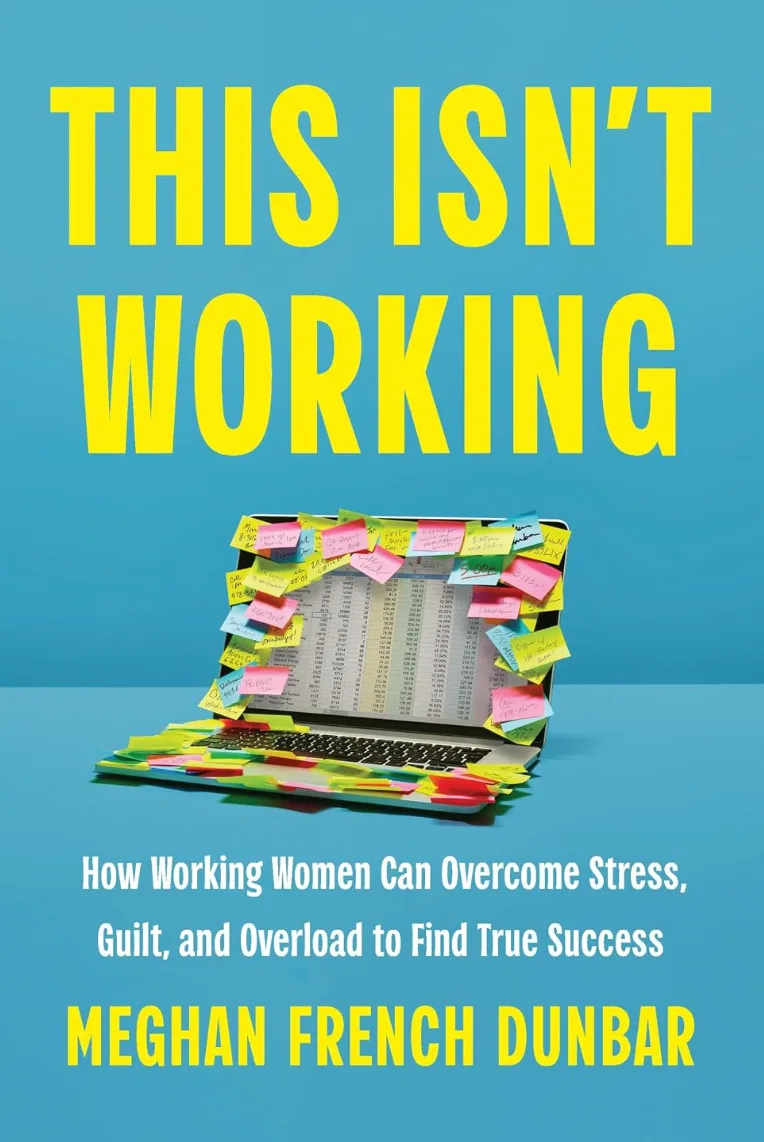
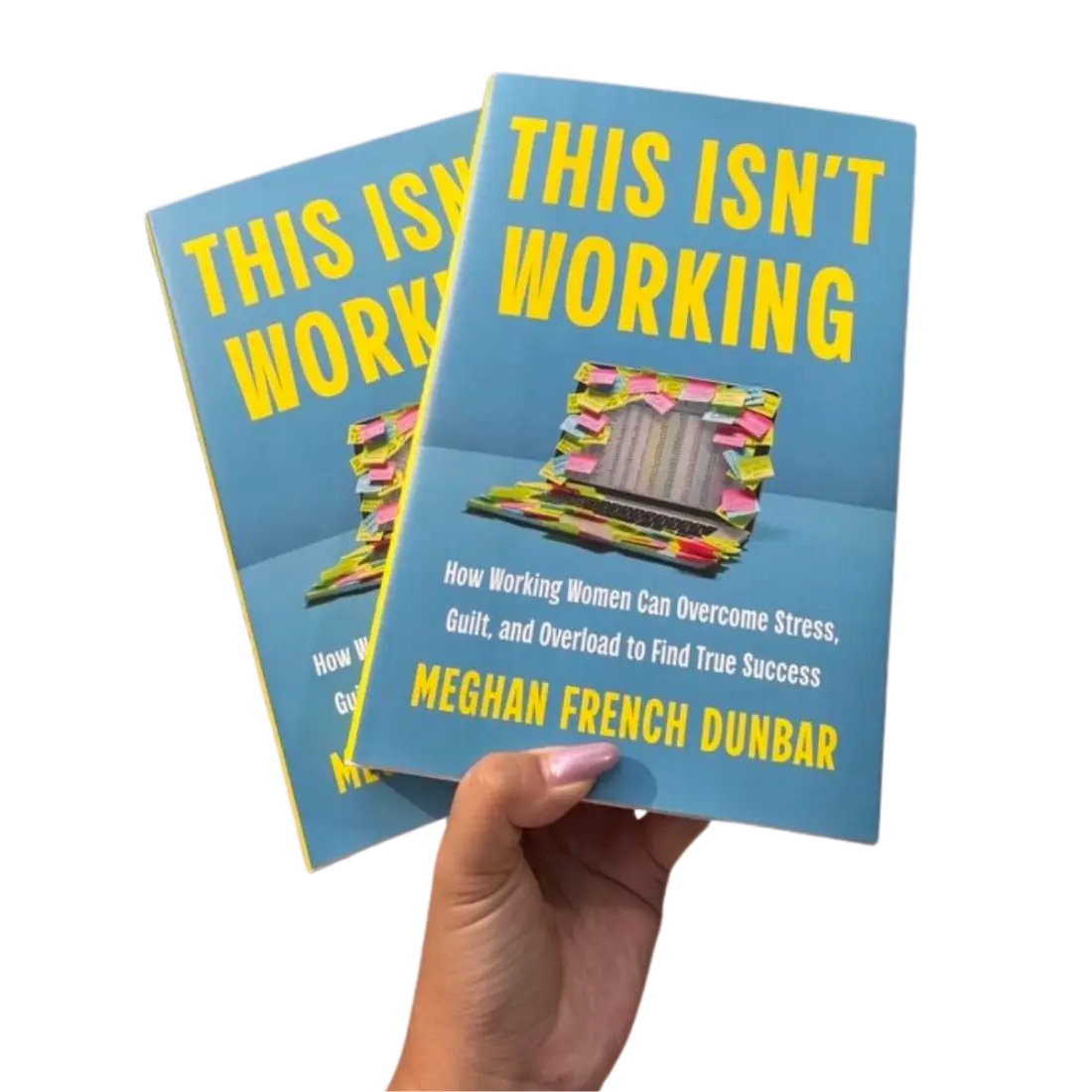
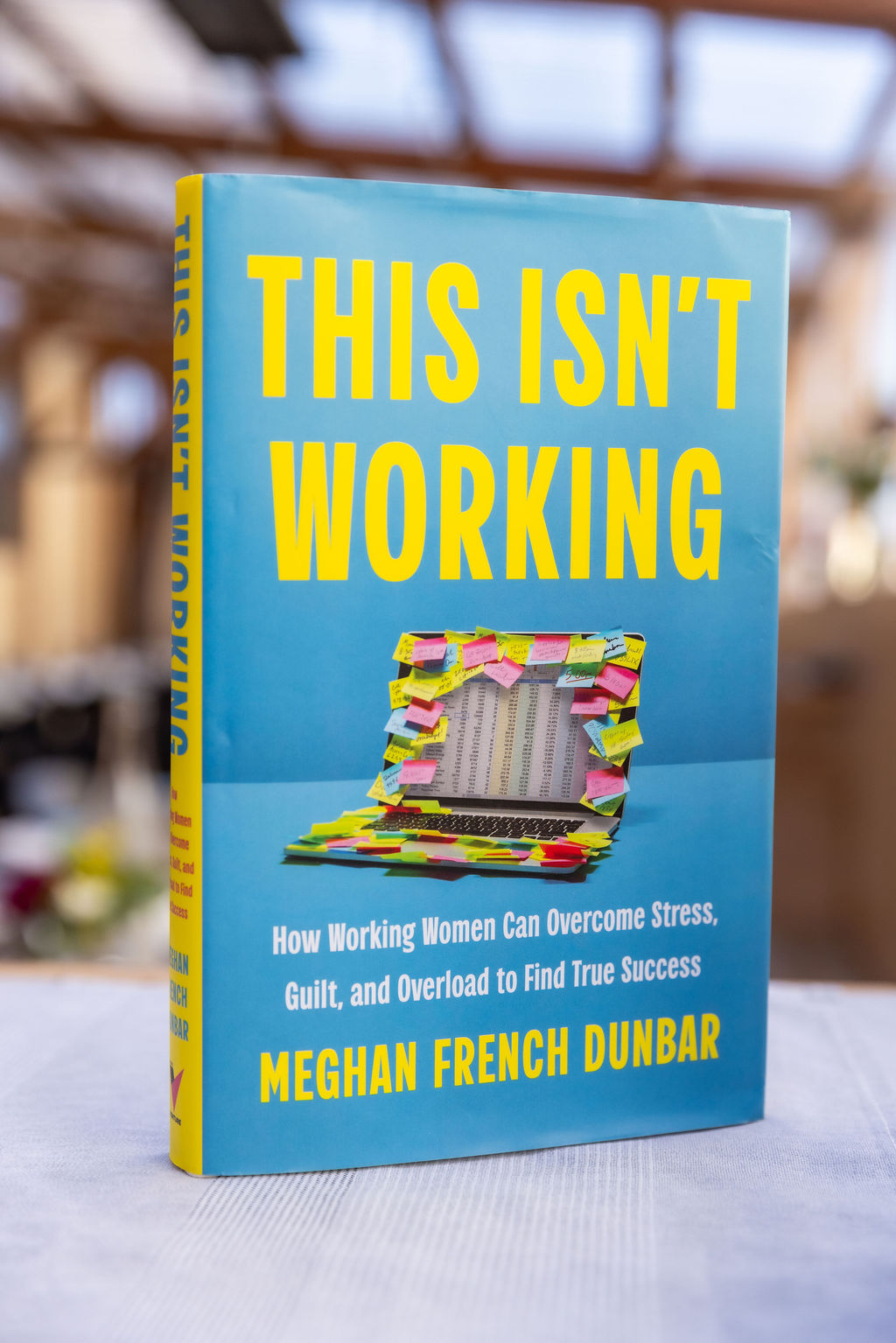
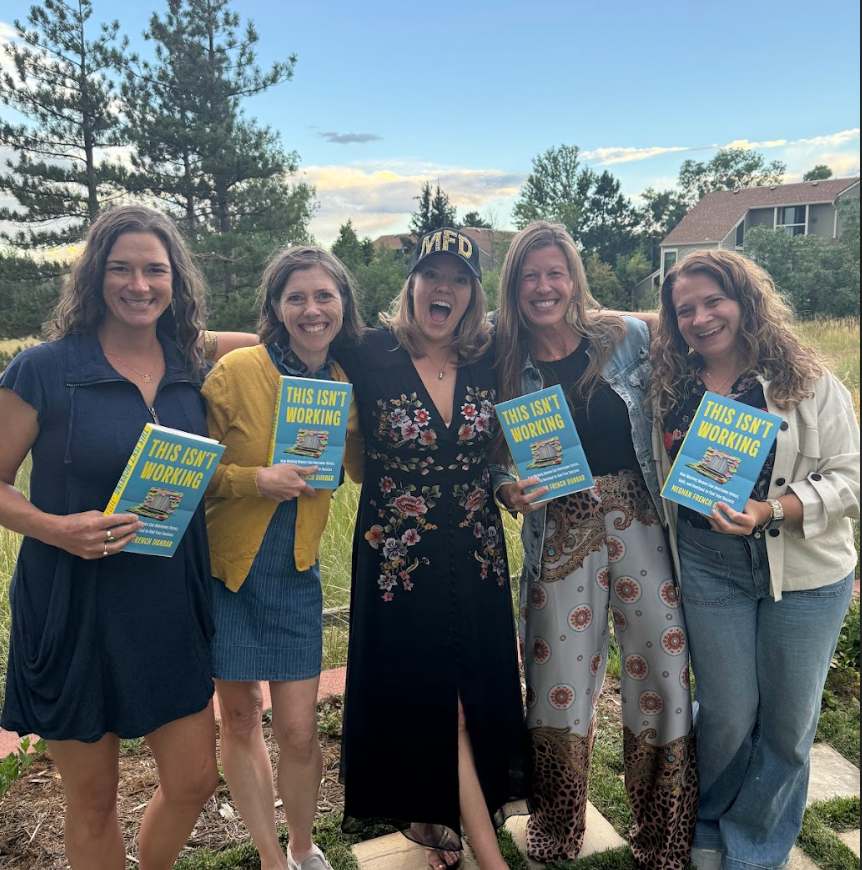
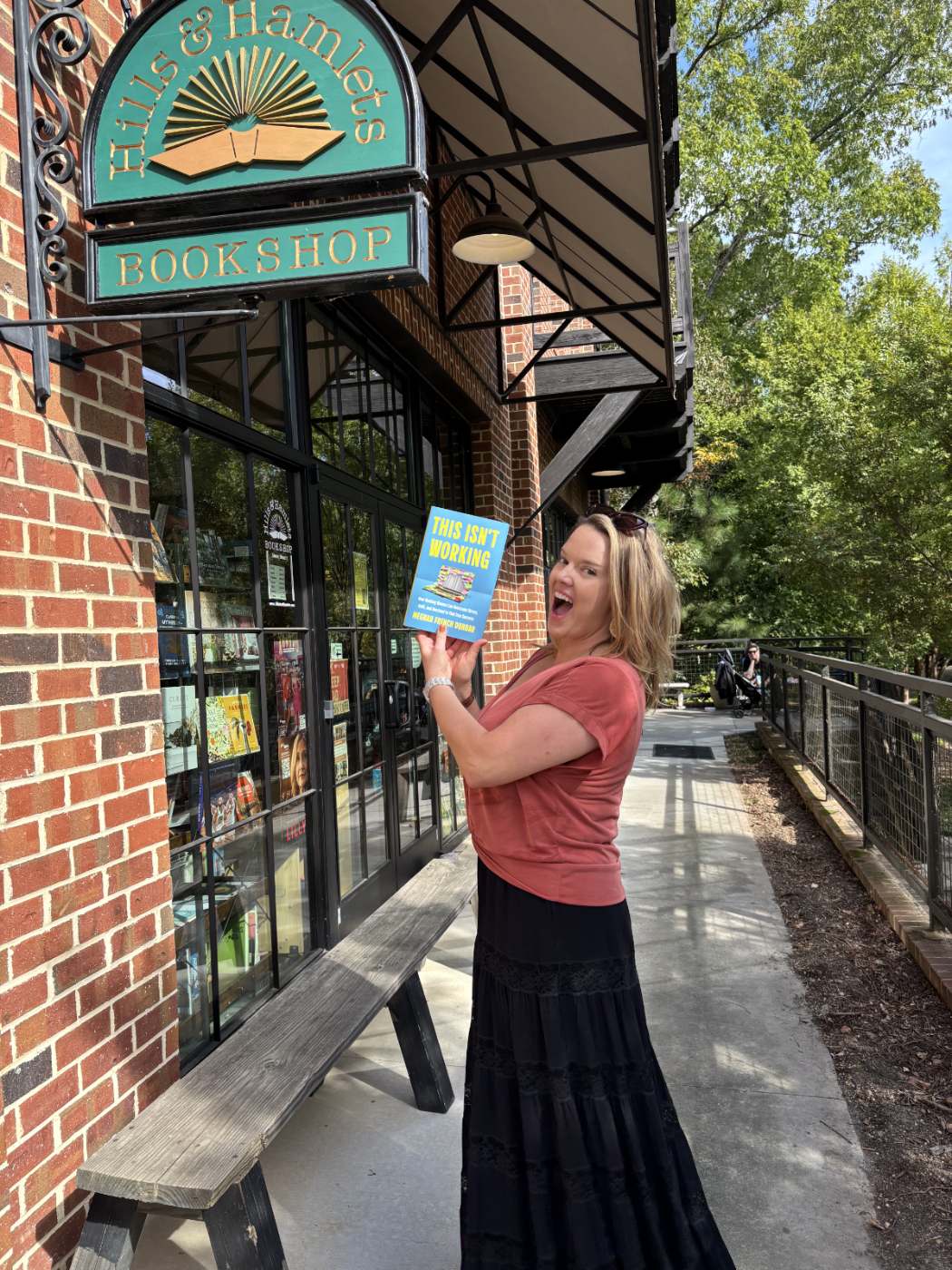
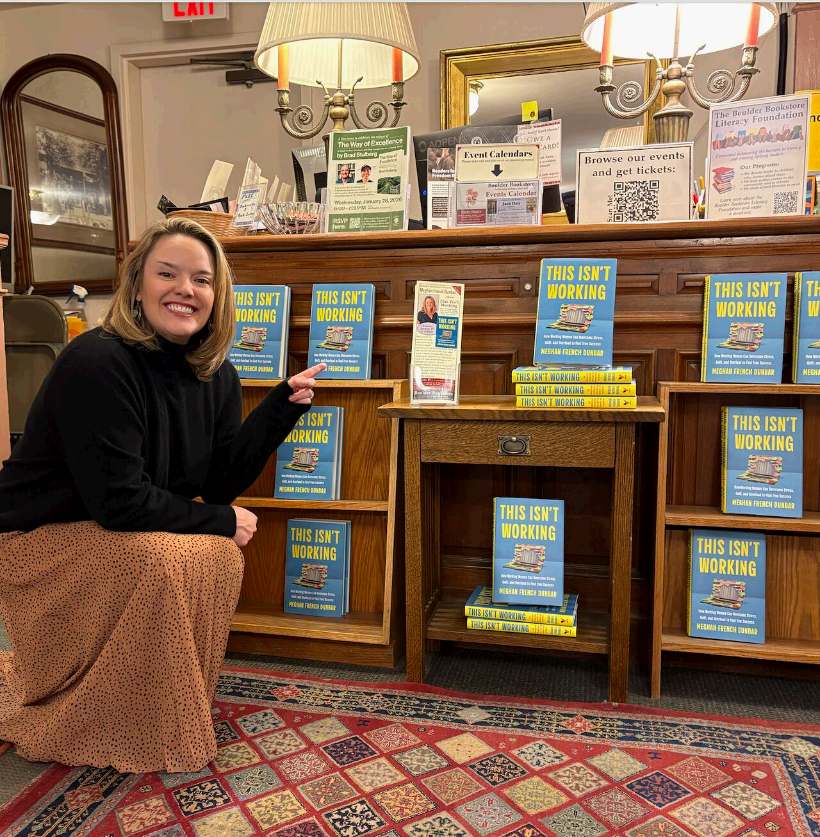
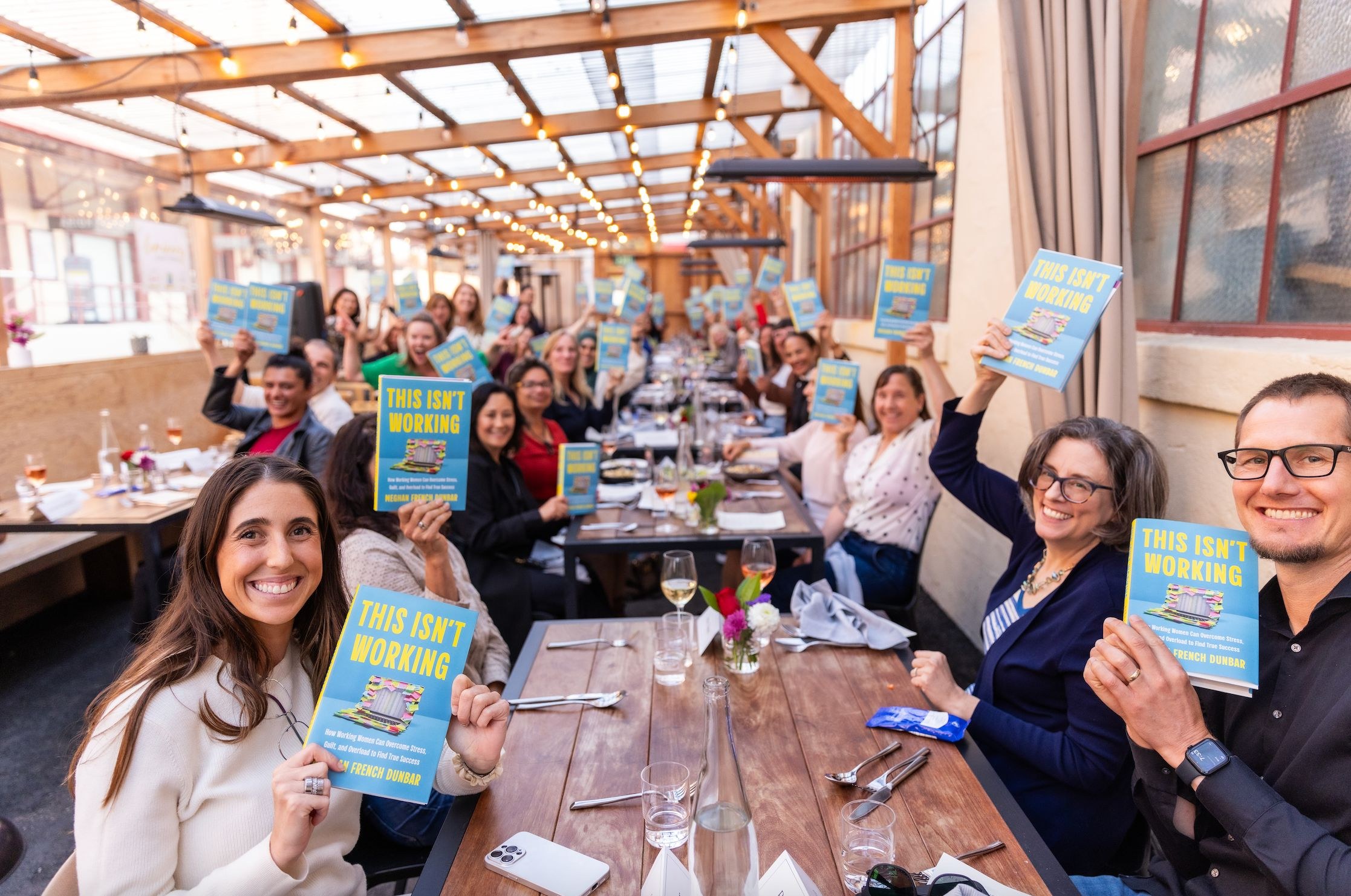
- This Isn't Working by Meghan French Dunbar (Hachette, 2025)
- EFWO — Meghan's own coined framework: Everything Fcking Works Out
- Growth mindset vs. fixed mindset
- Performance goals vs. learning/mastery goals
- Neuroscience of social vs. physical threats
CONNECT WITH MEGHAN
- Book: This Isn't Working: https://meghanfrenchdunbar.com/book — available wherever you buy books
- Website: meghanfrenchdunbar.com
- Substack: https://meghanfrenchdunbar.substack.com
FULL TRANSCRIPT
[Editor's note: Lightly cleaned for readability. Preserves original voice + delivery.]
Meghan French Dunbar (00:58): Today's episode is inspired by a recent conversation I had with my (quote) "mentee." I put "mentee" in quotation marks because she's really just someone I adore who asked me to be her mentor and I was like "I guess we can do that, but really I just adore you and we bring value to each other, so let's meet on a regular basis in a mutual appreciation society where we talk about anything we want to."
One of her questions recently: how did I overcome my fear of failure? Especially doing things like launching a magazine and public speaking — all the things I've put out in a more public-facing way. How did I overcome crippling perfectionism and the need to 100% guarantee success at everything I did?
I was like: "Oh, Maddie. I wish I could say that came easy. It did not. Do I have a story for you."
After that conversation, I thought — this is a great podcast topic. It impacts so many people I talk to. A perfectionist personality that leads to crippling fear of failure, making it so people don't pursue what they actually want.
I grew up as a high achiever. From when I was like eight, I'm winning awards, wanting to be the best in class, captain of the soccer team and basketball team, all of it. As I graduate college, this ambitious personality leads me to a place where I am pretty terrified of failure. I am a perfectionist. Everything I do, I need to be the best at. I need to prove to everyone that everything I touch turns to gold.
It made me essentially terrified of taking risks my entire twenties. I never did anything new because I hated learning something for the first time and not being perfect at it immediately.
This changed at the end of my twenties in a number of ways. One of the key ones: when my co-founder and I had the idea to launch a business magazine about conscious and sustainable business, we had to launch a crowdfunding campaign to get it off the ground.
We literally set up in my backyard. Made our little video. Explained why the world needed this incredible business magazine to celebrate leaders of businesses actually making the world a better place. We put it on Kickstarter. We wanted to raise $50,000 in 30 days.
With Kickstarter at the time, if we didn't raise the full $50,000, we would lose all the money we had raised.
Talk about stress and pressure.
And just to make it more painful — this was a very public thing. I had to send it to every human being I've ever known in the history of my life to ask for money. Social media. Bringing attention to the campaign.
I was terrified. This was one of the bigger risks I'd taken in my life. It was a reputational risk — a social judgment risk — people would see me fail if we didn't accomplish this.
As the 30 days progressed: $10,000. $30,000. More and more coming in. Doing cute random acts of kindness in the community to bring attention. We had about $42,000 on the last day.
Of course, I'm like — there's going to be a Hollywood script here. Some random aunt I've never met is going to throw in the last $8,000 at the final minute. Hail Mary. Over the finish line. Everything perfect.
Final five minutes. No one else has thrown in the money. Last two minutes of the campaign. I'm sitting with my co-founder at her house. It starts counting down by the second — like a bomb about to go off. Five, four, three, two, one — the screen flashes. I don't even remember what it said. But it might as well have said: YOU FAILED. YOU FAILED VERY PUBLICLY AND YOU'RE A TERRIBLE HUMAN BEING.
I was mortified. Family calling me, checking if I was okay. Sobbing. Went home. My husband. My dad came up — cute — brought me a box of little goodies to help me overcome my failure.
And of course, I was going to move on and get a real job now, right?
That is not what happened.
I decided to dust myself off. A few weeks later, my co-founder and I launched another crowdfunding campaign. We went back to the same people who'd backed the Kickstarter. Did it on Indiegogo — chose the option of "we're just going to raise whatever money we get, we'll take it." We raised about $20,000 — just enough to hire a designer, cover the print bill, get all the distribution.
On January 1st, 2015 — because of that crowdfunding campaign — we got picked up by every Whole Foods in the country.
I told Maddie: as my story shows, most of the things we want to do in our life are going to require us to put ourselves out there and risk "failing." It's not that I've completely overcome my perfectionism. It's that I have a lot of practice with these things — and I have some tools that have helped me.
That's what we're going to talk about today. The perfectionism trap. How do we overcome our fear of failure? Three concrete strategies and mindset shifts that have helped many of the people I know pursue extraordinary things and take huge risks.
Meghan French Dunbar (~08:00): Why so many high-achieving women struggle with perfectionism.
This is a generalization — not all women — but many. Growing up in societies with a patriarchal lens, girls are socialized to seek perfection in all things. Unattainable physical perfection. Social perfection — where we don't want to make mistakes or churn the water, we need to make everyone around us comfortable. There's a socialized perfectionism in young girls as we come of age.
And then when you're high-achieving, you also don't want to fail at anything you try. You want to prove you're the best. Extrinsic motivation of rewards and grades and everything we've been indoctrinated with — we can't make any mistakes.
For women specifically in the business world: we're held to higher standards. Our work is doubted. We're ignored, overlooked, judged more harshly. We're kind of proven incompetent until proven otherwise. So we have to avoid mistakes at all costs. Overperform. Go the extra mile. We tie our worth to our performance and our ability to never make a mistake.
Often, ascending the ladder, you're one of the first women who's ever been in this role. You feel this additional pressure that if you make a mistake, it reflects poorly on women everywhere. Our fear of any misstep becomes a form of self-protection. At some point, we just can't accept anything less than perfect.
Meghan French Dunbar (10:11): How perfectionism holds you back.
One research study found that women have higher rates of perfectionism, lower rates of self-esteem, and higher levels of stress about their performance. Surprising nobody.
This is why we hear stats like: women don't apply for roles unless they're 100% qualified. Men apply at 50%. It also shows up as women holding back their voice — the "I don't know if this makes sense, but..." qualifiers that diminish our contributions because we're not 100% confident they're perfect.
A lot of what I'm cultivating as I get older is the ability to have self-compassion. I see that fear and understand why I'm feeling it — a lot of this was conditioned in me. What would it look like to step into that opportunity or say the thing without it being 100% perfect? I've been experimenting with that lately. Even on this podcast — not every single episode is going to be perfect. And that has to be okay.
Beyond not applying for jobs or not speaking up in meetings, persistent fear of failure often holds us back from what we actually want. From taking the risk that could be the difference between a mediocre existence and the existence we want to have.
A friend of mine — we were talking a few years ago. She lives in a small community. She had this business idea. Not a passing thought — she'd detailed the value proposition, the community need, all of it. I was like: "Damn, this seems like something you're really passionate about!" She said: "I really am. I don't know." I asked what was holding her back. She said:
"Just risk intolerance."
I said — I've been there. Let me tell you. She said: "No, I don't have any risk tolerance. I can't do this."
She had already talked herself out of pursuing the thing she actually wants to do. And continues to be at a job she doesn't love as a result.
To pursue the things that will actually make you happy or help you flourish, you have to make a change. Whether it's quitting, launching a business, starting a side gig, going back to school, switching industries. At some point we get an internal story that we're too old to put ourselves out there. The more comfortable we get with staying in the comfort zone, the more we relegate ourselves to a mediocre job we actively dislike.
Being a perfectionist and having this incessant fear of failure often gives us the illusion of safety — but we're actually just playing small.
Eileen Fisher. Jane Wurwand of Dermalogica. Every single one of the women I know who are thriving, running businesses they love, writing books, out public speaking, living the life that's setting their soul on fire — there is not one of them who didn't have to put herself out there and risk failing multiple times.
Becoming comfortable with failure is a key tool for flourishing.
Erin Wade (~15:30): [Erin, on leaving corporate law to open Homeroom Restaurant] I got a job working for a large corporate firm making a shit-load of money, defending America's largest companies from lawsuits. I really hated it. I was miserable. Your time is measured by the minute. It's billed to the client every six minutes. Your success is defined not so much by the outcome for the client as much as how much you bill. Really demoralizing. It felt like being on a hamster wheel to nowhere.
Not surprisingly, I was not great at it. Every time a partner asked me to work late or stay on a weekend, I was like — hell no. Last person to raise my hand. At some point, they were like: "This is a recession. We could hire anyone to be making a lot of money." I got let go.
Real awakening. I'd always been a big overachiever. I'd never failed so spectacularly. I was fired literally because I didn't care. It's a bad feeling to get fired.
I thought about where I wanted to go. I'd never let go of that love of restaurants. I honestly thought I'd just be a lawyer for a decade, make enough money, and open one one day. I was like — what am I doing? I don't have kids. I don't have a house. I don't have anything to lose. Why not open a restaurant that I had dreamed of opening?
Even though I went into business out of a love of food, the thing I actually fell in love with was business itself. A lot of the drive to do good in the world that led me to become an attorney — I felt I could do so much more of that in business than I ever could as a lawyer. By creating the company you want to create, you create the world you want to create. It's a little microcosm of your values. I found tremendous meaning and joy in that.
Meghan French Dunbar (17:42): If Erin had let her fear of failure stand in the way, she'd probably still be toiling as a partner in some corporate law firm with the golden handcuffs on. Fairly miserable.
This is why it's so critical to overcome the incessant need to be perfect. Let's get into three specific mindset shifts and practices for working yourself beyond risk aversion.
Meghan French Dunbar (19:00): Mindset shift 1: Normalize fear + play it out to worst-case scenario.
Neuroscience continues to tell us that our brains perceive social threats and physical threats very similarly. Our brains can't really tell the difference between the fear of being socially rejected or failing publicly (like my crowdfunding campaign) and, say, seeing a car careening at us in a crosswalk. We experience that fear in our body the same way.
Once I understood this, it helped me realize that when I feel fear around failure — it's not a personal failing or a weakness. It's literally my adorable little brain trying to protect me.
Understand the neurological response. Say: this isn't actually scary. This isn't a physical threat. My brain just can't distinguish between the two. Feel the fear, and once you realize "okay, it's just trying to protect me — but it's not a real thing right now" — you can release it. Normalize it as just something that happens.
One tool that helps: play your fear out all the way.
Erin Wade (21:24): [Erin, on the friend who asked the question] I had a really helpful conversation with a friend when I was reflecting on whether to keep working as an attorney or open this restaurant. I was really afraid at the time of losing all my savings and failing.
She was like: "Well, Erin — what would you do if that happened?"
I said: "Well, I guess I'd just be a lawyer again."
She said: "So then why would you literally settle for what your worst-case scenario is if you failed as an entrepreneur? Why would you immediately go to the worst-case scenario?"
I was like — fuck, she's right. I was really questioning whether I should do the worst-case scenario. It was going to be embarrassing. How was I going to explain this to people? I mean, it's cliché, but you do only live once. The day I die, if I looked back on this moment, I'd really regret just staying the course.
Meghan French Dunbar (22:27): This practice of extrapolating your fear all the way to worst-case scenario helps it lose its power. When you ground it into something specific and keep playing it out — "then what would happen? and then what would happen?" — you realize either (1) some of the stories you're making up to rationalize why you're avoiding the risk, or (2) the specific failure you're worried about is really not that big of a deal.
This is the tool I used to launch the crowdfunding campaign. Someone asked me: "What's the worst case?" I said — literally what happened. We raise money publicly, fail, everyone pities me. Okay. So what does that mean? That I'm embarrassed. Yeah — there's no substance to that. You feel embarrassed for a little bit, and then you move on.
People weren't going to take to the internet to shame me. My future employer wasn't going to look at a 2014 failed Kickstarter and refuse to hire me. It had no material consequence — except wasting a few months of my life. And if I hadn't done it, I would have wondered about that idea for the rest of my life.
Play your fear out. Especially if what you find is "I would be embarrassed" — that's not a good enough reason not to do something.
Meghan French Dunbar (24:53): Mindset shift 2: Learning-focused goals over performance goals.
Just praise Carol Dweck. She's a Stanford psychologist and she's done pioneering work on growth mindset. Her research on performance goals vs. mastery/learning goals has completely changed my life.
Performance-based goals: getting the A, the award, the promotion, the bonus. Proving competence to others. Avoiding judgment. External validation. Extrinsic motivation. Most of us were raised on these.
Growth or mastery goals: doing something because it helps you become more competent, learn, improve, grow. Rooted in intrinsic motivation. The deep satisfaction of learning. Dweck's famous example: "I want to get an A in French" vs. "I want to LEARN French." Very different.
While I was writing the book and geeking out about this — my friend Katie calls me. She's in the middle of an MBA. Works full time as an oncology nurse navigator. Two kids under nine. Very stressed. Her accounting class:
"I hate it so much. I've gotten straight A's my entire MBA program, but this damn accounting class — I know I'm not getting an A. I'm studying late into the night, so when I go to work I'm exhausted."
I said: "Katie. Back up. Why do you need an A in accounting?"
She said: "I've gotten straight A's this entire MBA program. I just need it."
I said: "Let me tell you about performance goals vs. mastery goals. What if we reframed this from 'I need an A in accounting' to 'I just need to learn accounting'? It doesn't matter what the grade is. You just need to be competent so that in the future, when you're moving up into a director-of-operations level role at these oncology centers, you know the basics of accounting. Are you going to be an accountant? No. You just need to LEARN this thing."
She literally put "learning goal" on a Post-it behind her computer. She said it took all the stress and pressure off the accounting class.
Dweck's research shows: people with performance-based goals tend to have fixed mindsets. They believe they're not capable of additional growth. Avoid challenging situations. Less resilient in the face of adversity. Greater fear of failure.
People with learning/mastery goals tend to have growth mindsets. They believe they can improve. Interested in continual learning. More resilient. Higher risk tolerance. Not as afraid of failure.
Dweck: "In the growth mindset, failure can be a painful experience, but it doesn't define you. It's a problem to be faced, dealt with, and learned from. The other thing exceptional people seem to have is a special talent for converting life's setbacks into future successes."
The more you put yourself out there, the more you grow. Research on neuroplasticity and resilience shows they're actually strengthened by doing hard things.
Example: writing this book. The statistics are pretty brutal — getting an agent, getting a deal, becoming a best-seller. When I first looked at the performance-based statistics, I started convincing myself I couldn't do it. Then I switched to a learning goal: "I want to have the experience of writing a book. I want the education I'd get from interviewing incredible people. That's cool." All of a sudden it becomes about my own growth. That's what got me over the crippling statistics. I probably would have given up if I'd stayed in performance-goal mode.
Meghan French Dunbar (34:13): Mindset shift 3: EFWO.
This is my own little gem. Developed when I had my previous company, Conscious Company Media.
Apologies in advance for the cuss word: EFWO stands for "Everything Fcking Works Out."
It started as a survival tool. It became something my whole team used. I still use it today.
The foundation of EFWO: everything is happening FOR you, not TO you. So many of the things you perceive as "failure" are actually stepping stones you need to get to something else.
Jane Wurwand (35:11): [Jane, on the dot-to-dot analogy] I love this analogy of joining the dots up. You can't see what that dot-to-dot puzzle is until you start filling in the space between the dots. The dots were all there all the time. But you can't see what the hell it is until you start making the journey. If you could see it was a zebra, you wouldn't join up the dots — no point.
Let's imagine our life is like a dot-to-dot puzzle. It's all laid out. It's all right there. However — you'll never see it if you don't join them up in sequence. You can't just suddenly scribble all over the bloody place. You have to join them up in the order they're written. Otherwise you don't see what it was meant to be. That's how I think of my life.
Meghan French Dunbar (36:04): Whether stepping stones or dot-to-dot — every single thing that happens, even if you didn't want it to, you'll look back at some point and realize it either cleared the space for something, or gave you wisdom, or gave you a connection you needed.
The night I had the idea for launching a business magazine, I went home from that dinner and got fired from my job. Via email. At 1am. The only time I'd ever been fired. I was very unfamiliar with failure — I couldn't even understand why it was happening. But I immediately saw it: "Wait a second. If I'm being fired right now, maybe this is the universe telling me I'm supposed to launch this print magazine." 24-hour turnaround on that one.
Other times it takes longer. During COVID, the parent company that had bought Conscious Company closed the business. About a year later, a handful of investors reached out — "Why don't we try to buy it back?" We put together a deal. It didn't work out. I was bummed for months. Everything felt like it was falling apart.
About a year AFTER that: I realized the door had to close so I would have the space to have the idea for the book proposal. Had I bought my previous company back, I 100% would not have had the time, space, or energy to write a book. And when I wrote it, I was on fire. It felt like the exact right thing.
When I first took the book proposal out, I sent it to a small publisher who I had a friendly intro to. I got rejected. Had I not been rejected there, I wouldn't have taken the steps to get my agent and reframe the proposal. And then I got a much larger book deal at the third-largest publishing group in the world.
The more my team and I leaned into EFWO, the more it took the stress and pressure off. A major advertiser would pull out and we'd be like: "Maybe that's clearing the way for a new revenue line we need." Every time something felt disappointing, we'd sit down and ask: "What could this mean? Why could this be happening for us? What could we learn?"
"Whatever is meant for me won't pass me by."
That quote is the foundation of EFWO.
Meghan French Dunbar (~41:00): As I wrap this up, my question to you: if you removed the fear of failure from your life — if it was no longer an obstacle — what would you pursue? What would change? How much richer or more textured would the quality of your life be if you could move beyond your fear of failure? How much more could you grow and evolve? What new experiences might you have?
All of those things could open up as a result of releasing your fear of failure.
Alright. With that, I'll talk to you next time.