Why Chasing Achievement Won't Make You Happy | Unbehaved
If you've ever hit the big goal, celebrated for a week, and then quietly wondered "is this it?" — fair warning, this episode is going to feel personal.
Unbehaved* host Meghan French Dunbar opens with a scene from 1992 Bergen Elementary: an 8-year-old version of herself in metaphorical war paint dominating field day, then heading home to add her blue ribbons to a Scrooge McDuck-style pile under her bed.
That childhood conditioning — achievement = worthy = loved — kept working for 30 years, right up until it didn't. When COVID took away every external marker she'd used to prove her worth, she landed in her therapist's office with a diagnosis of clinical depression.
In this episode, Meghan lays out why the old playbook of "social success" is failing so many high achievers — with research from Brian Knutson (who found the dopamine hit of anticipating a reward is neurologically identical to the hit substance addicts get), Edward Deci + Richard Ryan (who found extrinsically motivated people have MORE anxiety and depression after achieving their goals), and Harvard's Human Flourishing Program (the five actual markers of a flourishing life).
Then she introduces the new playbook of "soul success" — and walks through concrete practices for reorienting your entire relationship with what "successful" means. Including the story of turning down a headhunted CEO role that her ego wanted, the Ted Lasso permission-slip conversation with her mentee Maddie, and the weekly check-in practice you can start using this Sunday.
*[Editor's note: This episode originally aired under the show's former name, "Better Than This." The show is now "Unbehaved."]
WHAT WE COVER
- Why your definition of success dictates every major decision you make — whether you realize it or not
- The 1992 Bergen Elementary field day story: how by age 8, Meghan had already indoctrinated herself into believing achievement = worthy = loved
- The 30-year script — Dean's List, MBA, founding a magazine, standing ovations — that worked right up until COVID
- The COVID collapse: going from CEO on stage to full-time mom of a 9-month-old, catastrophizing that she was Macaulay Culkin (a childhood movie star peaked too soon), and getting clinically depressed
- Elaine Dinos's 12 years at a global consulting firm and the "happiness as a thin layer of varnish" reveal
- Alfa Demmellash on lasting three days at Bear Stearns and coining the word "self-incarceration" for the careers we choose against ourselves
- Mindset shift 1: Brian Knutson's neuroscience research — the dopamine hit of anticipating a reward is the SAME physiological response substance addicts get. Extrinsic motivation is literally addictive.
- Mindset shift 2: Edward Deci + Richard Ryan's research — people who chase extrinsic goals have INCREASED anxiety and depression after achieving them. Those pursuing intrinsic goals get the opposite.
- Mindset shift 3: Harvard's Human Flourishing Program identified 5 markers of a flourishing life. Daniel Pink identified 3 drivers of intrinsic motivation. Almost none of them show up in a typical career definition of "success."
- The reframe: shifting from social success (extrinsic script) to soul success (rooted in what actually predicts flourishing)
- The Conscious Company Media closing-day call — and how the metrics of human flourishing revealed the company was actually a wild success
- The headhunted CEO role Meghan turned down — and the question she asks now when opportunities feel too tempting
- The Ted Lasso permission slip: Meghan's coaching moment with her mentee Maddie about guilt, joy, and success
- The practice: a weekly Sunday check-in against the markers of human flourishing (with specific prompts you can steal)
PULL QUOTES
"I might as well be a baby William Wallace from Braveheart, donning a child-sized kilt and war paint as I head into field day. It is my favorite day of the year. Why? Because I dominate."
"I've just indoctrinated my brain to believe everything is about winning, achieving, proving myself, being the best."
“In the absence of achievement — in the absence of an outlet to be seen, validated, awarded by my peers — I didn't know how to value myself."
"I'm a childhood movie star who peaked too soon in my career."
"Happiness can feel like a thin layer of varnish. But I wasn't joyful. I wasn't whole. It was filling a void." — Elaine Dinos
"It felt like a self-incarceration. I was opting away from the people and communities where I knew life, where I knew what is real, what deeply moved me." — Alfa Demmellash
"The burst of dopamine that surges to your brain when someone anticipates a reward is the same physiological response substance addicts experience when they're about to get their substance."
"Even though our culture puts a strong emphasis on attaining wealth and fame, pursuing these goals does not contribute to a satisfying life. The things that make your life happy are growing as an individual, having loving relationships, and contributing to your community." — Edward Deci
"High Achiever Meghan — I see you. I love you. I have compassion for you. Thank you for all you've brought to me. And — new idea of success — if I'm maximizing for joy and deep human connection, I am in fact crushing it right now. This means I am being entirely successful."
CHAPTERS
- 00:00 — Cold open: what this show is for
- 00:58 — How do YOU define success? (And why the answer is more consequential than you think)
- 02:00 — 1992, Bergen Elementary field day: the blue ribbons and Scrooge McDuck under the bed
- 04:30 — The 30-year linear achievement path: Dean's List → MBA → CEO → standing ovations
- 06:00 — COVID: the collapse, the depression, the Macaulay Culkin catastrophizing
- 08:00 — Therapy: "you're clinically depressed" and the realization that achievement was her only worth
- 10:00 — Elaine Dinos's story: 12 years at a global consulting firm and the thin layer of varnish
- 14:35 — The old playbook of "social success": the societal script we were all handed
- 16:30 — Alfa Demmellash's story: three days at Bear Stearns and the word self-incarceration
- 20:00 — Mindset shift 1: Brian Knutson's research — extrinsic motivation is literally addictive
- 22:00 — Mindset shift 2: Deci + Ryan's research — extrinsically motivated people get MORE anxious and depressed after they achieve
- 24:00 — Mindset shift 3: Harvard's Human Flourishing Program (5 markers) + Daniel Pink's Drive (3 intrinsic drivers) — and how few of them show up in a typical definition of success
- 28:00 — The Conscious Company Media closing-day call and the reframe that changed everything
- 35:00 — The new playbook of "soul success" — reimagining what to optimize for
- 37:00 — The headhunted CEO role Meghan turned down (and why)
- 39:00 — The Ted Lasso permission slip: Meghan's coaching conversation with Maddie
- 42:00 — The practice: a weekly check-in against the markers of flourishing
- 43:54 — Sign-off + subscribe
RESOURCES MENTIONED
People + companies referenced:
- Elaine Dinos — former global consulting firm executive; source of the "thin layer of varnish" reflection
- Alfa Demmellash — Ethiopian refugee, Harvard grad, founder of Rising Tide Capital; source of the self-incarceration framing
- Brian Knutson — neuroscientist whose research found the dopamine burst of anticipating a reward is neurologically identical to what substance addicts experience
- Edward Deci + Richard Ryan — psychologists whose research on extrinsic vs. intrinsic motivation followed college students post-graduation and found extrinsically motivated people ended up MORE anxious and depressed
- Daniel Pink — author of Drive; identified three key drivers of intrinsic motivation: purpose/meaning, growth/mastery, and autonomy
- Rachel — Meghan's former editor-in-chief at Conscious Company Magazine; her Asana / Conscious Leadership story
- Justin Rosenstein — co-founder of Asana
- Maddie — Meghan's 24-year-old mentee; the Ted Lasso permission-slip conversation
- Nell Derrick Debevois Dewey ("Nell 3D") — Meghan's friend who developed the weekly-check-in spreadsheet practice
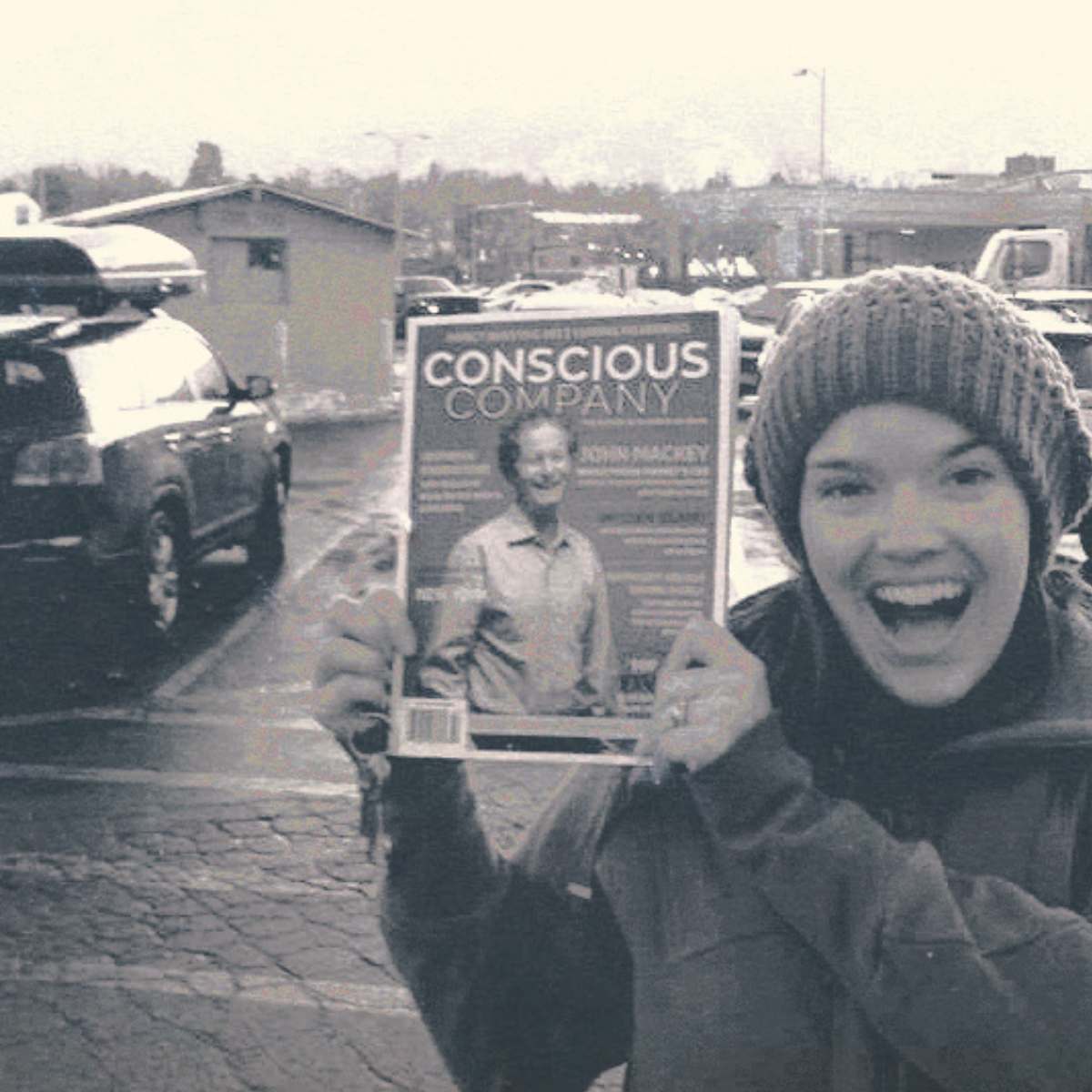
- Eileen Fisher — cover of Conscious Company Magazine issue three; referenced for the Irvington visit
Books + frameworks referenced:
- Drive by Daniel Pink — 3 drivers of intrinsic motivation
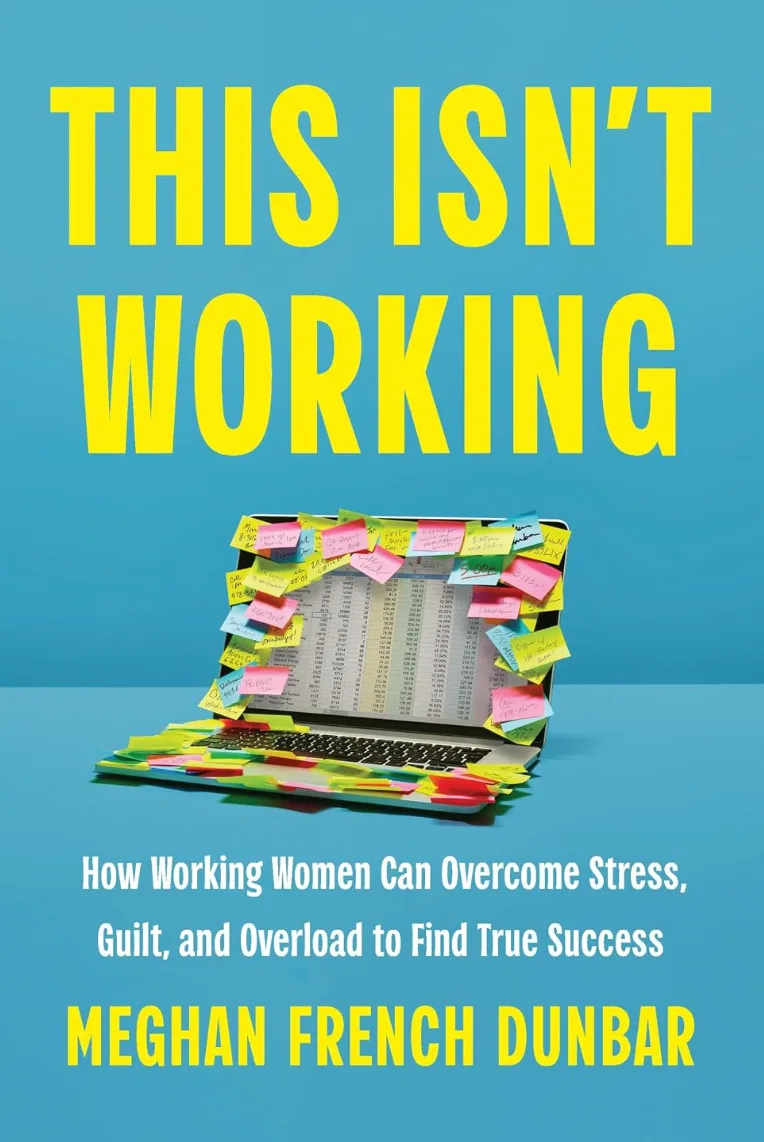
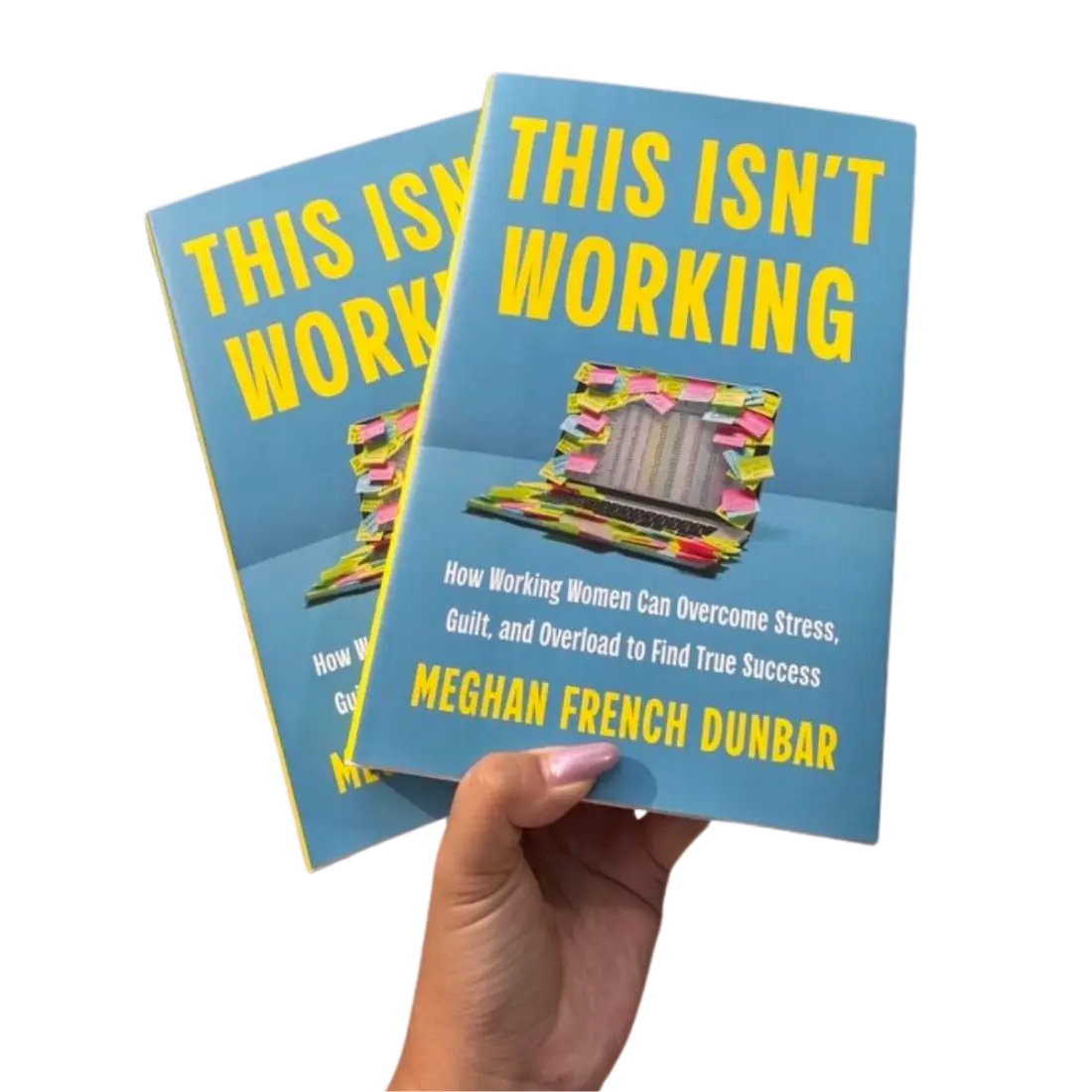
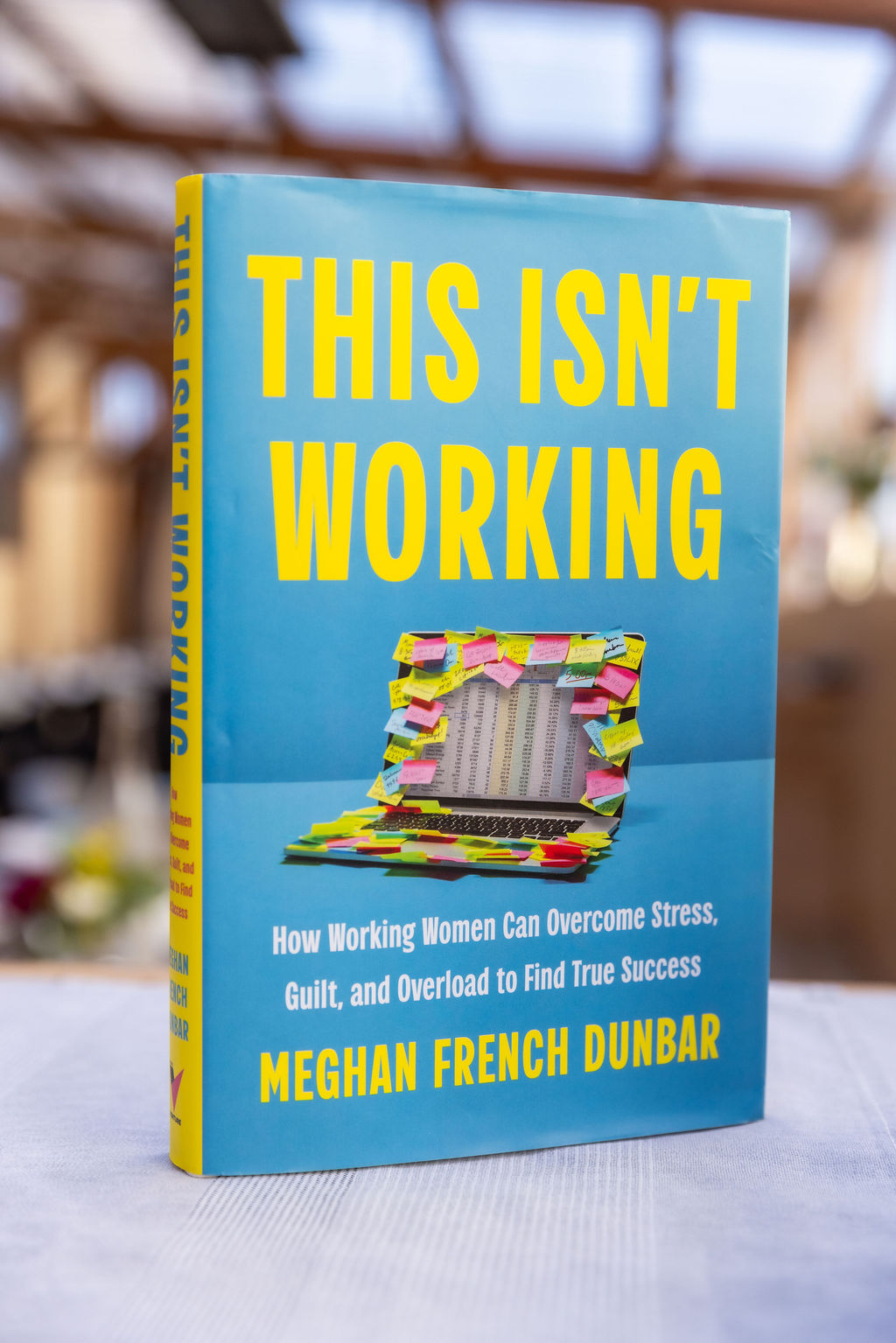
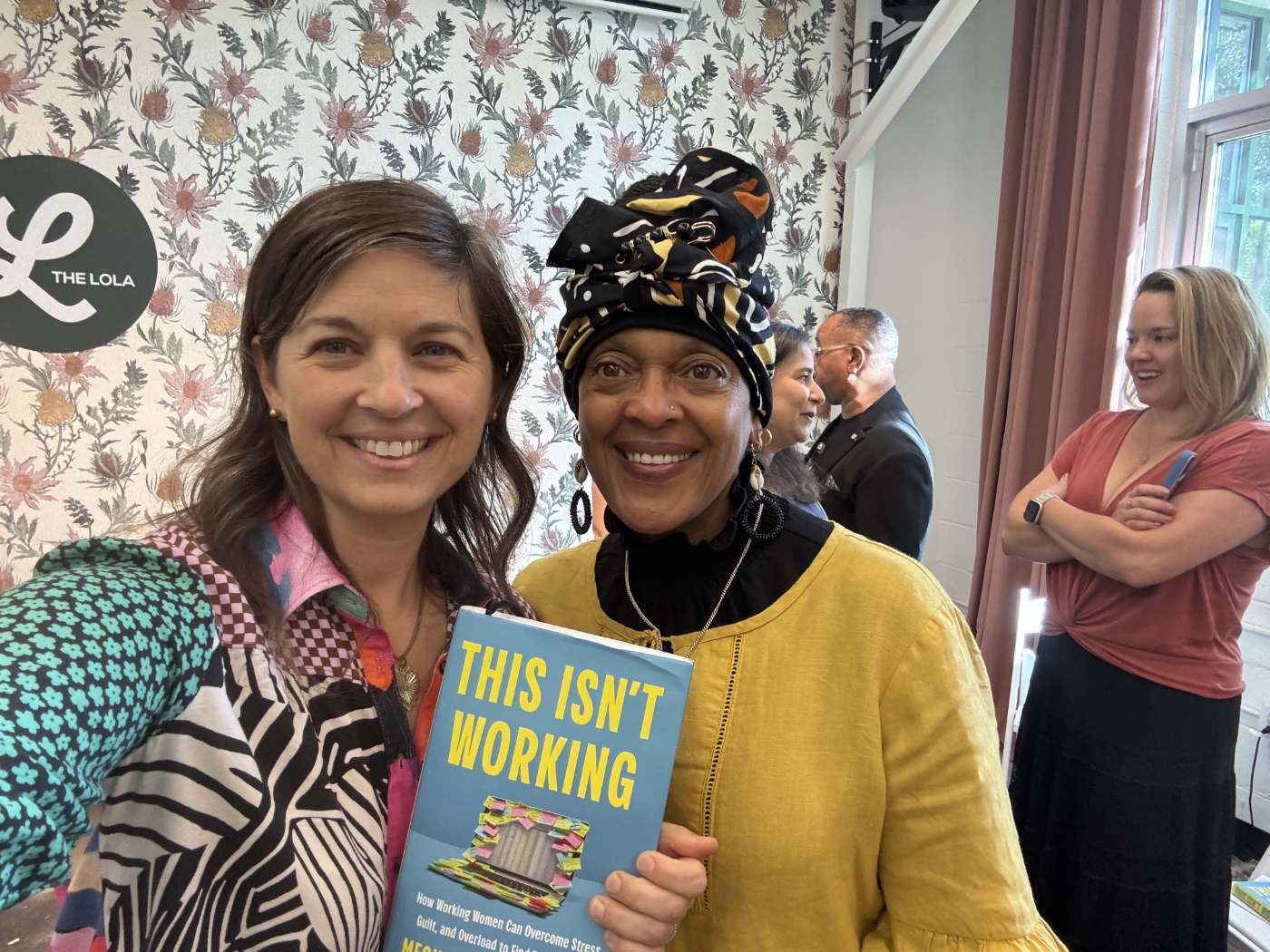
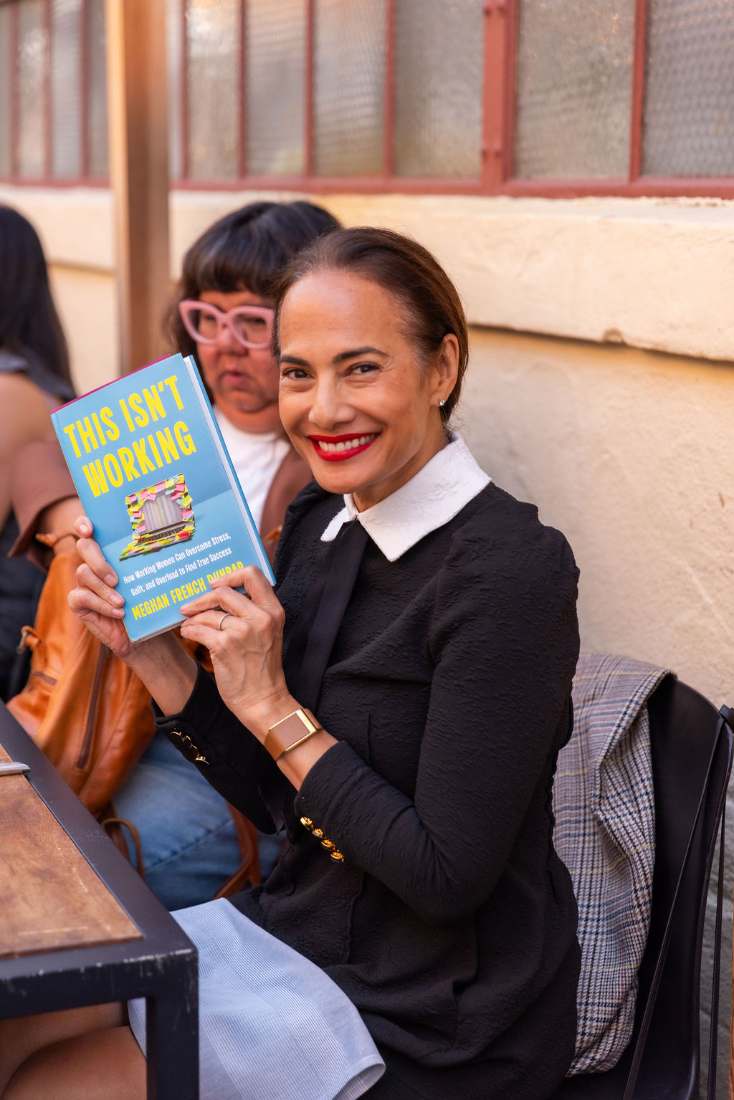
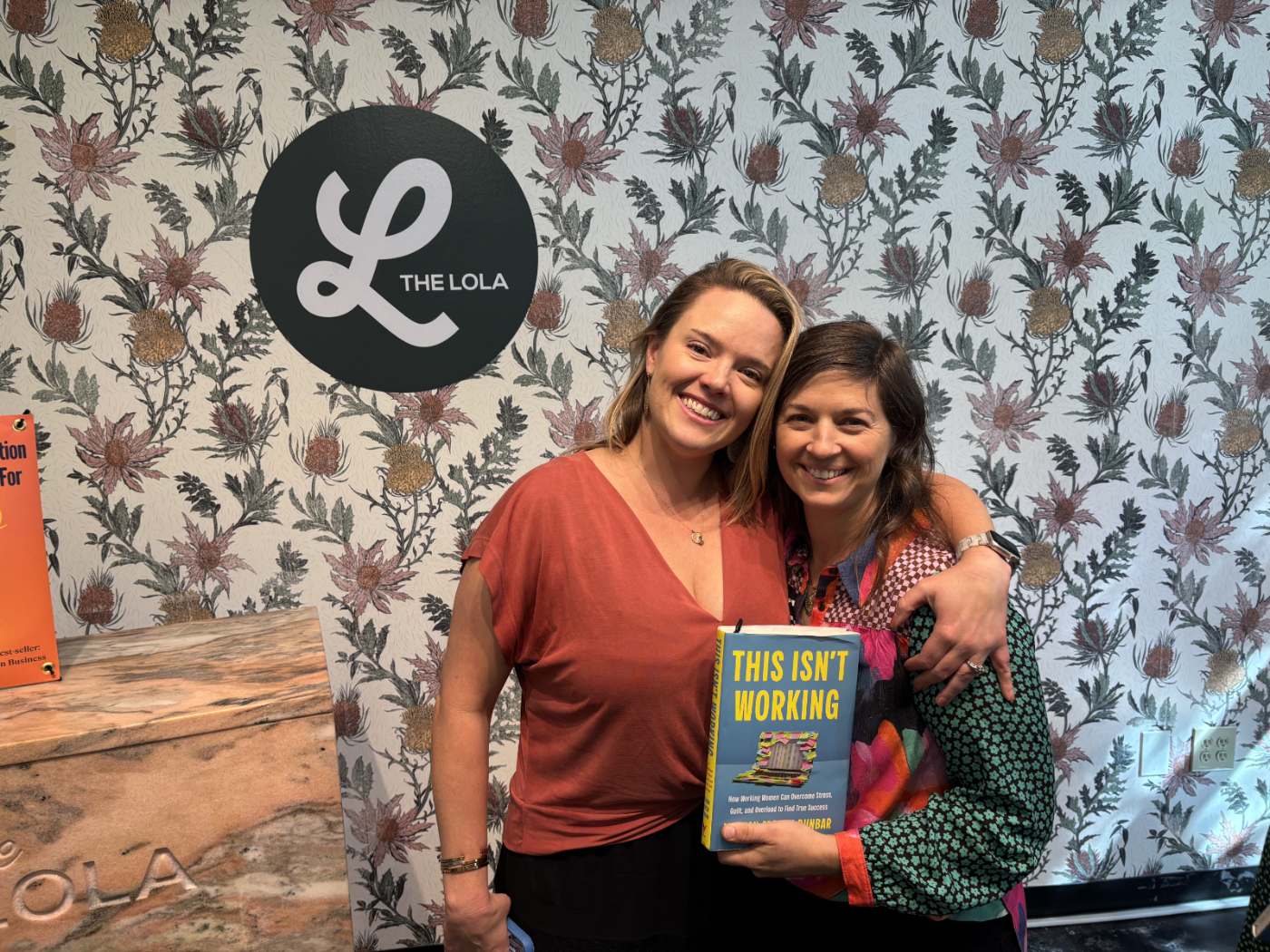
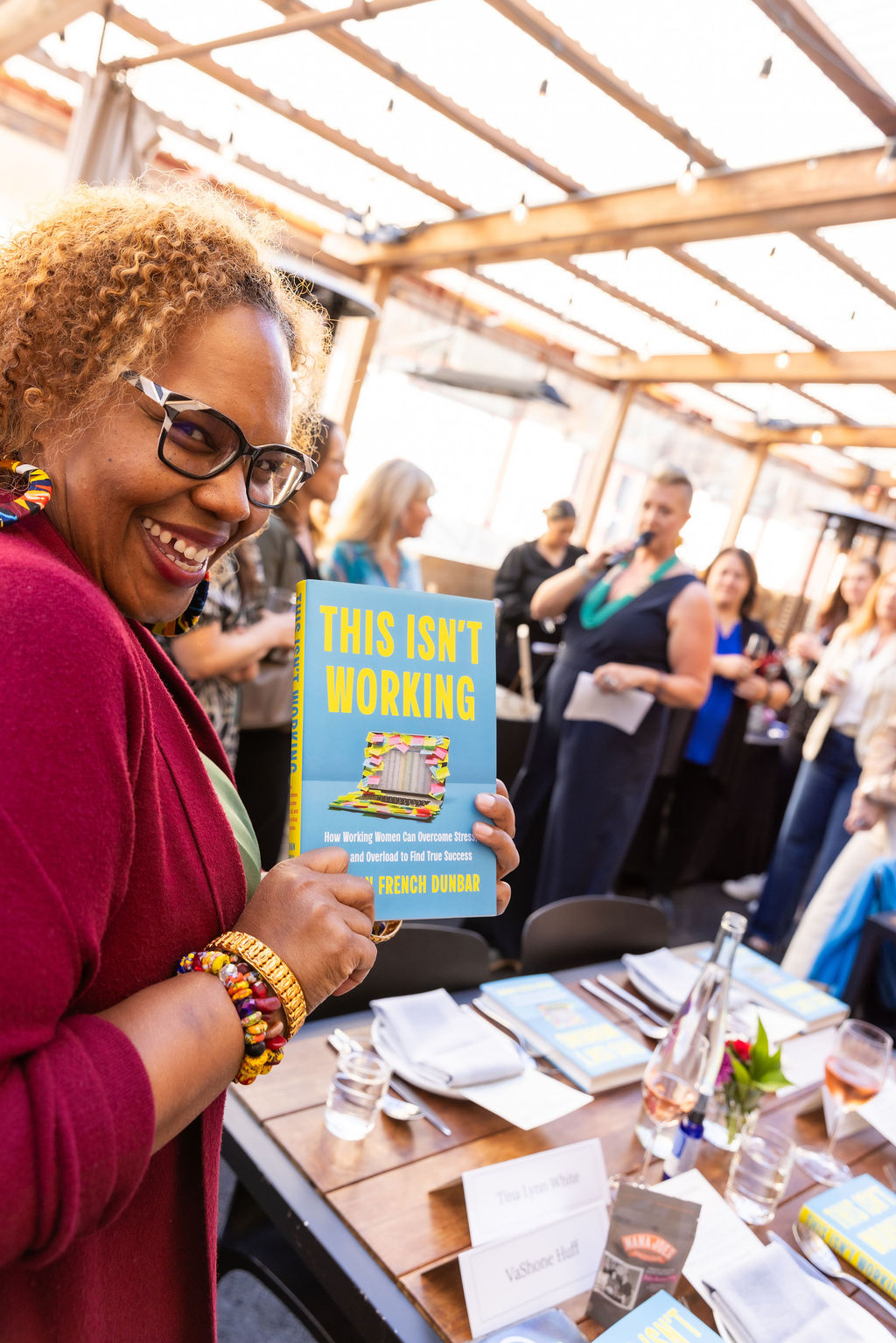
- This Isn't Working by Meghan French Dunbar (Hachette, 2025)
- Harvard's Human Flourishing Program — 5 markers of human flourishing:
Happiness + life satisfaction
Mental + physical health
Meaning + purpose
Character + virtue (values alignment)
Close social relationships
- Conscious Leadership Group
CONNECT WITH MEGHAN
- Book: This Isn't Working: https://meghanfrenchdunbar.com/book — available wherever you buy books
- Website: meghanfrenchdunbar.com
- Substack: https://meghanfrenchdunbar.substack.com
FULL TRANSCRIPT
[Editor's note: Lightly cleaned for readability. Preserves original voice + delivery.]
Meghan French Dunbar (00:01): Hello there, and welcome to Better Than This. This is a show for ambitious humans who are tired of the status quo playbook and are looking for something better. My name is Meghan French Dunbar, and I've spent the last decade exploring what it would take to improve work for everyone — to discover whether or not it's possible to succeed in business without being forced to sacrifice ourselves, without the chronic stress, the burnout, guilt, overwhelm, the anxiety.
Good news: it is.
As an author, entrepreneur, journalist, and resident instigator, I've interviewed over a thousand extraordinary business leaders who've achieved success by throwing the old playbook out the window and doing everything differently. What's even better is that this new playbook improves your performance, your workplace, and your life. If you're ready to admit that the way we're working isn't working, and are looking for something better than this — you're in the right place. Let's get started.
Meghan French Dunbar (00:58): When I ask you about the word success — how would you define success for yourself? What comes to mind? What goals, aspirations, accomplishments?
Here's the thing about success — subconsciously or not — whether you're very clear on your definition or it just floats in the back of your brain, my guess is there's some aspect of achievement, awards, titles, some pinnacle of your career you're aiming for.
And the thing we don't realize about success is how consequential the concept is. How you define success dictates many, if not all, of the decisions you make in your life. What work you do. What compromises you make. What you spend the most of your time on. Where your energy, wisdom, insights, and passion all go — all of it points toward what you think of as success.
For most of us, we don't consciously think about success. It's just been handed to us — conditioning from a young age that equates it with achievement, accomplishment, setting goals, winning awards, being the best in the class.
In this episode, we're going to talk about why that concept of success actually sets you up for failure. It does not lead to long-term contentment. And it doesn't track with what we now know helps humans flourish.
We'll cover: what the old playbook of ambition looks like and why it's failing so many of us. What the new playbook looks like — rooted in values, well-being, and flourishing. And then how to bring this to life in your own life, with practices for reorienting your relationship with success.
Let's get into it.
Meghan French Dunbar (~02:00): To bring the old playbook to life, let me give you a little peek into my psyche as a child. We're going all the way back. It's 1992. Bergen Elementary. And it is FIELD DAY — the annual competition of extraordinary feats of agility. The three-legged race. Running while balancing an egg on a spoon. Running while balancing a hula hoop.
I might as well be a baby William Wallace from Braveheart, donning a child-sized kilt and war paint as I head into field day. It is my favorite day of the year. Why? Because I dominate. I am that absolute dick of a child who takes field day WAY too seriously and wants to win every single competition.
And I do.
I've grown up with an older brother four years older than me, so everything in my life revolves around winning, competing, being the best, trying to prove myself. So I get all my blue ribbons from field day — as I did the year before and as I will next year — and I take them home. I have this little box under my bed where I keep them. I pull it out and add the new ones. And I might as well be Scrooge McDuck laying on my bed of coins.
Except mine is a bed of blue ribbons. And they all tell me something about myself:
I am a good girl. I am the best. I have proven myself. I am worthy of love.
Because that's what achievement means. That's what we tie our self-worth to.
And I've already done this by the age of 8.
I've just indoctrinated my brain to believe everything is about winning, achieving, proving myself, being the best. This is the pattern that sticks with me for the rest of my life. High school: captain of the soccer team, captain of the basketball team, top of the class — everything so I can get into the best school. College: Dean's List, two degrees in four and a half years, proving proving proving. First entry-level position at the Environmental Defense Fund — my goal is to get promoted to associate, then to director. Everything is promotion, goal, next achievement, salary, title. Linear.
I do my MBA. I launch a company. We sell the company. I'm a keynote speaker. Every way I ever imagined I was going to succeed has come to fruition. My ego feels great. I'm getting standing ovations. Everything about my life is rooted in how successful I am by all the external achievements I can show off.
Meghan French Dunbar (~06:00): And then COVID hits.
I had my son in the summer of 2019. I'd been leading my company for nearly five years. When I got back from maternity leave, I was terribly burnt out. No gas in the tank.
I remember coming back and thinking — I am not the leader my team needs. They deserve something better. I can barely get out of bed. I'm exhausted to the core of my being. I have a newborn. All the newborn parent stuff on TOP of years of overextending, overworking.
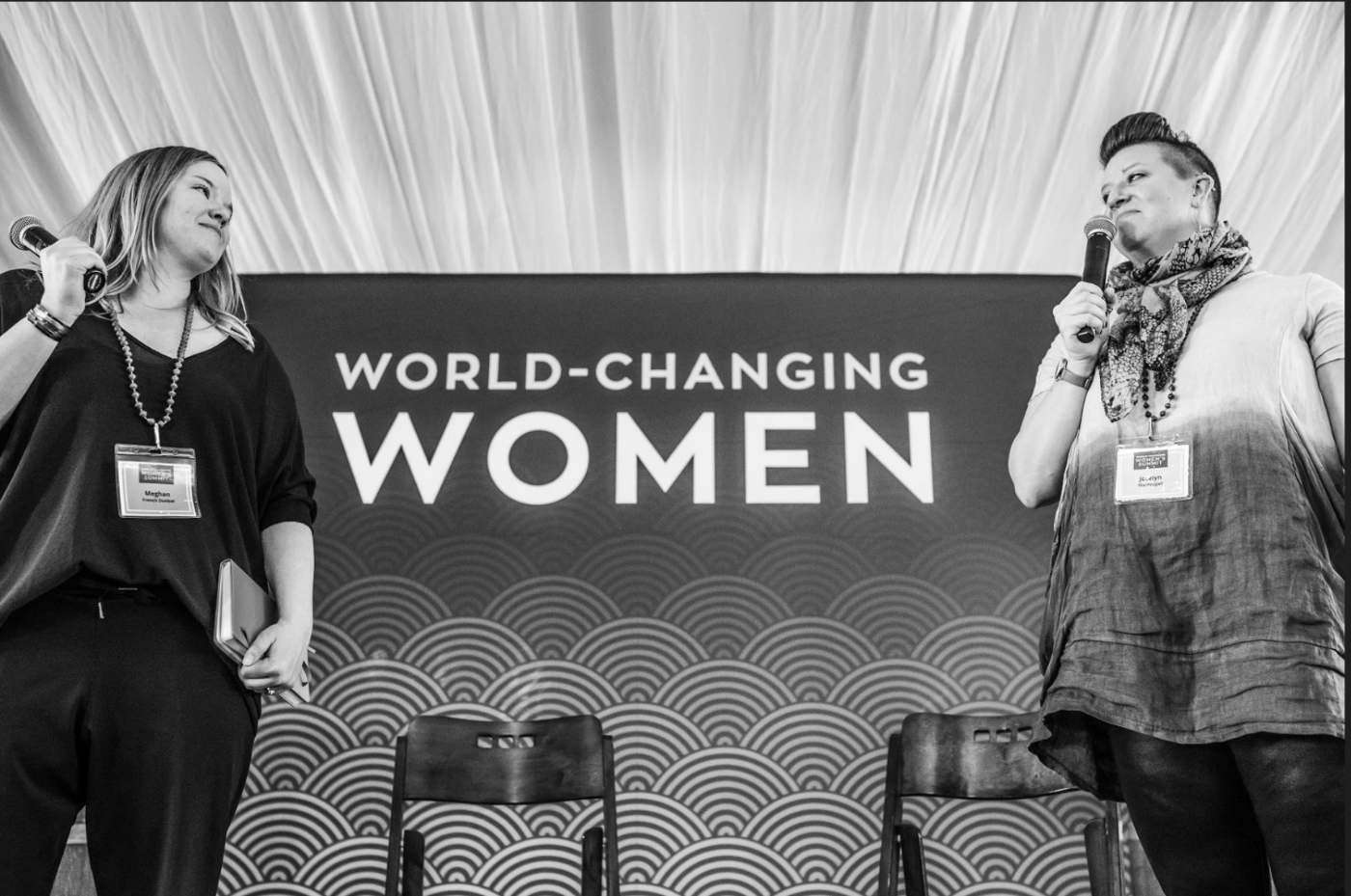
I told myself: I'll just get us through our big event — the 2020 World Changing Women's Summit in January. I got us through. I resigned on February 1st. March 13th was my last day.
March 17th we were in global lockdown.
I went from CEO — on stage hosting events with hundreds of people, with a name for myself in my professional community, giving keynotes to leaders twice my age, being invited to exclusive events — to full-time mom of a nine-month-old.
I did not plan for that. I was going to launch the next venture (an in-person events company for women) immediately. Then COVID.
I have ADHD. I'm a creative spirit. My therapist once called me a business artist. I never imagined being a full-time mom. I AM a great mom. But I had a little too much entrepreneurial pizzazz to be a full-time mom to a nine-month-old in a pandemic. And month after month went by. I slipped further and further into pretty sincere depression.
I'd contended with burnout, chronic stress, and low-level depression before. This became significant depression. Crippling fear-based thoughts about my son getting hurt on the playground. Snapping at my partner. Everything was wrong. I was catastrophizing:
"I'm a childhood movie star who peaked too soon in my career. I'll always look back at what I had and be resentful. I've ruined my career. It's over. I'm never getting back in."
I finally saw a therapist. It only took five to six months of that to be like — okay, I'm ready.
First session: "You're clinically depressed."
Which — yes. I knew that.
Session after session, we got to the heart of it: I had nothing to attach my self-worth to. In the absence of achievement — in the absence of an outlet to be seen, validated, awarded by my peers — I didn't know how to value myself.
I felt entirely worthless without something to show everyone. I didn't have my blue ribbons.
She helped me unpack it — all the way back to childhood. 30-plus years of conditioning that the only way I felt worthy of love was to achieve.
Fortunately, I knew I wasn't alone. I had met many other professional women in the same boat. For example: Elaine Dinos.
Elaine Dinos (~10:16): [Elaine, on making it to the top of a global consulting firm] When I joined, I quickly prided myself on being all things to all people. It was a services-oriented environment — the customer is most important. I noticed in my organization, and many others, you are not rewarded to take care of yourself. You're rewarded to sacrifice.
The metrics for success were all externally validated. How much productivity, how much compensation, how hard you're working, how late you're staying. Being rewarded for my productivity felt good. It felt like self-worth.
As I've unpacked the 12 years I spent there, I realized: a lack of self-worth and needing to prove myself was really generating a lot of that. I gave so much of myself.
I was the busiest of the busy. We'd walk by each other in the hallway and someone would say, "How are you?" And I'd say, "Busy. So busy." Like — I'm doing great if I'm busy. That's not how you are. That's a wall up.
I climbed the ranks. Top performer. During the 2008 downturn, they let two-thirds of the staff go and I got promoted and took on double the work. And I was proud of that. Already overworked, and then just more extraction. The treadmill goes faster and faster. I had one child, replaced my social life with baby things, kept giving everything to my employer. And I got rewarded. Promoted. More money.
Until I had my second child. That's when the rubber met the road and revealed all the cracks in the foundation. The work I'd built for myself and the life I was longing for were not compatible.
Happiness can feel like a thin layer of varnish. Yeah, I was happy going out to lunches, having happy hours, getting flown to New York with partners, staying in nice hotels. I was happy calling C-suite leaders. I got a lot of ego gratification.
But I wasn't joyful. I wasn't whole. It was filling a void. A lack of self-worth. A lack of believing that I'm enough.
Looking back, it was a very superficial version of happy. It wasn't joy. Happiness from compensation and title and who I knew was a very thin house of cards.
Meghan French Dunbar (14:35): Elaine's story. My story. Many stories I've heard. Maybe your story. All align with what I call the old playbook of social success.
Social success is rooted in the societal script we're all handed as we come out of the womb: your job is to do the best in school, to set yourself apart so you can get into a better school — a big-name school — do the best there so you can get a good job at a big-name place, make the most money, climb the corporate ranks so you get the big fancy titles, so you get influence and power. Set aside anything about passion or purpose. You need a practical, stable, well-regarded career. Make it to the top by 60-ish. Retire if you've saved enough. And THEN, maybe, start pursuing the things you actually enjoy.
That's the script. Supposed to work for everyone. Supposed to lead to happiness.
The entire time along the way, you're climbing a linear ladder based entirely on extrinsic motivation — motivation to participate in something based on meeting some external goal: praise, approval, competition, award, payment, influence, power.
Extrinsic motivation is not driven by the desire to engage in an activity for its own sake. It's all about appearances and showing how worthy you are.
This especially becomes a narrative for people trying to meet their family's expectations. We see this a lot in immigrant families. Here's what Alfa Demmellash — an Ethiopian refugee to the United States — told me about the pressure.
Alfa Demmellash (~16:39): [Alfa] A lot of times the expectation begins in your home life. You go to Harvard. Definitely the expectations were there. Not only is the family liberated — because Alfa is going to graduate Harvard, go do investment banking and financial-woes-for-everybody. It's over. It's like — you get a car, you get a car.
Meghan: Just Oprah.
Alfa: Totally. Like, regional economic development plans. Is this the investment of an entire nation? Okay.
When I did graduate, there was that pressure. My parents were like, "What are you doing?" I said, "I'm investigating where the pockets of economic poverty and othering are around me." They were like, "To do WHAT? You can't possibly be trying to get INTO the neighborhoods we're all trying to make sure to ESCAPE."
So there was pressure. Six months in, I did take a job at Bear Stearns, which is no longer with us. I lasted like three days. I walked out. I felt — when you're in the wrong place entirely, every part of your being knows it. I was spending more time in the bathroom at Bear Stearns than at the cubicle, having a conversation with myself in the mirror saying — why are you here? What happened? What went so awfully wrong that you are choosing to self-incarcerate in this way?
It felt like a self-incarceration. I was opting away from the people and communities where I knew life, where I knew what is real, what deeply moved me. And I was all of a sudden dressed up, putting on makeup and heels, walking through the doors of a giant black building — and not coming out until the sun was down. I couldn't answer "who forced you?" other than I just wanted to prove to my parents I wasn't being foolish.
But it was so egregious at a soul level that I was willing to do anything else. I knew the path would have to be defined differently.
Meghan French Dunbar (20:04): Alfa's story. Elaine's story. My story. I hope if you're seeing some of yourself in these stories — know that you're not alone.
Three things really shifted my mindset about extrinsic motivation and how I was thinking about success.
Mindset shift 1: Extrinsic motivation is addictive.
This was research done by Brian Knutson on the impact of anticipating a reward on the brain. He discovered that the burst of dopamine that surges to your brain when someone anticipates a reward is the same physiological response substance addicts experience when they're about to get their substance.
It follows the same script as addiction. Think about it.
Think about the last time you achieved the big goal — a sales target, revenue goal, promotion, new title, new role. You celebrate. Go to dinner. Champagne. Maybe you feel good for a week. Maybe a month. Then — what happens?
You need the next thing. And it has to be bigger. So — I'm a senior vice president. What's next? You're just on this hamster wheel and there's never an endpoint. Never enough. Perpetual cycle of contentment → disappointment → need the next thing.
That was the first realization. This is addictive behavior — which is not typically considered healthy.
Mindset shift 2: Extrinsic motivation is not particularly satisfying.
This was research by psychologist Edward Deci and Richard Ryan. They studied college students in two groups. Group A based their entire idea of success on extrinsic motivation — their post-college goals were about title, salary, influence, power. Group B was intrinsically motivated — post-college goals about impact, growth, evolving as humans.
They followed both groups. Many achieved their goals.
Group A: Regardless of the level of success they hit, they had the SAME level of life satisfaction as in college, AND increased levels of anxiety and depression.
Group B: Regardless of the level of success they hit, they had INCREASED life satisfaction as compared to college, AND decreased anxiety and depression.
Deci's words: "Even though our culture puts a strong emphasis on attaining wealth and fame, pursuing these goals does not contribute to a satisfying life. The things that make your life happy are growing as an individual, having loving relationships, and contributing to your community."
Mindset shift 3: Almost none of what predicts flourishing shows up in our definitions of success.
Harvard has a Human Flourishing Program. They've identified five markers that across the board result in humans feeling like they're flourishing:
Happiness + life satisfaction
Mental + physical health + well-being
Meaning + purpose
Character + virtue (values alignment)
Close social relationships
Daniel Pink, in Drive, identified three key drivers of intrinsic motivation: purpose/meaning, growth/mastery, and autonomy (freedom, voice, choice).
When I started imagining these as what actually brings us flourishing — how many of them do we equate with success? How many of our goals or professional aspirations have anything to do with these markers?
For me — very little.
Meghan French Dunbar (26:36): Does that track for you too? Not even being aware of the key elements of flourishing as part of your definition of success?
If none of us are basing our ideas of success around what brings us flourishing — and we know extrinsic motivation is addictive and doesn't make us happy in the long run — maybe we can start to understand why so many high achievers aren't happy. Feel like something's missing. Feel like they're doing it wrong.
That's how I felt. I've done everything right. I've done all the things. I'm not particularly happy. I'm actually really stressed, anxious, bordering on depressed. Someone promised me a vision of the future — if I did everything right, I'd be happy. This doesn't feel right.
So many of us just keep adding more and more to our plates. Maybe I just need to do more. Have a bigger goal. Once I hit the next thing, that's where the happiness is. And it doesn't come. We keep adding. The relentless busyness distracts us enough that we don't have to feel we're not happy. But any time we pause, we feel it in our bodies — something is missing. Something is wrong.
And that's a hard pill to swallow.
Really hard. If the entire societal script you've been sold — what you've been told your whole life will make you happy — doesn't actually help you flourish. It's not an easy thing to just accept.
There's not a particularly easy solution either. But there are things you can do.
The key thing: reimagine success from maximizing for productivity, accomplishment, achievement, wealth, and influence — to maximizing for the key markers of human flourishing and intrinsic motivation.
How can you maximize for deep human connection? Mental + physical health? Joy? Growth, mastery, following your passion? Impact and values alignment? Freedom to do the work you actually want with the people you actually want on the things that actually matter?
Flip the script. Make decisions about your career based on maximizing what matters — not maximizing productivity.
Let me show you how this has worked for me.
Meghan French Dunbar (~28:00): Back to the COVID story. I left my company. The parent company closed the magazine. Eventually the whole business.
I felt like a tremendous failure. Like I'd wasted six years of my life and had nothing to show for it. It hadn't made heaps of money. So — it had failed.
Part of me needed closure. So I organized a Zoom call with many of my former teammates. About 10 of us from around the country. And I asked a simple question:
"What were your favorite memories from our time working together, building this crazy company?"
The call went on for over two hours. Story after story about the relationships people had built with each other and with people they'd met through the work. The impact from a specific article. Someone coming up at an event saying: "Because I read your article, I changed my entire management style."
Rachel — the editor-in-chief for a while — was so excited about learning about the company Asana she went and spent a day with them. That led her to meet the Conscious Leadership Group. That has become an entirely new chapter in her life. She talked to me about how much she'd grown as a human as a result of one story she wrote for us.
Every single thing on that call was about people, connections, meaningful experiences, growth, knowledge, mastery, passion, purpose. Every element of human flourishing and intrinsic motivation.
I left the call feeling so much better. I told my husband: "Maybe it wasn't a total failure. Maybe we succeeded in some way."
Only later — once I'd learned these key elements — did I realize how INCREDIBLY successful that tiny little magazine-turned-media-company was. For me personally: six years of running a company, PhD in business, evolved so much as a human, learned communication, listening, feedback, being pushed. Built deep friendships. Met people who inspire me. Interviewed Eileen Fisher at her house in Irvington, New York. Took a float plane from Vancouver to a tiny island off the coast of Canada to give a keynote.
My life is so much more textured. So much richer. As a result of doing something that made a profound impact on so many people.
If I'd gone in with a new idea of success rooted in flourishing and intrinsic motivation — it would have checked almost every box, with the exception of my own mental and physical health and some social connections (which I overworked myself past).
Meghan French Dunbar (~35:00): So I came out of this in 2022 and thought — what if I reimagined my own personal definition of success?
I would invite you to do the same. What are the things that matter most to YOU out of the elements of flourishing and intrinsic motivation? What would it look like if your idea of success and what you're shooting for was to maximize for those things?
How healthy and well you are. How happy and joyful. How much you're learning and growing. How passionate you are. How impactful. How aligned with your values. How free you are to explore opportunities or work where you want, with who you want, on what you want.
For me, autonomy is a big one. Freedom to work on what I want, with who I want, where and when I want. Flexibility to stop every workday at 3:30. Work from home. Minimize travel. I have two young kids. I identified key sources of stress and actively choose not to participate anymore. Do I have time and space for mental and physical health?
Then I started to put it into practice.
Meghan French Dunbar (~37:00): Shortly after this epiphany, I got headhunted for a pretty significant role. Well-known organization. CEO title. Huge pay increase. Access to influential leaders. I was so honored to be headhunted. My ego felt fantastic.
The role 100% would have made High Achiever Meghan very happy. Definitely aligned with the old idea of success. But new-idea-of-success Meghan? Not really. It would have been challenging — I would have grown, learned new things, had new experiences. But: no autonomy. Overly stressed. High pressure. Constant travel. Away from my kids. No option to work from home. No option to stop when I wanted.
So many considerations made it so I could not maximize for the way I flourish. I had to say no. And I felt VERY good about saying no — especially when I realized I was only considering it because of my ego. Because it was the next higher step on the linear progression toward high-achievement success that lived in my head.
This also comes into play with smaller day-to-day stuff.
Meghan French Dunbar (~39:00): My delightful mentee Maddie is 24. Just graduated from Johns Hopkins. Works for a women's leadership organization. She calls herself "a baby adult." She's been in the high achievers' cycle her whole life — everything about building her college resume, best schools, best job, the whole script.
She told me: "The other night I watched a few hours of Ted Lasso and I got to the end and I felt terrible about myself. I felt so guilty for watching Ted Lasso."
I said — girl, Maddie, I hear you. I just had the same experience.
Last month, I went to Austin with my three best friends from college. All of us work. All of us have kids under seven. We went for three days just to reconnect. Day one, I was okay. Day two — sitting by the pool, having little sneaky snacks, catching up on life, just having a delightful day.
And about every hour, my nervous system ramped up to 11. Something is wrong. This is not okay. I am not producing. I'm not with my kids. I'm not taking care of something. I was checking my phone, waiting for a notification. Wracked with guilt for taking a single day to enjoy being with my friends.
Around hour five, I took a breath and — wait. Stop, stop, stop. High Achiever Meghan — I see you. I love you. I have compassion for you. Thank you for all you've brought to me. And — new idea of success — if I'm maximizing for joy and deep human connection, I am in fact CRUSHING IT right now. This means I am being entirely successful.
Goodbye, guilt. Thank you and goodbye.
So I offered this to Maddie: "Just hear me out. Ted Lasso — does it make you happy to watch that show?"
She said yes.
I said: "What if that's your idea of success? Your career, the way you're working right now, the life you're building allows you time and space for things that bring you joy — Ted Lasso, for example. That takes the guilt off. It takes the pressure off. We can prioritize these things as the things we actually WANT to be doing to maximize our success."
Meghan French Dunbar (~42:00): One of the best practices to actually root yourself in this new definition of success is a regular check-in.
My friend Nell Derrick Debevois Dewey — Nell 3D as she calls herself — has a spreadsheet she uses at the end of every week. I use a little journal. You touch base at the end of the week on what the week looked like when you oriented it around the key markers of flourishing and intrinsic motivation:
- How happy or joyful did I feel?
- How did I support my mental and physical health?
- Did I feel deep social connection this week?
- Did I grow, learn, or develop?
- Did I gain any new knowledge?
- Did I make a positive impact or feel aligned with my values?
- Did I have the freedom to work on what I wanted?
Score yourself 1-10. Write out where you felt aligned and where you fell short. Whatever resonates. The key is consistency.
When I started doing this, I realized the areas where I was woefully deficient — I never made time for my mental and physical health. It was always on the should list, never on the do list. When I started looking at it as something that actually helps me flourish as a human — that makes me happier, that makes me feel good — it became something I prioritized.
At the end of the week, how can YOU check in with each of the things that matter to you?
I would recommend writing down a new definition of success rooted in flourishing and intrinsic motivation — and checking in with those key elements every week to make sure you're staying on track.
That's it for today. I so appreciate your time and the fact that you're part of this community. Hopefully I'll see you next week.
Meghan French Dunbar (43:54): Thanks again for listening to Better Than This. As a reminder, you can always find show notes and any corresponding resources for the show on the show's website at meghanfrenchdunbar.com/betterthanthis. If today's episode resonated with you, I would be very grateful if you could leave a review or a rating on whichever podcast platform you're listening on — or share the episode with a friend who you think would appreciate it.
You can also subscribe to my Substack for weekly insights and tools to support your growth along the way.
Until next time: keep challenging the status quo so we can — wait for it — build something better than this.
Take care.