Vanessa Childers: Stop Outsourcing Your Worth | Unbehaved
What happens when you finally stop performing — for other's approval, for the type of room you're in, for a version of yourself you're "supposed" to be — and let yourself be completely unfiltered? To be truly, awkwardly, publicly seen?
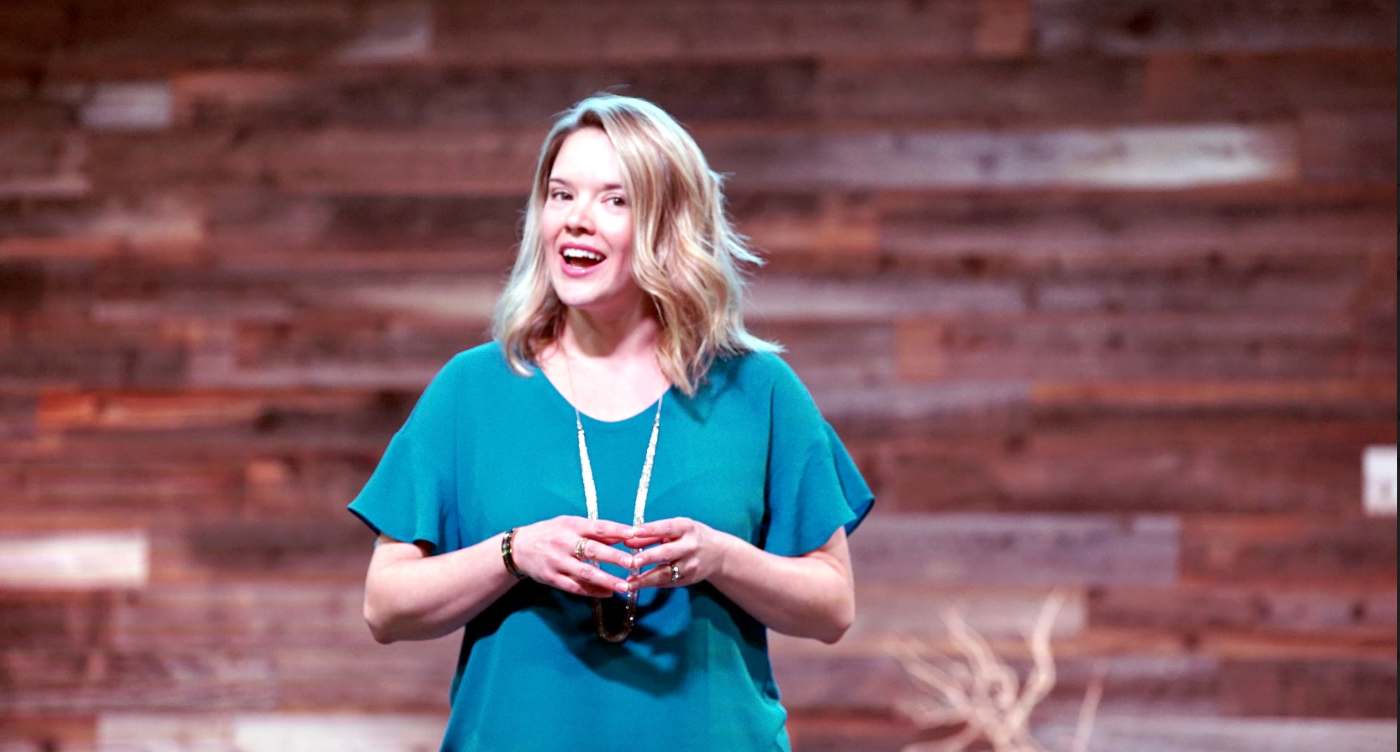
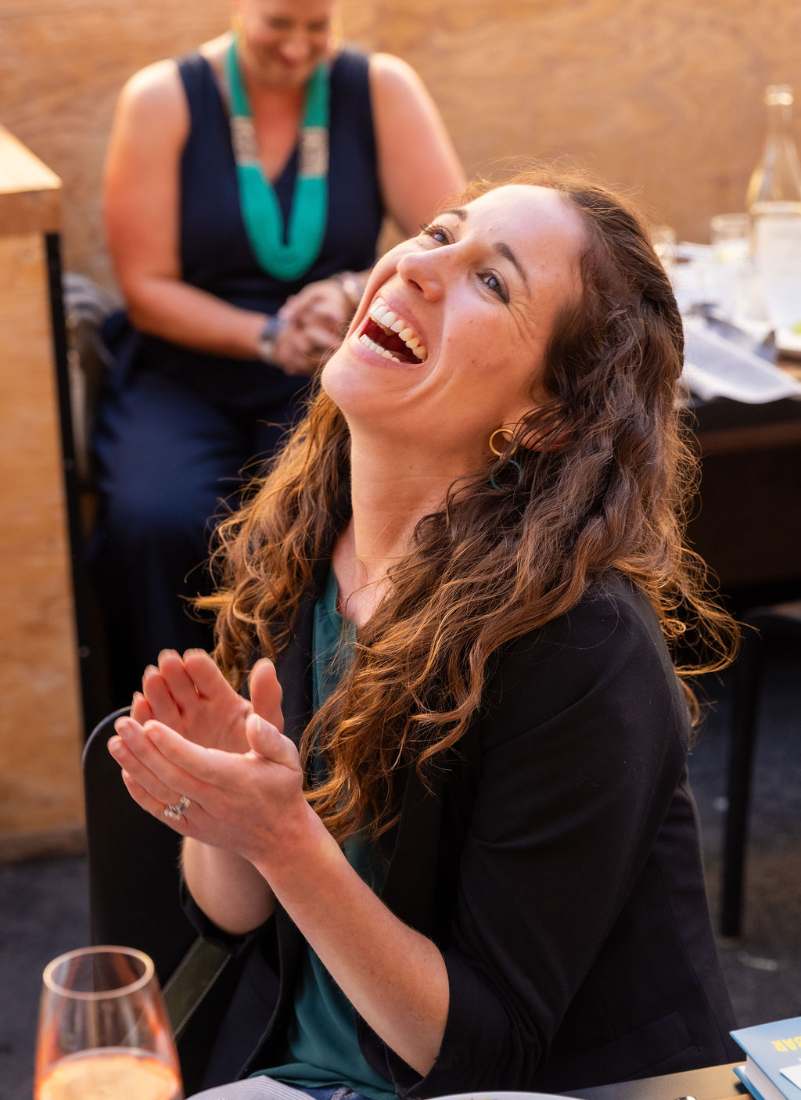
In her first-ever podcast appearance, author and viral essayist Vanessa Childers walks us through the slow, painful, and ultimately liberating process of letting her ego die a "fiery, fiery death" — and what she discovered on the other side.
From an 8-year career spent chasing the male gaze and conforming to "female-coded" journalism, through a marriage she blew up, an eating disorder she almost didn't survive, a pandemic breakdown, a toxic client who tried to intimidate her, and a mythological toucan whose advice landed her a book deal (yes, really) — Vanessa's story is proof that the things you think are destroying you might actually be unloading the crutches you didn't know you were leaning on.
The result: becoming a published author, cultivating a cult-like following, finally getting to do what lit her soul on fire in the first place, and a radical new permission slip for anyone who's been wanting to push back against all of the "shoulds."
If you've ever felt desperate to be seen and terrified of it at the same time, this one's for you.
What We Cover
The beliefs Vanessa was handed as a young woman — be pretty, be quiet, be captivating but not too loud — and the 28 years she spent trapped in the male gaze
The reframe that changed everything: "I can be captivated by myself"
Why anxiety is the flip side of narcissism (and how "desperate to be seen and terrified to be seen" actually works)
Blowing up a first marriage and realizing you're the pattern, not the victim of it
How weight loss after divorce became the next container for the same self-abandonment
Anthony Bourdain's death as the wake-up moment
The fiery death of the ego — and why Vanessa calls it "the biggest gift"
The November 2024 moment that cracked her filter wide open
The toxic client, the boundary, and "Welcome to being a woman"
The Tootsie Pop metaphor for authentic self vs. the crystallized stuff around it
Writing on LinkedIn without caring who was reading
The stranger's comment that planted the seed for a book
The hypnotherapy session with a tree, a toucan, and a past-life regression gone sideways
How "keep writing on LinkedIn" became a book deal with Gremlin Books
Permission slip: make bad art
About the Guest
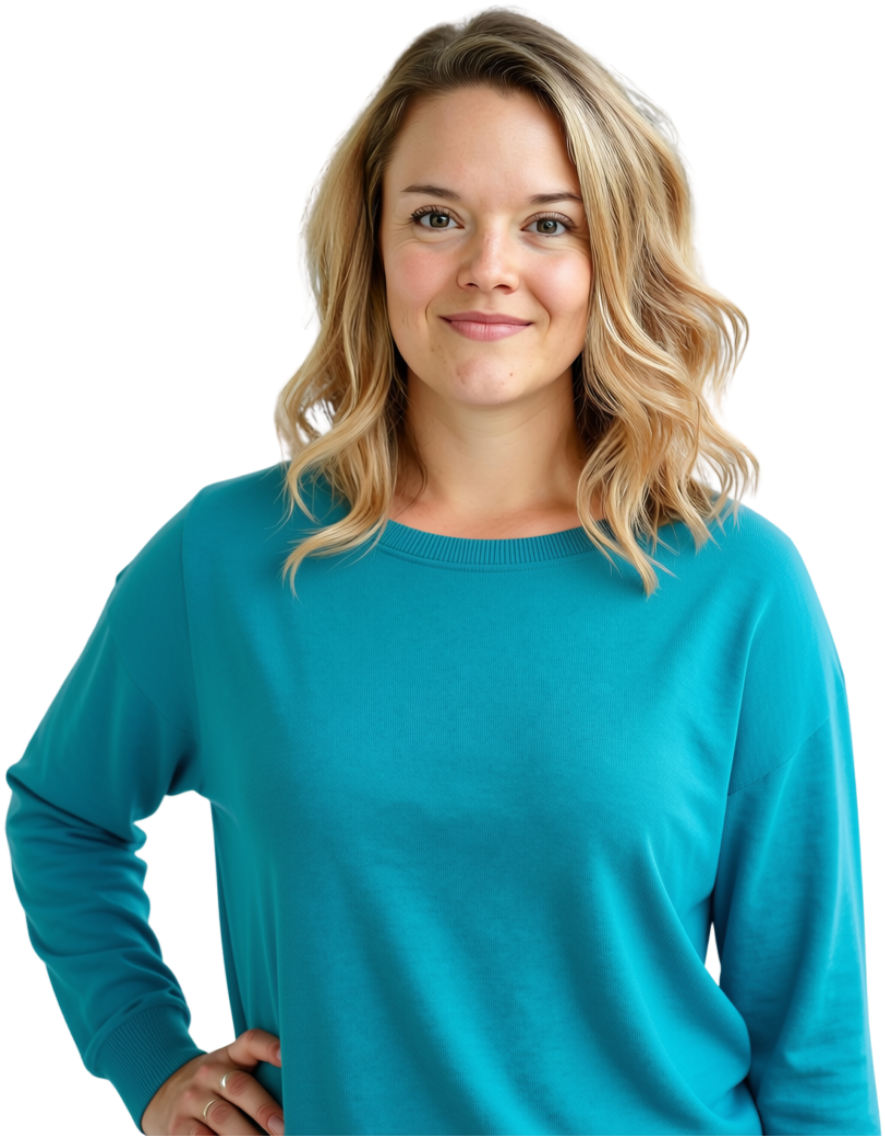
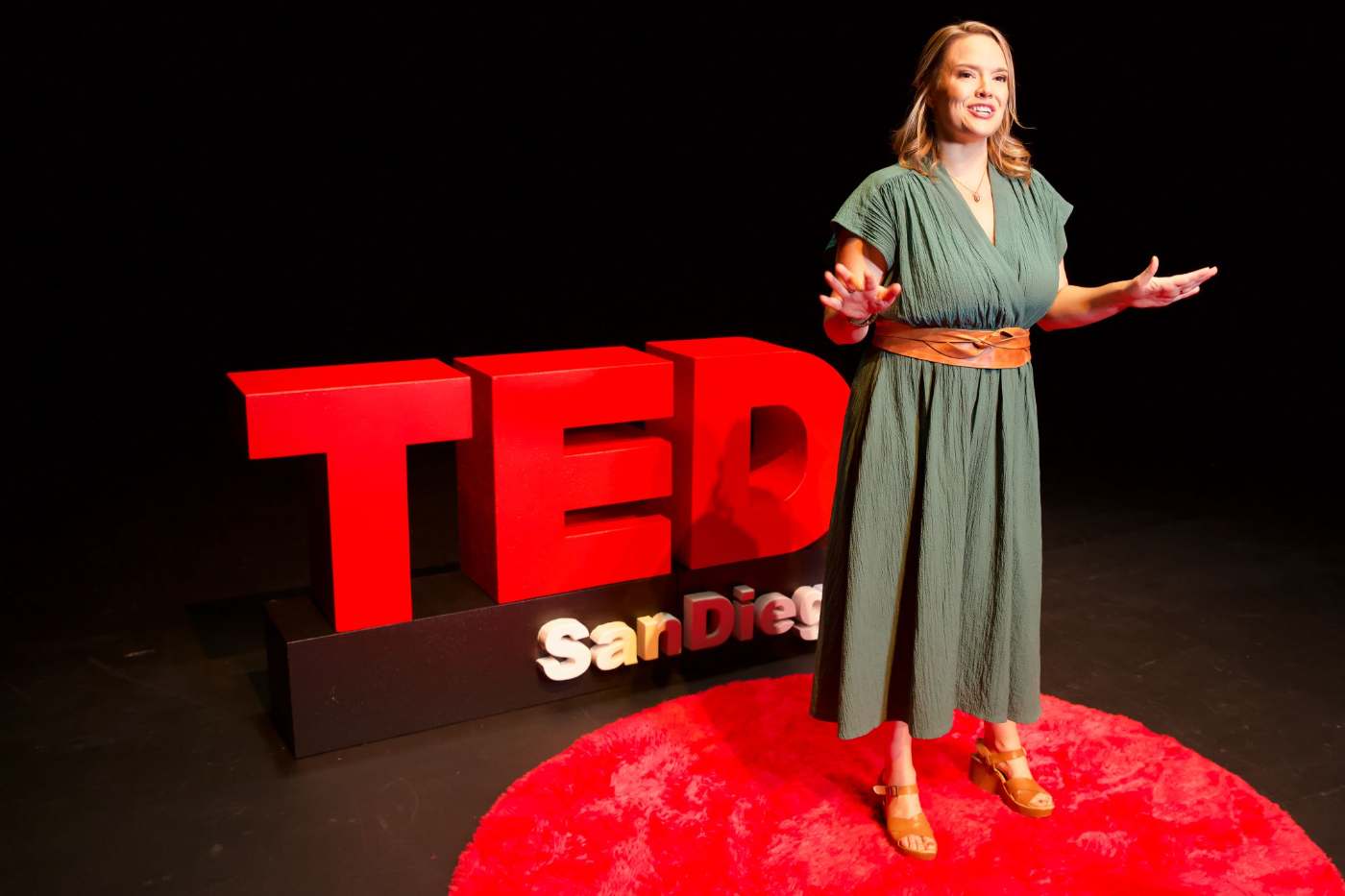
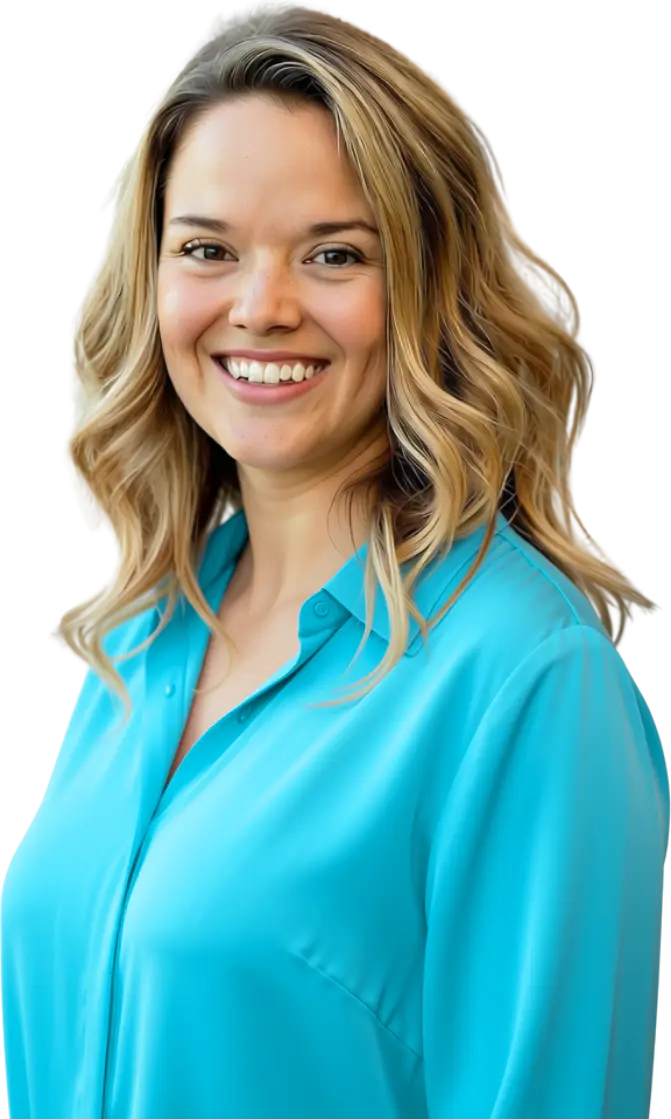
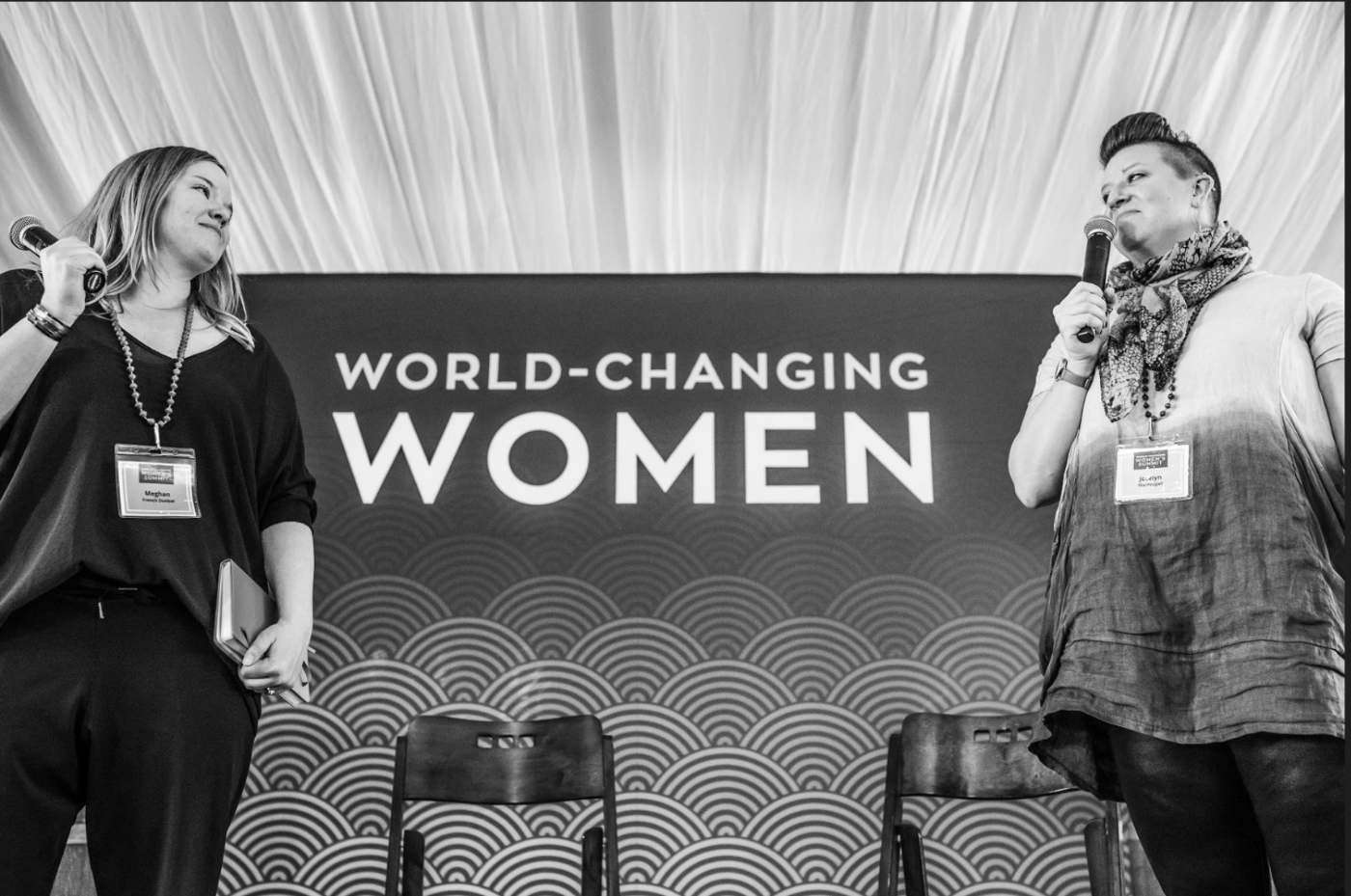
Vanessa Childers is a writer and essayist whose unapologetic, breathless, essay-style LinkedIn posts have built a loyal and growing community of thousands of readers who show up for her honesty about millennial burnout, motherhood, work, and the slow process of becoming your whole self. A former member of Meghan's team at Conscious Company Media, Vanessa spent years writing in home-design and lifestyle journalism before she started publishing the kind of writing she'd always wanted to make.
Her forthcoming book — Touks Made Me Write This — will be published by Gremlin Books (founded by Nicole Reed of Reed Press) in early 2027. She lives with her husband and two daughters and can be found at vanessachilders.com — which she describes as "half portfolio, half mental breakdown in website form."
This is Vanessa's first-ever podcast appearance.
Chapters
00:00 — Cold open
00:22 — Welcome + content note
03:08 — Meet Vanessa + the beliefs that clipped her wings
05:46 — "I can be captivated by myself"
06:30 — Hashtag mom life + why we're recording anyway
07:14 — Social anxiety, the stage, and being desperate to be seen
09:32 — Marriage #1, the affair, and blowing it all up
11:27 — Realizing she was the pattern
12:07 — Weight loss after divorce + the eating disorder
13:17 — Anthony Bourdain's death as the wake-up call
14:38 — Conscious Company Media, pandemic, miscarriage, and the breakdown
17:35 — The fiery death of the ego
18:14 — Watching the DGAF filter fall off on LinkedIn
19:38 — November 2024: "I do not matter"
20:34 — The toxic client, the boundary, and "Welcome to being a woman"
22:51 — The Tootsie Pop
24:31 — Writing on LinkedIn without caring who read it
26:55 — The stranger's comment that planted the seed
27:37 — The hypnotherapy session
31:07 — Being a tree
31:38 — Meeting the toucan
33:37 — "Keep writing on LinkedIn" → a book deal
36:41 — What letting go of the ego unlocked
39:32 — Permission slip: make bad art
41:21 — Where to find Vanessa
42:35 — Meghan's unbehaved lessons
Pull Quotes
"I can be captivated by myself. I can be fascinated. I can intoxicate. Like what I love doing is intoxicating and like part of me is in that." — Vanessa Childers
"So many of us are desperate to be seen and terrified to be seen." — Vanessa Childers
"My ego just died. A fiery, fiery death. And that's been the biggest gift." — Vanessa Childers
"Welcome to being a woman. Things are uncomfortable and you have to feel shame." — Vanessa Childers
"I'm not protecting people from my emotions anymore." — Vanessa Childers
"I knew inherently that what I needed to do needed to be witnessed, it needed to be public… I just needed to be witnessed." — Vanessa Childers
"A mythological toucan saying keep writing, pouring your heart out on a job site." — Vanessa Childers
"Make bad art. Make it bad on purpose. See how bad you can get." — Vanessa Childers
"Doing it badly is less painful than not doing it at all. So permission to do it badly and please expect it will be bad. Please just try to make it bad. Because then it's fun." — Vanessa Childers
References
Anthony Bourdain — chef and author whose 2018 death by suicide was a wake-up moment in Vanessa's story
Conscious Company Media — the magazine where Vanessa and Meghan worked together that Meghan co-founded
Nicole Reed — founder of Reed Press and Gremlin Books; Vanessa's publisher
Gremlin Books — Vanessa's forthcoming publisher
Touks Made Me Write This — Vanessa's forthcoming memoir (Gremlin Books, early 2027)
Connect with Vanessa
Website: vanessachilders.com
LinkedIn: linkedin.com/in/vanessachilders
Substack: "Instant Mess" vchilders.substack.com
Connect with Meghan & Unbehaved
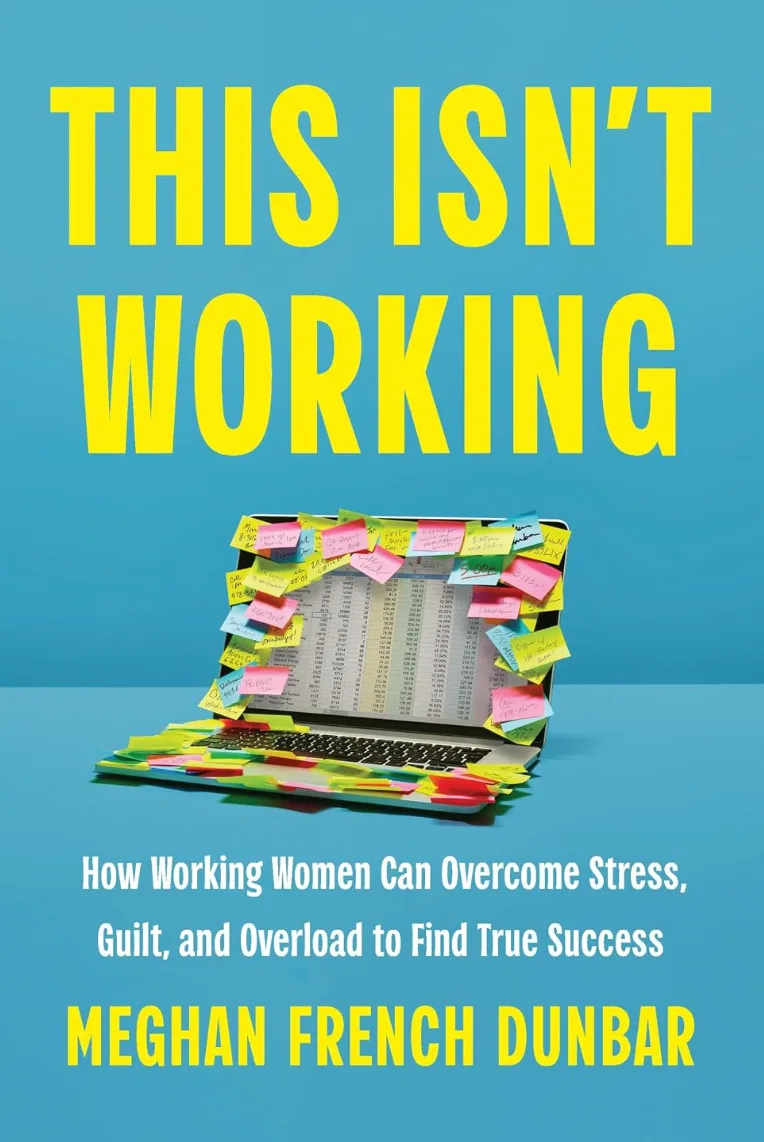
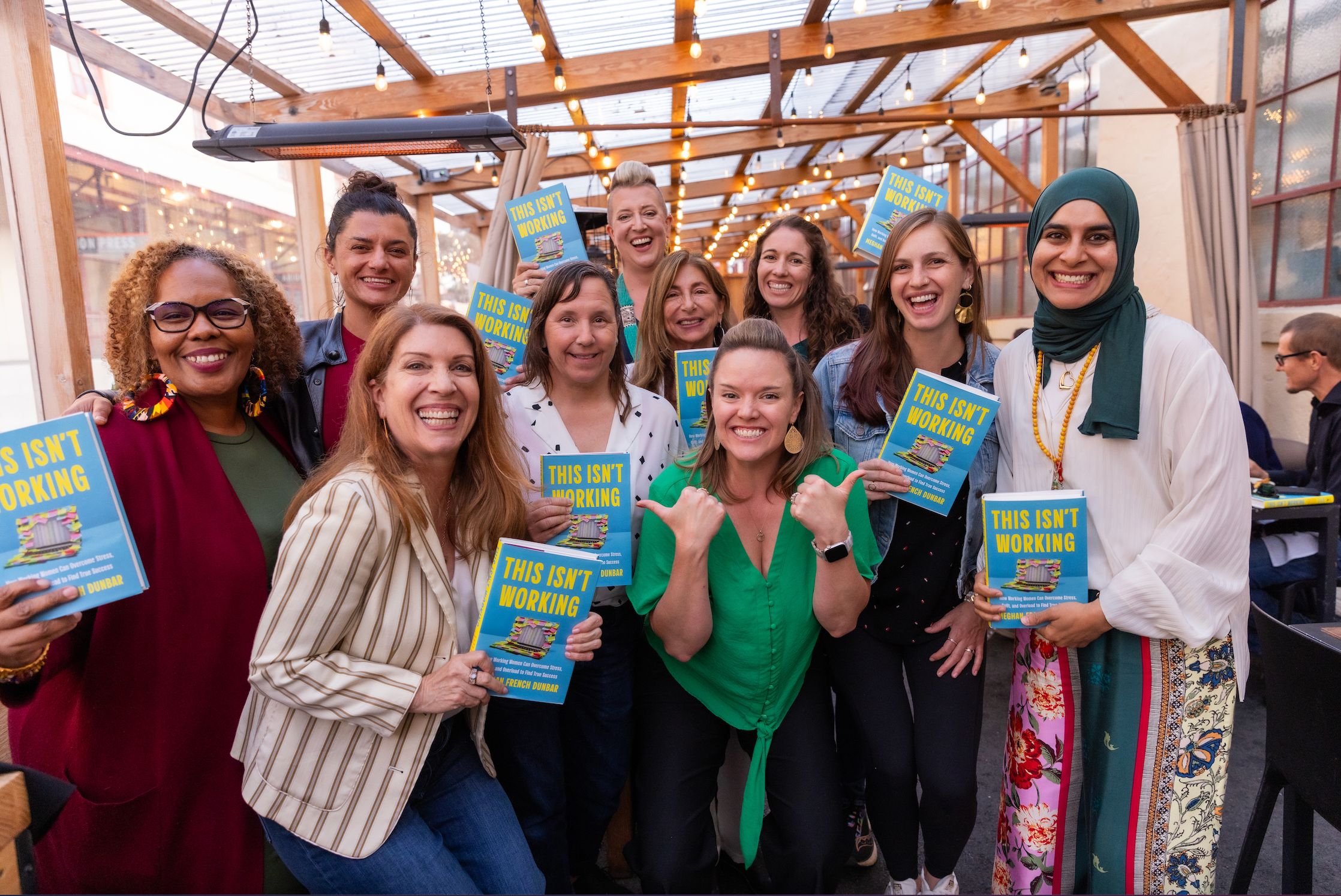
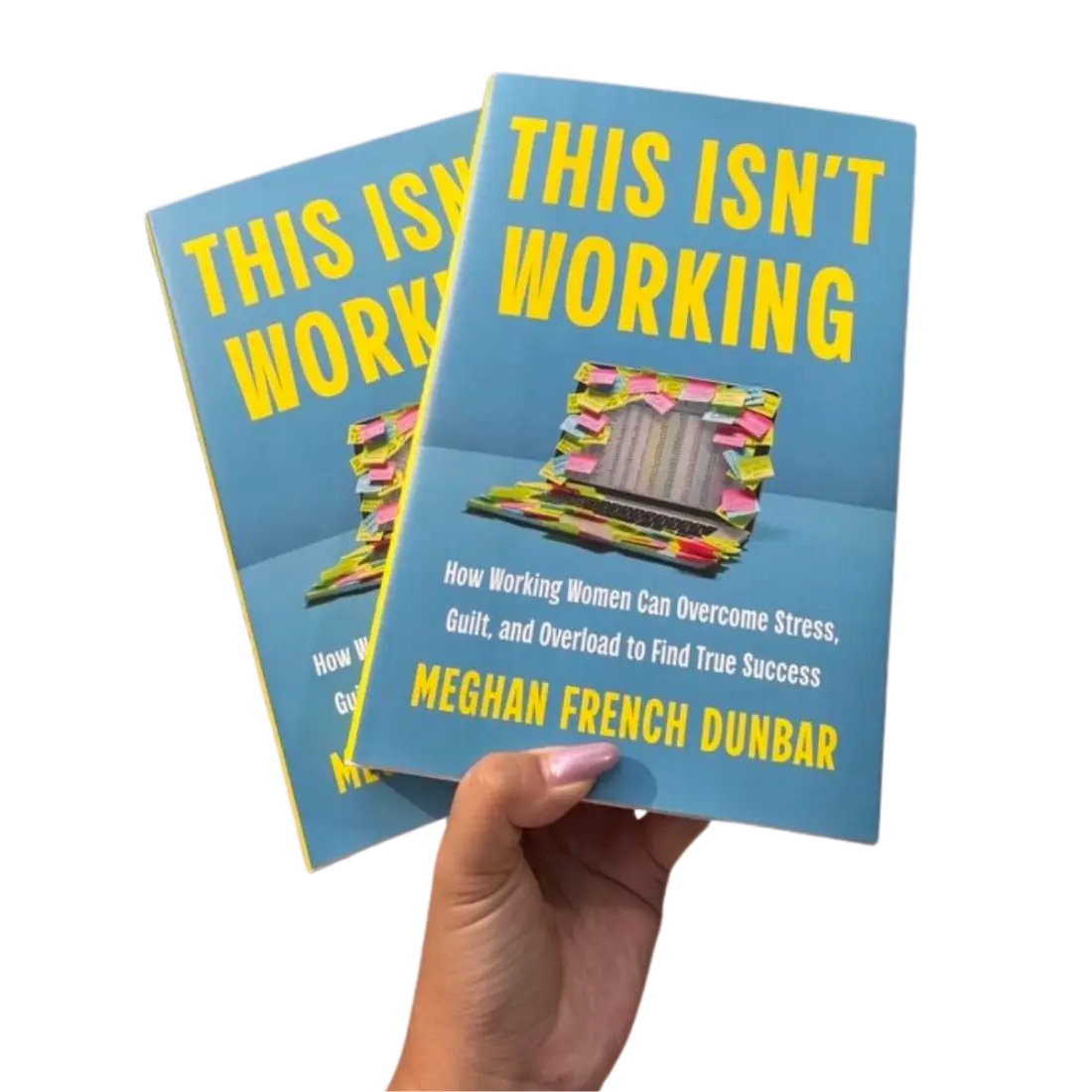
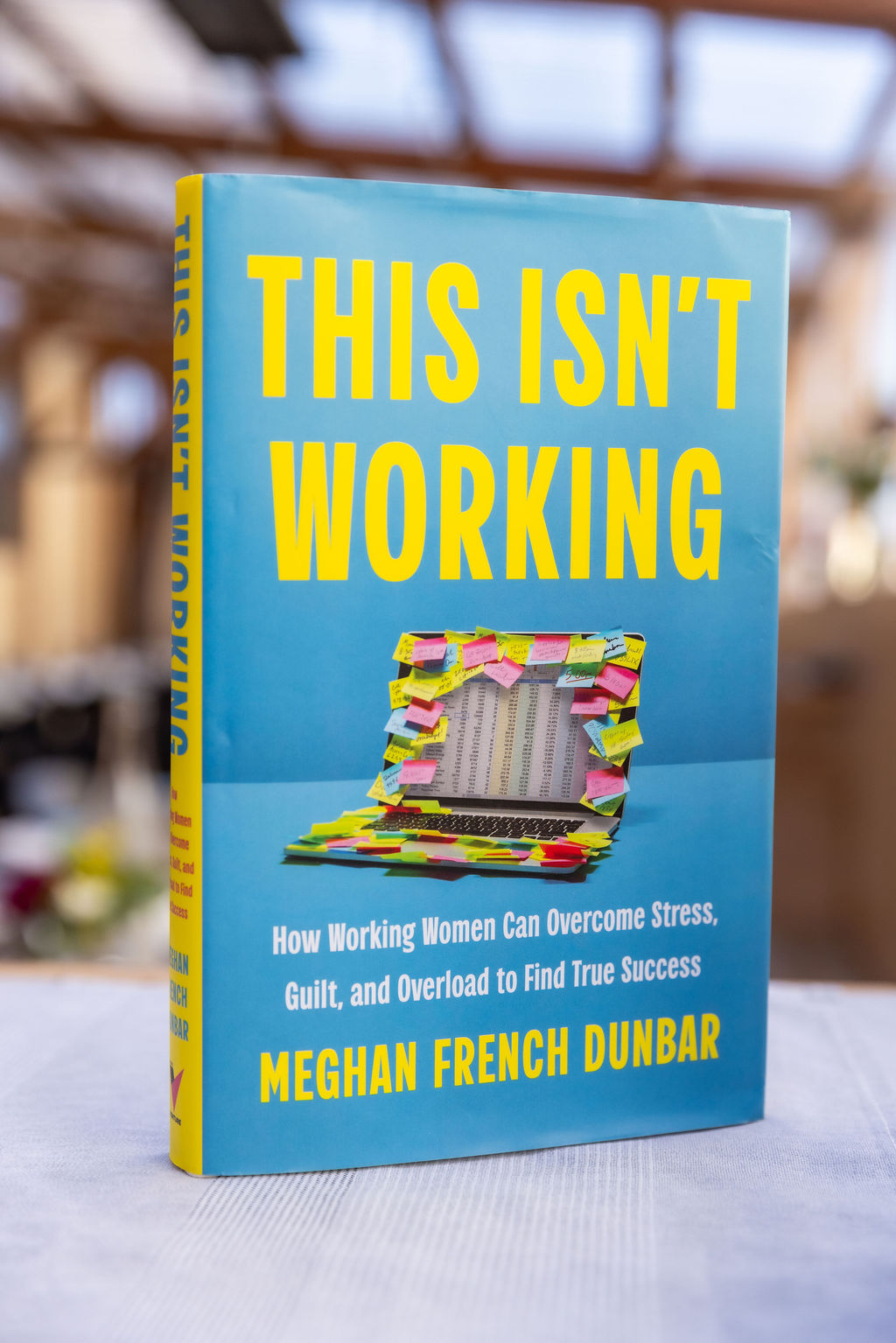
Book: This Isn't Working: meghanfrenchdunbar.com/book
Website: meghanfrenchdunbar.com
Substack: meghanfrenchdunbar.substack.com
Instagram: @meghanfrenchdunbar
LinkedIn: linkedin.com/in/meghanfrenchdunbar
Full Edited Transcript
Vanessa Childers (00:00) I was just done. Like I was done censoring myself and I was done putting up with stuff that I felt was wrong. It's like, Meghan, I see things in weird metaphors. Like, you have your authentic self, which is like the Tootsie Pop, like the good stuff inside the Tootsie Pop. And then you have all of the crystallized stuff around you. And it was just like someone took a hammer and just went, pop.
Meghan (00:22) Hello, lovely human, and welcome to Unbehaved, where we unpack status quo BS, the stuff that's making so many of us feel broken, and talk to fascinating leaders who found success by doing things differently. I'm your host, Meghan French Dunbar, recovering CEO and author of This Isn't Working. And I am so damn thrilled you're here today because we're talking to someone I have worked with for years and someone I absolutely adore. And it's her first ever podcast appearance.
She has one of the coolest stories I have ever heard about what opens up when we start unbehaving. We're talking to author and viral essayist Vanessa Childers, and y'all, she brought the good stuff. Not the polished stuff or the easily digestible soundbite stuff. No, folks, she gifted us with the real, awkward, messy, uncomfortable stuff. The stuff that we actually learn from and relate to.
But that people are too often too scared to say out loud. And that in itself is one of the beautiful things we get into today: how she went from someone with severe social anxiety who outsourced her sense of self-worth to others, to someone who has, as she describes it, become captivated by her own self, who started believing enough in herself to stop settling and start pursuing what lit her soul on fire.
We talk about her experience with refusing to feel responsible for someone else's discomfort for the first time, what drove her ego to a quote, fiery death, and the entirely true, hilarious story involving a hypnotist in Florida, a high school reunion, and a mythological toucan whose advice landed her a book deal on LinkedIn. Yes, really. And before we get into it, just a heads up that Vanessa discusses her eating disorder and suicidal thoughts in this one. If that feels too heavy for you today, please listen to what you need and come back to this one when the time is right. All right, let's get into it.
Meghan French Dunbar (03:08) Well, we hear the pitter patter of your children running around in the background — the wonderful Vanessa Childers. I adore you. We have known each other for like seven, eight years now. We used to work together.
Vanessa Childers (03:17) A long time.
Meghan French Dunbar (03:18) You have a story that I have watched unfold in real time over the last many years of unlearning and unbehaving and that leading to some pretty cool shit. So I wanna start all the way at the beginning with what are some of the beliefs that you used to hold that really clipped your wings that you are starting to let go of, and where did they come from?
Vanessa Childers (03:44) How much time do we have?
Meghan French Dunbar (03:46) Let's do it.
Vanessa Childers (03:49) Okay, I'm going to start chronologically. I feel like you gotta be pretty. Everything that comes out of you acoustically has to be pretty, but quiet and soft. If it's loud, it's gotta be like operatic and classical. Don't be too loud. Don't be too weird.
I feel like I spent probably a good 28 to 30 years just so entrenched in the male gaze and wanting to be not only attractive to any man, full stop, which is gross. But also like captivating, fascinating, intoxicating, and desired. Chasing that caused me to let go of so many other dreams I had. Looking back, it's just really sad.
Let's see, I think I had some beliefs around writing specifically and communicating my thoughts. And I think I went into certain types of journalism — I put it in air quotes because I was like in the home design industry and lifestyle content, like very female-coded things that are kind of like where you should be sharing your opinions and things you should be sharing your opinions about because it's safe and it's artistic but, like, not too crazy creative artistic and not too free thinking.
Yeah, so those are some of the beliefs that I subconsciously subscribed to growing up that we all kind of insidiously just absorb, swimming through capitalism, especially American capitalism. Each one of those I felt like I undid or kind of looked square in the eye and then started to unravel.
I think the biggest one was the male gaze because that was really the strongest hold on me. And once I stopped trying to be attractive to anyone but me — it's so corny, it's so corny — but I started to realize that I could give myself that feeling. I can be captivated by myself. I can be fascinated. I can intoxicate. Like what I love doing is intoxicating and part of me is in that.
And I think part of that was getting burned too many times by dumb boys. And part of that was finding like an actual amazing man. And I married him right away because he was great. And I was like, I'm going to have you even though I already like committed to being a nun. I will undo that and I will marry you because I want hopefully to raise children with someone like you. And now that I have two daughters, I'm like, God. Yeah, I'm going to stop there.
Meghan French Dunbar (06:30) Cool. So speaking of children, for our listeners, I don't think I mentioned it at the beginning: Vanessa has two children and they are home with her right now. When we scheduled this, there was like childcare and it fell through because hashtag mom life. And we are just going to record it anyways because this is the reality of what's happening right now.
You mentioned the one I was going to ask — if there's any that were more harmful than the others — and it sounds like the male gaze was the one that you identified. And I also know that you went to a performing arts high school and you were on stage — a singer. I'm curious about that sense of performing and being concerned about the male gaze and all the things. How did that begin to unravel for you?
Vanessa Childers (07:14) Ooh. I can't pinpoint it down to just one moment. I always felt more comfortable on stage because I had so much social anxiety. Like literally, I was thinking the other day when I was putting on deodorant and I was like, I remember, I remember in middle school — and I know hormones are happening, right? Like hormones are happening in middle school and always for women, but I just remember I could not wear anything solid colors because I would be sweating from my armpits down to my knees, just existing amongst people.
Anxiety is like the flip side of narcissism, in my opinion. Like sometimes it's like you think everything is going wrong just for you and like you're the only one who can't do it and everyone's judging you everywhere you go. They're all noticing you. Like I wouldn't even go for a run during the daytime because I thought people would look at me and say, oh, she has an extra 15 pounds on her. Poor girl trying to run it off, you know, like the things that…
So on stage, I wasn't into improv or comedy or anything, but on stage I was very rehearsed. I came from a classically trained vocal background and everything was rehearsed to a second. And so I could control my presentation and at the same time get a little bit of — because I was desperate, so many of us are desperate to be seen and terrified to be seen, right? I was desperate to be seen and captivating and also terrified of really, really, really truly being seen. And being on the stage was a safe, strange… I still got nervous every time I stood on stage, but it was like a way for me to get a little bit of that dopamine hit of, people saw me for a minute and they liked it and I held their attention.
Like even right now, Meghan, there is still a voice back here convincing me that even though you reached out to me to talk to me today, that you just want me to be quiet. That you're just thinking, get to the point, Vanessa, like I can't listen to you anymore. And I know it's not true and I know it's not logical and it's much more quiet now, but it's still there.
I think there were a few breaking points to all of that. It's a lot of long stories.
Okay, so I got married really young to someone who made me feel seen in the beginning and then made me feel completely invisible by the end, right? It was not a relationship. It was literally like an empty shell of a marriage. We had no idea what we were doing. I had an affair with a married man.
There was also infidelity all over. And thankfully, I think the reason I gave myself permission — not to have the affair, but to unhook from trying to earn love from my first husband, trying to earn just like basic decency and respect — we got divorced when I was 28 or 29. I just turned 29. I was like, okay, I'm starting to become of age where I'm aware of timeline here, right? I still didn't even really want children in my 20s at all, it was not on my radar. But I realized, I'm going to be even more alone in life if I have children with him, because he is not going to be present.
Meghan French Dunbar (10:24) Yeah.
Vanessa Childers (10:25) And I absolutely love my dad and I want someone more present with my children than recreating that dynamic, among other things. And so instead of just ending it like a responsible human, I blew it up. And then of course that blew up and everything blew up and I was left in the wreckage like, oops, and also at least I'm free now. And I'm 29 and I feel like a tiny infant human and I've never lived alone as an adult before and what do I do with my hands, and also I'm never being in a relationship again and I'm going to be a nun and there's going to be lots of cats and traveling and it's going to be great.
Meghan French Dunbar (11:07) Mm-hmm.
Vanessa Childers (11:08) Yep. I'm going to move back home. I'm going to save up money and then I'm going to whatever. Anyway, when all of that blew up, I finally saw the pattern in me. I was a participant in the pattern. I wasn't just like, oh, everyone fails me, or I'm just unlovable and everyone doesn't love me back. It's like, no, I'm choosing this. I am attracted to this and this is no longer going to be the case.
It was almost like I woke up one day and not only was I aware of those patterns, but the patterns weren't there anymore. It was just very strange. And I think that was a really big turning point for me. I was just really interested in cycle breaking and being aware of what I was doing and not just being on default mode.
And then a side effect of that divorce and that implosion of life — I lost all my appetite. And in a very short, maybe six weeks, Meghan, I lost 30 pounds.
Meghan French Dunbar (12:07) Ohhh.
Vanessa Childers (12:07) And all of a sudden I got so many compliments. So many compliments.
Meghan French Dunbar (12:15) For like being sick.
Vanessa Childers (12:16) And I became addicted to that. Yeah. So I say the pattern snapped, but it just kind of wiggled its way into a different spot where I was like, okay, now I'm going to turn all the shite that just happened into something beautiful. And that beautiful thing is that I am now more beautiful. Oh my gosh. I can't believe I said I broke the pattern. Then it was — it was an awareness moment, I guess — because I was stuck in the pattern in a different way, where now I was addicted to thinness. Maybe I was able to say what was on my mind more, but I only could do that if I was somehow completely pleasing physically.
Long story short, for two years I was stuck in this cycle of constantly over-exercising, under-eating, trying to just be as small as I could in all the ways. And then Anthony Bourdain died. I think it was the summer of 2018 or 2017. And when he died by suicide, it jostled me and made me realize I wanted to die too. And I was like, oh, I'm miserable. I am — I'm convincing myself I'm healed and I'm entrenched in an eating disorder. Like, it just found a new spot to live. Like, yeah, I'm no longer chasing unavailable men, I have a very available man now in my life, but here I am chasing — I don't know — a white supremacist beauty standard that I really don't actually believe in, and here I am obsessed with it and engulfed in it and hungry, just starving.
I fainted in the middle of a run once and got road rash all over my face. I was not eating enough and I kept having all these thoughts about food and not knowing what to do with it and not realizing — you're just hungry, hun. Like you just need to…
Meghan French Dunbar (14:07) Mm-hmm.
Vanessa Childers (14:07) …like, the problem isn't the hunger. The problem is what's causing the hunger, which is not eating. The solution to hunger is eating food. Who would have thunk? And then that led me to my therapist, who had the pleasure of unpacking everything I just told you with me for many, many years after that.
So this long runway up to having a professional actually walk me through some of these patterns and see things I never could have seen by myself, or at least not in such a short period of time, really helped me get to decide — to your first question about the beliefs — okay, I don't want this anymore. I don't want this anymore. I'm going to start over.
But in that, that was actually right when I met you, right when I joined Conscious Company Media. So that was like my first step into, I don't really want to keep doing this — like, what felt meaningless home design and lifestyle magazine editing anymore. I was partly fed up with the company I was working with and the complete lack of any support of mothers, even though 100% of their staff was women. They just had no maternity leave. They had no anything for anyone. There were no benefits. And they paid us like nothing. And I came to a breaking point of, I have to leave even though all my friends are here. I need to work at a company where I feel human.
I found you. I was like, oh my god, my life is amazing now. But there was a seven-year stretch — we had pandemic, you left, and I was let go from Conscious Company and Intentional Media. I was pregnant during 2020. I miscarried and had to have a D&C alone and masked in 2020. And then I got pregnant again and I found out I was pregnant the second day on the job of my new pandemic job. And then had to work for nine months and then go on another unpaid maternity leave. And when I went back to work after 11 weeks of being home with my first child during the pandemic, I had a breakdown. I was like, I can't do this. I can't work. I can't do it.
And so I quit. And then, oh my gosh. So through all of this, I have been in eating disorder recovery. So I've gained 70 pounds? Honestly… going from what society would consider thin and pretty and white to what society would consider average and overweight and not attractive, probably. Even within those constraints, I still had — was completely privileged and am completely privileged in so many ways — but it felt like I spent basically the majority of my 30s sacrificing all of my crutches. How I looked, who I went to for validation, what I did for validation — like all these things all of a sudden I had chucked, and I was left with this shell of a person during a time where we were all isolated.
And then people would see me after years and be like, I barely recognized you. Like you look nothing like you used to. People would outright say that. It was painful, but my ego died, I think. I think after all that shite, my ego just died. A fiery, fiery death. And that…
Meghan French Dunbar (17:32) Yeah.
Vanessa Childers (17:35) That's been the biggest gift, right? I still feel like, where did my 30s go? And I'm about to be 40 this year, but I get to start 40 with no ego. So that's great. I like that. It's all behind me now. So it's all fun to talk about, but during it was terrible. But when your ego dies and you don't give a shit about what anyone thinks of you and you also are exhausted for so many reasons — children, parenthood, motherhood, physically and mentally and spiritually, and capitalism and the list goes on — like, you no longer have the energy to try to filter yourself.
Meghan French Dunbar (18:14) I feel like I have gotten to witness what happens when a woman's ego dies with you. And it has been very much publicly over the last year. So for context, you were helping me before my book came out, like just helping me think through my social media and content stuff. And so we were working together pretty closely and we are both trying to figure out what voice to use on the social media, specifically LinkedIn. And I was testing things that needed to be like professional and da-da-da-da-da. And you were also throwing up your random stuff occasionally. And then there was a moment in the middle where the DGAF filter just like fell off.
And you specifically just started letting it rip on LinkedIn. And I got to watch — the feeling of watching someone who you see all of their genius and how bright and sparkly they are, watching other people start to see it for the first time, for me is like one of my favorite feelings in the world. And I got to watch this happen with you in real time on the LinkedIn's. You're writing, you're putting things out, they're getting weirder and weirder, and I am just like, go Vanessa, this is awesome.
And the more that you do this, the more you're starting to get this little cult-like following around you that ultimately leads to some other things that we'll talk about in just a sec. But let's talk about that. What was that like for you? What started it?
Vanessa Childers (19:38) Yeah. So you have been the closest witness to what started it. So what started the beginning of it was November 2024. Trump became president. And we all were like, no, this can't be real. I think that broke open a very internal and nuclear part of me that was like, I'm gonna stop censoring myself because it doesn't matter. Because people don't give a shit about me. They don't. The people who should don't. I don't matter. I even wrote this rage poem. And it was just — I closed my eyes, tears are streaming down my face, and I'm typing basically, I do not matter. I do not matter. What other conclusion could I possibly come to? I do not matter.
And that's when I was like, no more censoring. I'm not protecting people from my emotions anymore. You know what I mean?
Meghan French Dunbar (20:34) Mm-hmm.
Vanessa Childers (20:34) So that happened internally. And then I had a client — I was freelance writing, copywriting. I had a business consultant who hooked me up with a client. Anyway, it was a very toxic dynamic and it increasingly became more and more toxic. And it was someone that you knew as well. And so at some point I was like, this doesn't feel right. So I was like, Meghan, is this normal? And you were like, hell no, it's not normal.
Meghan French Dunbar (21:05) You're right.
Vanessa Childers (21:07) And so I realized, I'm going to set a very strong boundary here. I told this man, I cannot do this X, Y, and Z, which was completely fair. And this man tried to threaten me. He tried to gaslight me. He tried to intimidate me. And he would not for the life of him communicate with me via writing. He wanted to get me on a call. I knew in my bones that he knew that I was a better communicator in writing than I am from my mouth. And I knew that he would try not only to not have a paper trail of his words to me, but I knew that he knew that he could intimidate me on a call. And so I refused to talk to him. I told our mutual client about everything. And I basically told everyone to go F themselves in a very, you know, professional way.
But I was just done. Like I was done censoring myself and I was done putting up with stuff that I felt was wrong. It's like, Meghan, I see things in weird metaphors. Like, you have your authentic self, which is like the Tootsie Pop, like the good stuff inside the Tootsie Pop. And then you have all of the crystallized stuff around you. And it was just like someone took a hammer and just went, pop. And I don't have any of that. I just can't make people comfortable anymore unless it's, you know, people I care about and I'm not harming people. I'm just not going to make people comfortable from the consequences of their own actions. You are a grown man. You can bear the discomfort perhaps for the first time in your whole life.
Welcome to being a woman. Things are uncomfortable and you have to feel shame. And that shift in me not caring about what people think and also just deciding not to be filtered — some of it was not a conscious choice, it just kind of happened. I think I also realized I was freelancing during a time when my eldest was in some sort of preschool and my youngest was young enough that she could be sitting on a blanket while I worked. But as she became more mobile, I was realizing, you know what? I can't be freelancing right now anyway. It's way too hard to be working and a full-time parent. And the older child's only in school for two hours a day. I was literally a full, full-time parent to two children and trying to be a freelance copywriter. And I'm sure many people do it. I could not. It was too much.
So instead of trying to use my LinkedIn as a place to talk about my niche and copywriting and content and stuff, I just started writing about writing and writing about my voice and writing about everything that was pissing me off. And trying to remember all these core memories of falling in love with the words and falling in love with the magic of storytelling and not caring about any business coming from it. And the only reason I did it on LinkedIn is because there were already people there, and I ramble, if you hadn't noticed, and so I need long-form content. And LinkedIn even — it has a 3,000-character max and I have to chop down most of the stuff I write.
I knew inherently that what I needed to do needed to be witnessed, it needed to be public. And I didn't care if the people who read it were like, what the actual. I just needed to be witnessed. You know? And so there was a good six months of me being crazy on LinkedIn. People responded to it. Because a lot of what I was talking about was like millennial angst and hating this lie we were sold about go to college and get a job and climb the ladder and retire and you'll own a home and you will be able to support your spouse to stay home and raise your children. None of that is the case.
And people were — I think people really resonated with, one, just the angst and the burnout, because we're all going through it. Millennials in particular, Gen X in particular. And also, I started riding the wave, I think, which is a very breathless, run-on, run-on sentencing. I like to drop Easter eggs in there. I'll make connections that I don't even think my reader will ever catch onto, and I think people did. People who perhaps are — I haven't been tested for anything, I'm pretty sure I'm neurodivergent — and so I think people who are in that realm of consciousness too, felt seen. And then of course I got my hits of dopamine from that and couldn't stop. And I'm not sure if that's healthy, but it feels great, and I've really enjoyed it.
And then someone commented on one of my posts once and was like, you should write a book. And I was like, no, I've always wanted to write a book. I have no idea how to write a book. I have no idea. And she was like, well, what if — have you been keeping a repository of all your posts? Because it's like you could just string them all together. And I was like, no, but I will keep a repository. That's fun. I don't think I could string it together. And then, of course, once you have a seed planted, the more you expose yourself to the idea, the more you figure out how it could work. I started realizing, well, I could. I mean, you could put something together. It doesn't mean that anyone would ever read it.
Meghan French Dunbar (26:55) Was this just a stranger who had found your writing on LinkedIn?
Vanessa Childers (26:59) I've been meaning to go back and see who it is so that I can properly call them out in the best way and be like, you are kind of the reason that this happened.
Meghan French Dunbar (27:06) But that, I mean, it's just like, we never know the impact that our words have. And just reaching out to people and encouraging them to do things and highlighting what you see them shining their brightest light at — like, it matters.
Vanessa Childers (27:22) And it takes — sometimes it's a one-off comment that you don't even think about ever again until you realize someone tells you, like, yeah, that planted a seed.
And I don't know if I should talk about the hypnotherapy session that I… yeah.
Meghan French Dunbar (27:37) Oh, now you have to.
Vanessa Childers (27:40) So I was about six months into this writing journey and approaching my 20th high school reunion. My whole family — our whole family is gonna go back home, visiting my mom during the summer, and I was gonna go to my high school reunion. Even though I was asked multiple times by different people, I never went to a prom. I was so socially anxious — we talked about this. Even if someone asked me to prom, I was convinced they didn't want me to go with them. So the idea that I even wanted to go to my high school reunion…
I didn't go to my 10th reunion because I was 10 pounds heavier than I thought I should be to go to a high school reunion. That's so sad. And so I was like, you know what? Fuck it. I don't care what people think. And I would love to see people and let's go. And also I will be not at home. And so that would be great. I will do it. We came home and my mom is into some healing stuff. She went to a hypnotherapy session and loved it. So it's an all-day marathon therapy session with hypnotherapy involved.
So she gifted this to me. She was like, would you be interested? Because I would love to gift you a session and you could do it while you're here for your reunion. And I was like, okay, I have plans on this day. And she was like, well, it seems like the hypnotherapist could do it the day before your high school reunion. I'm like, cool.
So the way that this particular hypnotherapist worked is that you go, and however long as it takes, she's there. I went, I don't know, nine o'clock in the morning. We spent three hours doing a life review. Basically what we're doing right now. I just trauma dumped and we kind of followed threads of thought. What she was trying to do was to try to find some of the key questions. Of course, I came — she told me to come with questions to ask my higher consciousness, my higher self, some intelligence that we're gonna tap into, some questions that I wanted to know. And I was like, a lot of this stuff doesn't feel activated, like some old stuff that feels like I've worked through with my therapist. What I really wanna focus on is like my creative self. I wanna unlock more of this feeling of being electrically alive when I write, and I want to figure out how to not have to go backwards and go work a nine-to-five and not have any time between being a mom and a full-time whatever I'm going to be to do what I love almost the most, which is writing these days. And so that was one of the questions.
So the three hours of talking, uncovering the questions, and then about three hours of a hypnotherapy session where you're reclined in like a dentist chair and she changes her voice to this register that's really low and slow. Like she's possessed, and she walks you through getting your brain to the alpha state or whatever state — theta — I don't remember, but whatever it is that you are basically in a dream. It's like lucid dreaming, right?
And at first I thought it was making things up. She's like, what do you see? And I'm like, a beach with sand and sunset. And I was like, you're making this up right now. And then all of a sudden something clicked and a scene kind of flashed in front of me and I was a tree. I should mention that I really wanted a past life regression. So this is what I got. I was a tree in my past life. I didn't get any cool, like I was some…
Meghan French Dunbar (31:06) Okay.
Vanessa Childers (31:07) 17th-century peasant. No, I was a tree. And I remember…
Meghan French Dunbar (31:15) Which is awesome.
Vanessa Childers (31:17) I was a tree and I was surrounded by trees and I could see 360 around me and I could feel my rootedness into the ground. And I could feel that the message was, you have always been here. Like that, you were the universe, the universe always has been or something.
Meghan French Dunbar (31:36) Eternal.
Vanessa Childers (31:38) And then the next scene I saw — it wasn't the next scene, but the next thing that happened within that scene — was there was a little toucan who hopped in front of me and must have been on a branch right in front of where my sense of perspective was. And his little beady eye was right there. And I was like, he's cute. It would be cool if I was the toucan. That would at least be interesting. But I'm just going to tell her I see a toucan. I am a tree. And then — whoosh — I went into a different scene. I went through, I was like in ex-boyfriend's childhoods and just went through a wild ride. Things that…
Meghan French Dunbar (32:07) Sounds like it, yeah.
Vanessa Childers (32:09) …I didn't think I needed to excavate popped up, and so we explored all of that, blah blah blah blah. We never really got tapped into any creative ideas or anything. It was kind of disappointing. And then at the very end, the last scene was back in that forest. And I now was the toucan. And it was really, really cool. It was like I was both. I was like the tree and I was the toucan. I was the observed and the observer. And we were kind of like one in the same, this loop of consciousness.
The therapist asked me to ask the toucan about my writing. Like, how can Vanessa continue to expand as a writer and create a career out of this? And the toucan dead-ass said, keep writing on LinkedIn. And…
Meghan French Dunbar (33:03) Hahaha.
Vanessa Childers (33:03) I was like, you've got to be kidding me. I was like, you — are you kidding? This is so sad. My life is such a sad little pocket of the universe. Keep writing on LinkedIn. Well, it was just hilarious.
Meghan French Dunbar (33:16) Or an awesome one.
Vanessa Childers (33:21) Objectively, a mythological toucan saying keep writing, pouring your heart out on a job site.
Meghan French Dunbar (33:31) Hahaha.
Vanessa Childers (33:33) Cool. But yeah.
Meghan French Dunbar (33:34) But he wasn't wrong.
Vanessa Childers (33:37) No. The reason he wasn't wrong was I ended up — another silly post I posted was like, hey, I've legitimately lost my mind. I'm thinking about writing a book. And I shouldn't tell anyone because they say not to tell people until you have something that you've made. But I'm telling everyone now that I'm trying to make something. And if any publisher or literary agent or editor or crazy person in the publishing industry is interested in something about me, please come find me. And this woman reached out — Nicole Reed of Reed Press and Gremlin Books — who had an editorial consultancy and she was just about to launch her publishing company. And she was like, I'm launching my publishing company next year. I would love to chat about this book idea.
So we had a chat. She was like, just send me what you have. I just sent her this repository of LinkedIn posts. I didn't have anything intentionally written for a book. And I was still so scared of the idea of doing anything on purpose for a book, because then it would be like serious. I just thought she would say, yeah, we could string this together. It'd be great. She came back and she was like, listen, we have some pillar essays that I need you to write to make this a real thing. Like, you've mentioned an affair, you've mentioned a divorce, you've mentioned an eating disorder, you've mentioned spiritual awakenings along your life and casually mentioning your brothers and your mom and your mom has cancer and all these different things. She's like, we need that. We need more context about your life.
So the way that it works is her editorial consultancy — for hire, you can hire her for services like editing your book and feedback and developmental restructuring. Once your manuscript is complete and has been professionally edited, whether by her or elsewhere, that's when you can submit it to her publishing company. They don't accept unfinished manuscripts. She was like, but I want to offer you our editorial fellowship, which means that you get all of the editorial services for free because we want to be your publisher. So I think that's kind of how some of the big houses usually work — like you get their editorial services once you have a book deal. But it was pretty great to have this service through a small, small startup publisher. And I had to pinch myself many times. And since then, she's incredible. I love her so much.
I have no idea how we found each other because it's so perfect. And she has encouraged me to write these heavier, darker, more complex, deeper essays that are still kind of ridiculous — run-on, breathless, hilarious, absurd — but just so much deeper stuff that I never thought I wanted to try and do, because I was afraid it would be mediocre or bad — or, I mean, it could be, but I did it anyway.
Meghan French Dunbar (36:41) I love this. What I am hearing and what I got to witness was: I am letting go of my ego, I'm going to talk about the real things, I'm going to do it in my own unique, authentic way, I'm going to stop caring what people think. And all of a sudden that leads to a massive online following and a book deal, and you finding the exact right person that you're going to work with, and then your dream of publishing your frickin' book, which is about to happen — all because of you letting go of these harmful limiting beliefs.
Vanessa Childers (37:08) Yeah. And the cool thing is that basically the whole arc of the book is — yeah, I mean, it's incredible. I still don't really know what's going on. And I don't know what I'm doing. I don't know what I'm doing. But…
Meghan French Dunbar (37:21) None of us do. We're all making it up.
Vanessa Childers (37:24) Yep, that's for sure. At least I am. But the whole arc of the book is — you know, is — the cool thing about seeing some of the posts that actually went on LinkedIn in the early days is you get to watch me discover my rhythm kind of in real time. And then by the end of the book is when you start to see some of the essays that I wrote for the book and see how I start to take myself seriously as a writer. And it's really cool.
I mean, it's still in developmental edits right now, which is so excruciating because it's like passing your baby off to daycare and then just sitting around thinking about what's happening to your baby when you're not there. You know that. You know that.
Meghan French Dunbar (38:07) Yup, been there.
Vanessa Childers (38:09) But I'm really excited because I can feel what it's going to be even though I don't know exactly what it looks like yet. But yeah, it's about me finding my voice. It's about being a millennial — growing up as a millennial and forgetting the thing that lit you on fire and then coming back around to it after burnout, which is interesting — double metaphor there. Especially — it's for any creative, but especially if you were in love with words and stories and reading, Goosebumps and Babysitter's Club and all these things that just gave these — that made life feel magical — we kind of sacrifice that for this promise that no one ever showed up to fulfill. And so now it's our duty to make that child feel happy and seen and alive again.
Meghan French Dunbar (39:02) And then, I mean, that's not just for creatives. Like that is for everyone who —
Vanessa Childers (39:04) No, everyone's a creative, too, I think.
Meghan French Dunbar (39:08) I mean, how many people have let go of dreams because they feel like they're not practical or they can't make money, or they tell themselves a story or that they're not good enough. We tell ourselves a story of all of these things because we're afraid to pursue the actual dream because it is scary. And you are showing us the path on how to do this.
If you are going to — particularly women — a permission slip to do something, what is it that you would like to give women permission to do?
Vanessa Childers (39:39) Yeah, I'm glad you asked that because I was just telling myself that I want to scream something out that I haven't even touched, which is: make bad art. Make it bad on purpose. See how bad you can get. Because when that's your actual — when you're embracing the fact that it's probably not going to be great — that's when you find some interesting stuff, I think. When you no longer are trying to be something, and you just do the thing. The thing that you have convinced yourself you're not, like, so and so are, you — like, I forever told myself, well, I'm not interested in fiction, so I'm not a writer, I can't write a book, what am I going to write, a memoir? I'm 20, whatever, like no one wants to read a memoir about someone who didn't do anything — some random, boring person who thinks their life is so important that they're gonna write about it. Like, no one.
So I just did it, and then I was like, well, you know what? I don't care if people think I'm self-important. I don't care. I'm not hurting anyone. Why can't I just write? And the people who don't like it can swipe on by. And the people who think it's terrible — and I was one of those people for a long time, and I was like, gross, why am I doing this? This is terrible. Why? Like, you're embarrassing me. Like, I just told myself, I'm doing this because doing it badly is less painful than not doing it at all. So permission to do it badly, and please expect it will be bad. Please just try to make it bad. Because then it's fun.
Meghan French Dunbar (41:21) I love this. All right, and so we can find you on the LinkedIn's, we can find you on the Substacks. Is there any other place that people can find you, except to find the book?
Vanessa Childers (41:29) I mean, I have a strange website right now that maybe one day will be better. So we'll mention it. And hopefully when you go look for it, you'll see half a person trying to be an author and half a person still trying to get a job, which I really don't want a job, but I probably need to get one if I want to stay in a house. So, vanessachilders.com.
Meghan French Dunbar (41:53) You sold that. Oh my god.
Vanessa Childers (41:58) Half portfolio, half mental breakdown in website form.
Meghan French Dunbar (42:02) It's your tagline.
Vanessa Childers (42:04) Yeah.
Meghan French Dunbar (42:05) Oh my God, I adore you. Thank you for being real and for showing us what it looks like — like the messy parts, the hard parts, the unlearning parts — and what it looks like to unbehave, and what can happen when you start doing that. This is — I just —
Vanessa Childers (42:21) Learn from the best, MFD.
Meghan French Dunbar (42:23) This is her first podcast, her first podcast ever, people. And I got it. Thank you. Thank you. You're the best. Yay, love you.
Vanessa Childers (42:33) Thank you, Meghan. I love you.
Meghan (42:35) All right, friend, before I sign off, here are the key unbehaved lessons I pulled from Vanessa.
Number one: patterns don't break, they migrate until they're healed. Vanessa thought her divorce broke her pattern of chasing approval, but six weeks later, when she started getting compliments after losing 30 pounds, she simply moved from chasing unavailable men to chasing thinness. It was the same need for external approval, just dressed in a different package. The pattern didn't actually start to break until she started working with a professional therapist who helped her truly investigate her patterns and do the work to start healing. A lot of the time, many of us think that our patterns are healed, but we actually haven't put in the work and they're just showing up in our lives somewhere else.
Lesson number two: ego death is a gift, but that doesn't mean that it's easy. Vanessa walked us through a series of challenges that eventually led to what she called the fiery death of her ego. The pandemic miscarriage, the breakdown after 11 weeks of maternity leave, the 70-pound weight gain, and the humiliation of people telling her to her face, "I barely recognize you." All of it was truly painful in the moment. But it was also necessary for what she now calls the biggest gift — the death of the ego that had programmed her to outsource her sense of self-worth her entire life. I've experienced the same dynamic myself. The biggest moments of growth in my life have happened during the hardest times. It doesn't make whatever you're going through any easier, but hopefully it gives you a different perspective to hold on to to help you get to the other side.
Number three: your words matter. Vanessa told us about the woman who reached out to her on LinkedIn to ask her, have you ever thought about writing a book? A simple, encouraging question from a stranger changed the trajectory of Vanessa's entire life. It was the seed that needed to be planted in order for Vanessa to actually consider taking her writing more seriously. She told us, once you have a seed planted, the more you expose yourself to the idea, the more you figure out how it could work. So reach out and tell someone how fabulous they are and plant a seed for them. You never know how much your words of encouragement might mean to someone or what it might set in motion. And on the flip side, pay attention when people reflect your gifts back to you. They're often telling you something you're too afraid to say out loud or believe yourself.
And number four: put yourself out there. Vanessa's story of jumping on LinkedIn to announce to the entire world that she wanted to write a book, even though she was scared and even though it wasn't what she was supposed to do, is why her book, which we now know is officially titled Touks Made Me Write This, will be on shelves next year. She didn't play it safe. She didn't follow conventional wisdom. She didn't wait until she felt ready. No. She yelled that shit from the rooftops and thoroughly unbehaved. It was such a good reminder for me that your journey doesn't have to look like anyone else's. There is no one right way, and that often the best way is the one that feels most authentic to you.
That's all for today, my friend. I'll see you next time.