Sehreen Noor Ali: Why Holding It Together Is Breaking You | Unbehaved
You've been holding it all together for a while now. A demanding career, your kids, your relationships, maybe a hard season on top of all of it. And somewhere underneath all the busyness, you know you're running on fumes.
This episode is about the hidden costs of pushing through when your tank is on empty — something this week's guest Sehreen Noor Ali tried to do for years.
Sehreen built a startup while her youngest daughter was in and out of hospitals with a life-threatening diagnosis. She fundraised, parented, pitched investors, and performed at the highest level for years. She and her husband made it through. And then she had to figure out how to actually recover on the other side — a process that took two years, cracked open a self-image she'd been carrying her entire life, and ultimately pushed her toward a completely new definition of success.
It's a deeply honest conversation about what it looks like to hold your life together through the hardest things imaginable and how to reinvent yourself from a place of wholeness on the other side.
Fair warning: this is not a five-step plan. It's a conversation about what it actually took — including the critical part that she'd never said publicly before.
WHAT WE COVER
- The TLDR of Sehreen's startup collapse — and the "breath of air after you haven't had air" moment when she walked away
- Why you can hold it all together through almost anything — but you have to recover after, and no one tells you that
- Her honest answer about what she wishes she had done differently in fundraising (including the "being apologetic about being a mother" trap)
- What support actually helps someone going through a child's medical crisis — and what unintentionally hurts
- The "hyper-independence" script that so many immigrant daughters and high-achieving women carry — and why letting it die was the most freeing thing she's ever done
- The hospital moment that started her two-year journey of learning to trust herself
- Her first-ever public disclosure of the tool that cracked her open — and why she's willing to take the judgment to share it
- Why her definition of success evolved from alpha to flow — and the painful honesty of how hard that transition actually is
- Why self-mastery — including spiritual self-mastery — is her hill to die on for the future of leadership
- A simple, actionable practice she uses to turn anger into insight (one you can start this week)
- Why she thinks AI is a form of intelligence to be curious about, not threatened by
- Her permission slip for the woman who has been quietly convinced she's always been the problem
ABOUT THE GUEST
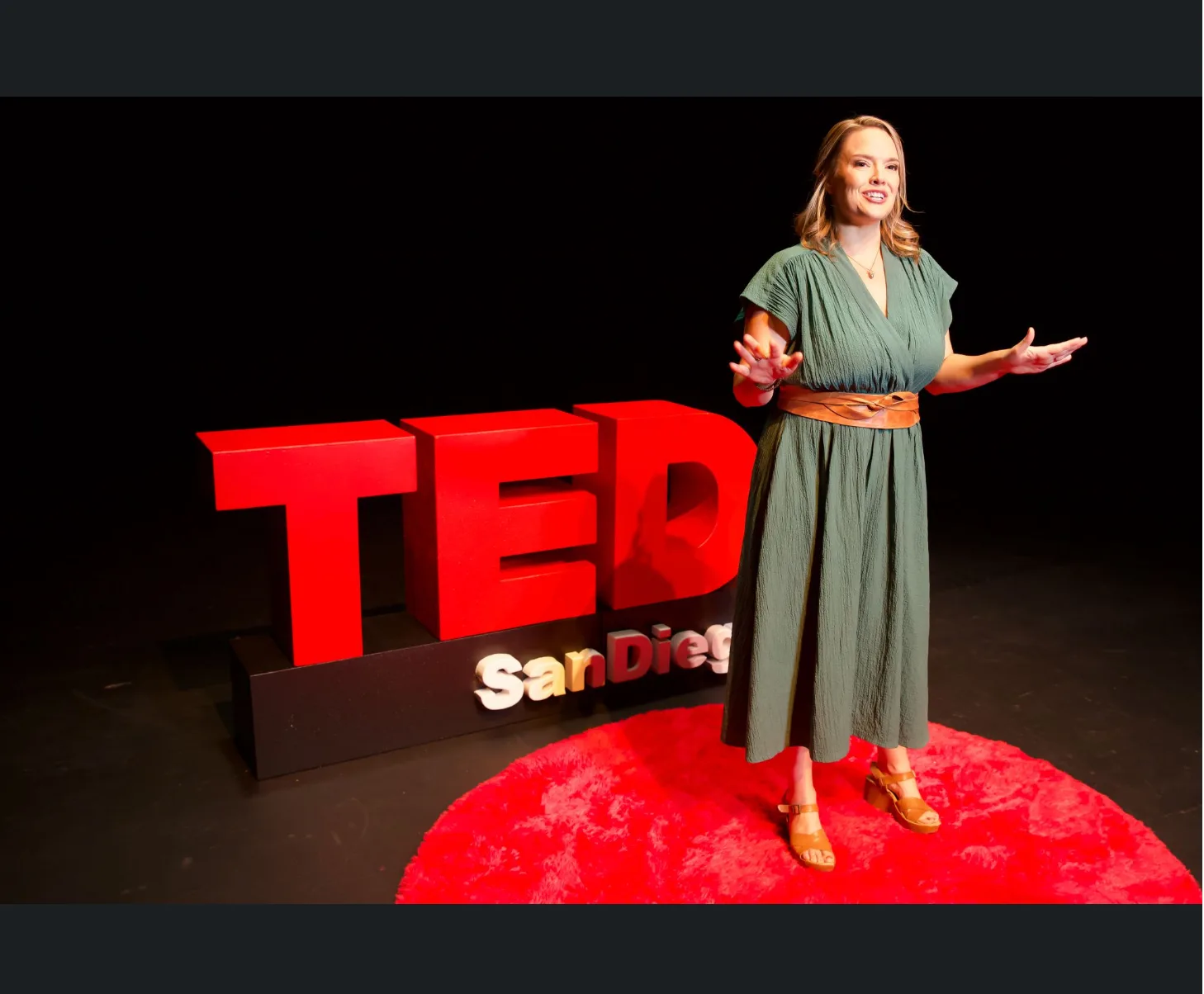
Sehreen Noor Ali is a strategist and operator who helps leaders navigate the AI era with clarity, positioning, and inner work. She's the co-founder of Sleuth, a venture-backed pediatric-AI company that Fast Company named a World-Changing Idea. Before Sleuth, she led sales teams in education technology and — earlier in her career — built early digital diplomacy programs at the U.S. State Department and regularly advised the White House on technology.
She's currently building out her strategic practice helping high-performing leaders — nonprofit heads, bank MDs, mission-driven founders — develop both AI fluency and the self-mastery she believes will be the leadership edge of the future. Sehreen lives in New York with her husband and two daughters.
PULL QUOTES
"What we did not know is you have to recover after peak performing."
— Sehreen Noor Ali
"I spent most of my life thinking I was the problem. Deeply. Always. I was always the problem."
— Sehreen Noor Ali
"My nervous system would be like, 'I can't do this. I'm not supposed to take from people.'"
— Sehreen Noor Ali, on her inability to receive help
"I really thought of myself as someone who did it all and was helping everyone. I've let that self-image die, thank God — because I can see how annoying it must be to be next to a person who keeps having some version of martyrdom syndrome."
— Sehreen Noor Ali
"The definition of success now is flow. The definition then was alpha. And going in flow is like the hardest ish ever."
— Sehreen Noor Ali
"The hill I will die on is that self-mastery is what's going to be most important for leaders in the future — including spiritual self-mastery."
— Sehreen Noor Ali
"That intuition you feel probably can be pulled on. It might not be that you're always wrong or not enough."
— Sehreen Noor Ali, the permission slip
CHAPTERS
00:00 — Cold open: "You have to recover after peak performing"
00:36 — Meghan's intro + welcome
03:01 — Interview begins: the TLDR of walking away from Sleuth
05:33 — "Our role is to find the effort and the agency, and then to let go of the outcome"
07:22 — What Sehreen wishes she had done differently (the apologetic-mother fundraising trap)
08:34 — What good support actually looks like for a parent of a child with support needs
09:31 — The hyper-independence script — "I'm not supposed to take from people"
10:29 — The hospital moment that began the trust-yourself journey
12:34 — First-ever public disclosure of plant medicine — and the rage it unlocked
13:53 — Meghan shares her own psilocybin therapy experience
15:41 — Growing up South Asian + first-gen + Muslim community — and her parents' "live ethically" ethos
17:44 — Returning to spiritual practice in her 40s
18:22 — The women's circle synchronicity story (the Maria text that changed everything)
20:15 — Growing up in community — dinner parties, deep relationships, "I've been to your house"
21:55 — The positioning problem of being a mother in fundraising
22:54 — Her current work: strategist and operator, not coach — AI fluency + spiritual self-mastery for leaders
24:28 — "The hill I will die on" — self-mastery as the future of leadership
26:01 — The AI summit sweatshirt story + emotional regulation in real time
27:19 — Success = flow, not alpha — the painful honesty of the transition
28:24 — The tools: breathwork, journaling, the women's circle, trusting herself
29:15 — "I spent most of my life thinking I was the problem" — mutual recognition with Meghan
29:46 — Scaffolding for the journey + the astrology tool (Mentora)
32:06 — AI as "another form of intelligence" — curious, not threatened
34:06 — The permission slip: "That intuition you feel probably can be pulled on"
34:38 — Unbehaved Lessons of the Day
RESOURCES MENTIONED
Sehreen's work + background:
- Sleuth — Sehreen's venture-backed pediatric-AI startup (named a Fast Company World-Changing Idea)
- Hitendra Wadhwa & Mentora — the astrology-based tool she references for intuitive validation
- Her current work — AI fluency + positioning strategy for leaders navigating the "metacrisis"
People + things referenced:
- Arthur Brooks — on suffering as sacred (referenced by Meghan)
- The Artist's Way by Julia Cameron (the morning-pages practice that led to the women's-circle moment)
- Positive youth development theory — the research on why kids need adults outside their parents who care about them
- Her (Spike Jonze, 2013) — the film referenced in the AI conversation
Concepts + frameworks referenced:
- Peak performing + recovery — the central thesis of the episode
- Hyper-independence as a script — especially in immigrant daughters
- Alpha vs. flow — the shift in definition of success
- Self-mastery (including spiritual self-mastery) — Sehreen's thesis for the future of leadership
- Positioning vs. identity — the fundraising-as-a-mother reframe
CONNECT WITH SEHREEN
- LinkedIn: https://www.linkedin.com/in/sehreennoorali/
- Her consulting practice Tecura Labs: https://tecuralabs.com/
CONNECT WITH MEGHAN & UNBEHAVED
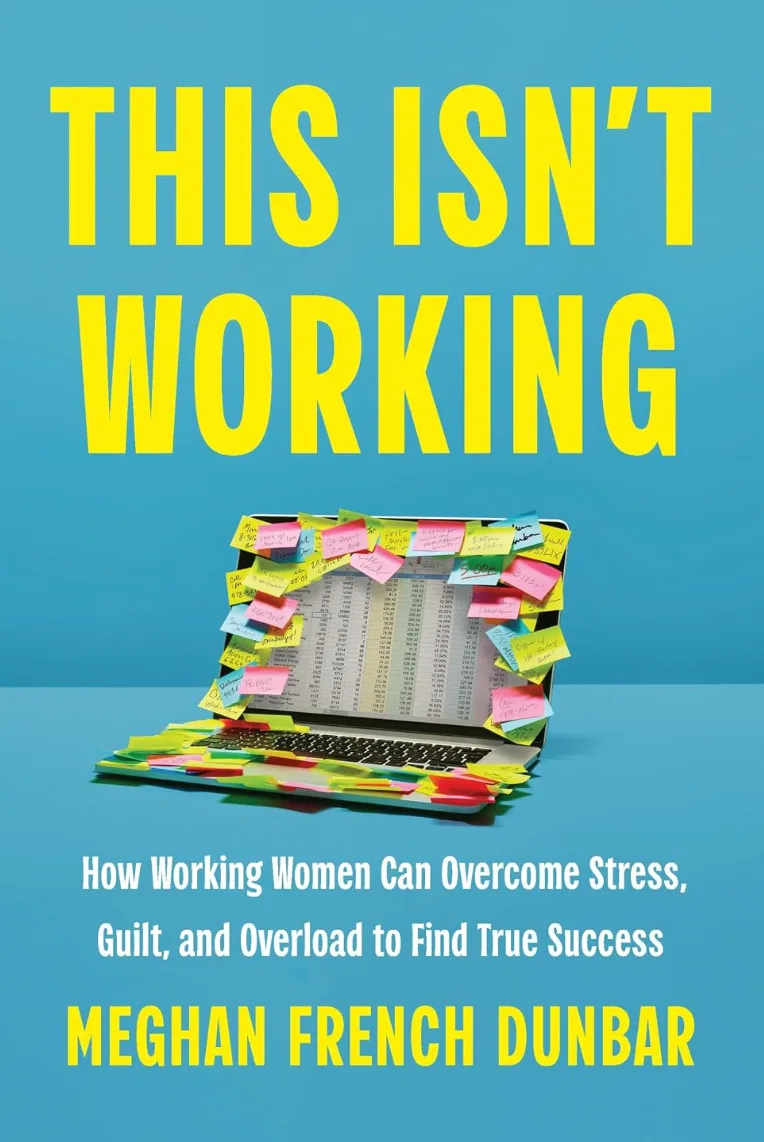
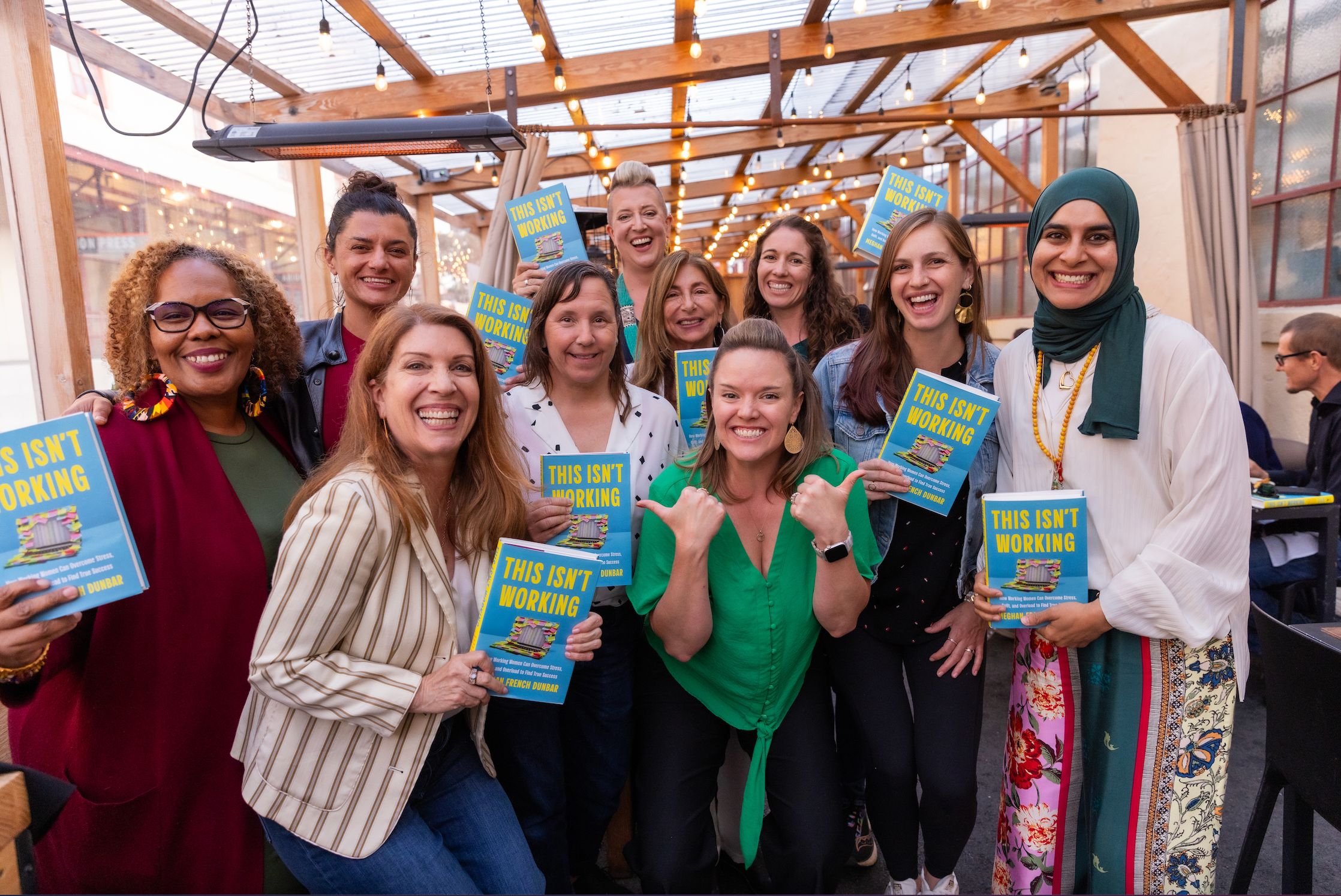
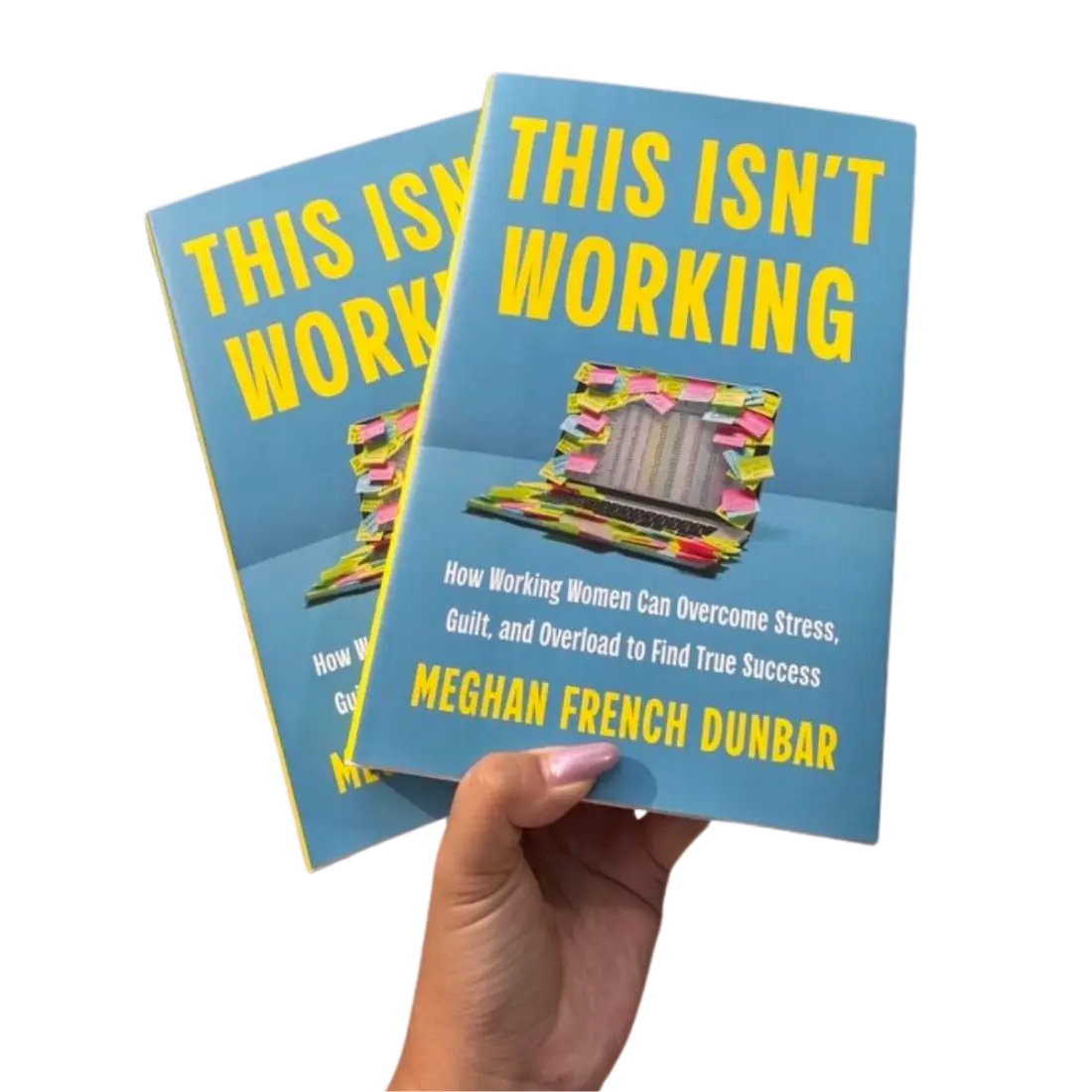
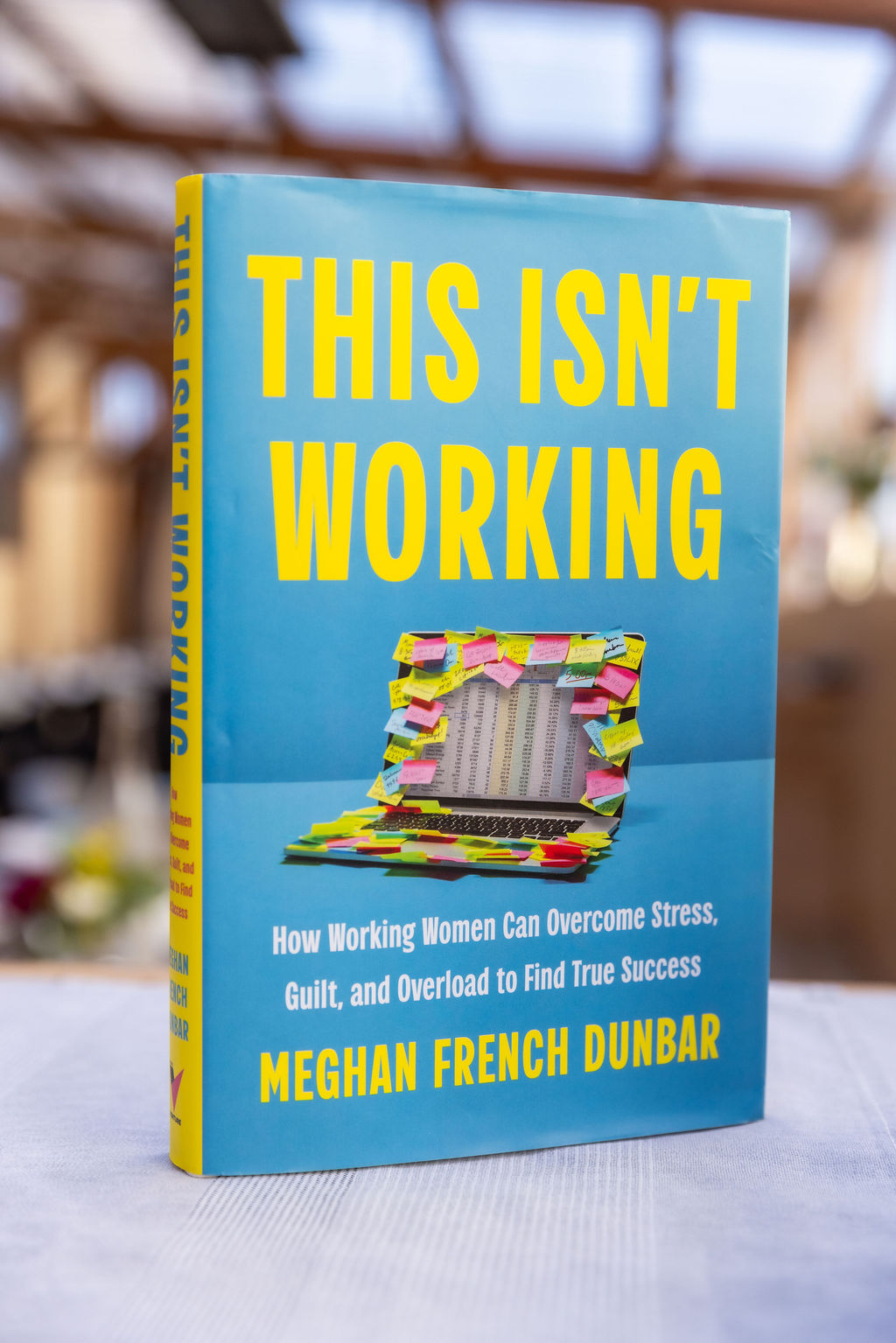
- Book: This Isn't Working: meghanfrenchdunbar.com/book
- Website: meghanfrenchdunbar.com
- Substack: meghanfrenchdunbar.substack.com
- Instagram: @meghanfrenchdunbar
- LinkedIn: linkedin.com/in/meghanfrenchdunbar
EPISODE TRANSCRIPT
Lightly cleaned for readability (duplicate words, filler, and transcription artifacts removed). All substantive content preserved.
COLD OPEN
Sehreen Noor Ali (00:00): My daughter was hospitalized right when we were fundraising. My younger daughter, the one who had the medical diagnosis. We were in New Jersey, and my husband and my older daughter were in New York City.
We were both peak performing. And I remember telling a friend of mine who was like the track captain in college about this idea of peak performing under insane stress. And it's very common actually. And that was kind of cool. I'm not gonna lie — the alpha on me was like, wow, we're amazing. I'm talking to Gary Vee, I'm talking to Chelsea Clinton, it felt really good.
I think what we did not know is you have to recover after peak performing.
INTRO
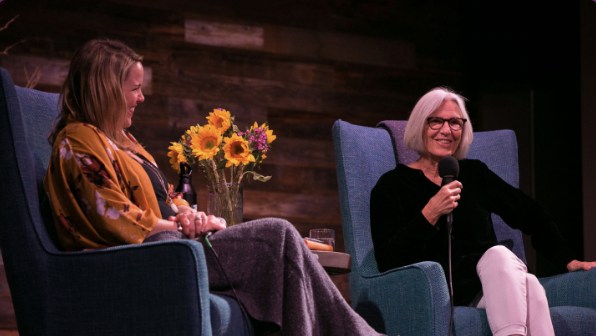
Meghan (00:36): Hello, lovely human, and welcome to Unbehaved, where we unpack the status quo BS that's making so many of us feel broken and talk to fascinating leaders who found success by doing things differently. I'm your host, Meghan French Dunbar, recovering CEO and author of This Isn't Working, and I am so damn thrilled you're here.
Today we're talking to the extraordinary Sehreen Noor Ali. In a deeply honest and raw conversation about what it looks like to navigate extreme life events while still being forced to perform at work, and how to reinvent yourself after things fall apart. And Sehreen is a master of reinvention.
Earlier in her career, she built digital diplomacy programs at the State Department and advised the White House on technology use. She led sales teams in education technology, and in 2019, she co-founded Sleuth, a venture-backed pediatric AI company that Fast Company magazine named a world-changing idea. But two years after co-founding Sleuth, Sehreen's youngest daughter received a life-threatening medical diagnosis.
Sehreen and her husband had to figure out how to navigate months of high-stress medical decisions while parenting their other daughter, managing their personal grief, and still performing at the highest levels at work. And they did. They held it together and got their daughter to the other side. But as Sehreen mentioned in the opening, no one ever told her she'd need to recover after all of that peak performance. So she just kept pushing through. It's something that so many of us do, right?
We hold it together for everyone around us, but never stop to recover afterwards. And then we wonder why we feel so damn depleted months or even years later.
Eventually, Sehreen was forced to stop when she and her business partners made the painful decision to shut Sleuth down in 2024. And in that forced pause, she started finding herself for the first time. And that's what we dig into today. The deep work that she did to finally start trusting herself and feeling like she is enough. She even shares something publicly for the first time ever. A tool that changed everything for her and made the rest of the journey possible.
We also cover what she believes is the most important skill leaders will need to navigate the future, how she has redefined her success after being a self-identified alpha, and a simple practice she uses to transform her anger into insight.
It's a real, courageous conversation, and I am so grateful that I get to share it with you today. Let's get into it.
INTERVIEW
Meghan (03:01): Of course I want to start with Sleuth. You co-founded this company, and then there was a devastating situation that ultimately had you walk away from it. So I want to hear a bit about that, and specifically the moment where you were realizing I actually need to leave this behind. How was that for you? Are you doing okay?
Sehreen Noor Ali (03:21): Yeah, the TLDR is I'm doing great.
That's the good news. The bad news is it's taken me several years to process. So I'd started this venture-backed company that crowdsourced data from parents to guide clinical outcomes. And in our first year, or like I don't know, 18 months later, my daughter was diagnosed with something really devastating. So for multiple years, I was carrying both of these really hard things. And ultimately we ended up deciding to sunset the company. Because the market was just changing and we'd have to become a telehealth company in order to meet our billion-dollar promise to our investors. And it just wasn't in the tea leaves.
And so it's interesting because I think the walking away from this startup that I believed in so strongly was made a little bit easier because I had gone through something so hard.
So the initial part was like, you know, when you work so hard and the burnout is so bad that it just feels like a breath of air after you haven't had air. That's what it felt like. But it was a delayed reaction. And so the journey, I think, just ended, frankly, like two years later.
And I am so grateful for it. Right before we got on, I was thinking about how the startup felt like the biggest thing in my life, the biggest thing that I tried and didn't make it. And now it kind of feels like a blip.
Meghan (04:43): Hmm. I just listened to a podcast from Arthur Brooks, and he was talking about this concept of suffering being sacred, because it's through suffering that growth happens. And it sounds to me as though that is a part of this journey. It feels to me like the system itself does not make it possible for parents or people who have anything outside of their work that they need to focus on and prioritize. It feels impossible for those two to coexist. And you tried to hold that together for a really long time.
Can you talk to us a little bit about what you learned through that? And is there any way that you ever saw this having a different outcome — if this would have been different with your investors, or if this could have been different in any way?
Sehreen Noor Ali (05:33): What I realized is that human beings are amazing.
So I remember my daughter was hospitalized right when we were fundraising, my younger daughter, the one who had the medical diagnosis. We were in New Jersey, and my husband and my older daughter were in New York City. And my husband is a high performer, has always been a high performer. But he got the highest rating he could during that time. And this man went to work, came to Jersey, took care of my older daughter, and when we got back from the hospital, was the person in charge of making sure she got enough nutrition in her G tube.
We were both peak performing. And I remember telling a friend of mine who was like the track captain in college about this idea of peak performing under insane stress. And it's very common actually. And that was kind of cool. I'm not gonna lie. The alpha on me was like, wow, we're amazing. I'm talking to Gary Vee, I'm talking to Chelsea Clinton — you know, it felt really good. I think what we did not know is you have to recover after peak performing.
And so that's why when we couldn't really pivot with Sleuth, the only thing I could feel was relief. I do wish I had done things a little bit differently with the startup. Of course. I mean, it's natural, right? We didn't make it. So there are tons of decisions that I wish I had made differently. While recognizing pretty deeply that I was handed something that I could not control.
And that has been a big lesson, which is: I believe that largely many things are out of our control. And that our role is to find the effort and the agency and then to let go of the outcome.
Meghan (07:18): Can you talk about the things that you wish you had done differently?
Sehreen Noor Ali (07:22): In the fundraising process, I would not have been so apologetic about being a mother. I think I own who I am so much more now. I did a good job with getting people to like me. I think it was just because I also really like people, but I was very skilled at having people like me. And I've just let go of that a lot. Because I don't feel like it's authentic. Like I feel like maybe there's something there that's in service of something else, and that's just not who I want to be. It can be useful for sure. And I think I would have been much more clear-eyed about every relationship I was in.
Meghan (08:01): I'm imagining you in this scenario, essentially going through some of the most stressful things that you can possibly imagine, being a co-founder of a VC-backed company and having a child who has a serious health condition. And had I been your friend at that time, I would have just been like, How do I help? How do I help? And I feel like a lot of people who are supportive of people going through hard times don't know what to do. So they say, "How can I help?"
What do you wish people would have done around you? Or what did people do around you that was really helpful and made you feel supported during that time?
Sehreen Noor Ali (08:34): I think that just repeat phone calls from very close friends was really helpful.
I think the thing that leaves me with pain is people not understanding that your life is very different when you have a child that is going through something. And that is much more of a general societal thing. We look at kids with disabilities, we look at kids that have support needs as other. And it's the othering that I see that still really triggers me a lot. Not necessarily of my child, but of any child.
I was terrible at receiving help. It really was on me. And I think that was something I really had to work on. I'm much better at receiving than I was then. So even when people offered help, I couldn't do it. I could not. It's like my nervous system would be like, I can't do this. I'm not supposed to take from people.
Meghan (09:29): Where did that belief come from?
Sehreen Noor Ali (09:31): Oh my god — immigrant daughter from South Asia. You know, very much it's just hyper-independence, for sure. I think there is probably pride. You know, I can do this myself, I don't need anyone.
And that definitely fed into my self-image back then. Like I really thought of myself as someone who did it all and was helping everyone and something. And now I've kind of let that self-image die, thank God, 'cause I can see how annoying it must be to be next to a person who keeps having some version of martyrdom syndrome.
And so, but I couldn't have done that if I hadn't had the space after we shut down. I mean, I couldn't see any of this back then.
Meghan (10:19): What changed? What has made it so that belief doesn't have its little claws so embedded in you, and you're actually able to receive help now?
Sehreen Noor Ali (10:29): I have done a deep, deep, deep inner-work excavation. Like, just when I think I'm at my end, something else pops up, right? So it's anything from receiving help to what's the shape and color of my ambition to what's the relationship I have with money. And along the way, finding different tools that have let me receive answers.
I go back to this one moment in the hospital with my daughter. And I have a picture of it. And I don't know why I have a picture, except that maybe there was something that my future self was like, you need to know where this started. We used to go to bed at 7:30 or 8 because after that, the hospital — it was inpatient rehab after her surgery — it was so depressing. Everyone was asleep, there were no people, it was short-staffed. And I would just listen to these podcasts that a friend of mine would send me.
And somewhere there I started understanding that I had to trust myself. And that actually I knew the answer. And so the past two years have been different modalities to hear myself. And so now I trust myself a lot more. Just as an example, I've been feeling a little depressed for the past couple weeks. And I'm like, what is it? And I know myself now to know how to go and get an answer. Cause of course the first thought was medically, right? Is it like, do I have enough vitamin D? Do I have enough iron? But I have a practice now where I can go deep into myself and surface an answer fairly quickly, actually. And so last night something happened and I was really discombobulated, and then 40 minutes later I was like, I have my answer.
And so that has been a very life-generating set of tools for myself. And just trusting myself has been enormous. And I have a lot of support. You know, my husband is incredibly supportive.
Meghan (12:30): Are there any of those tools that you recommend to others?
Sehreen Noor Ali (12:34): I would be happy to — with the caveat that I believe it's a very unique journey. What kicked me off on this with the trauma was plant medicine.
Meghan, I cannot tell you how on the brink I was. Because we got out of the hospital — she could not eat. She had lost weight. She could barely speak. She was four years old. And I was fundraising, you know, and I was supposed to be being this type of co-founder, which frankly I probably failed at as a good co-founder. And I remember she got out of the hospital in November.
I don't know what happened and I don't know how trauma works, but I was a rageful human being. Like everything that I had been mad about in life from childhood onwards came out at the same time. Things that I had thought I had worked through in therapy were getting resurrected.
The only reason I could operate again was because of plant medicine. And I remember one of my closest friends who was considering doing it was like, "I saw you. I saw how you talked. I saw how angry you were before you did this, and I saw your after." So she was like, "You never have to convince me."
Meghan (13:53): I did a full-day psilocybin-based macrodose therapy session, because it's legal in Colorado and in Oregon. And the difference between my husband and I — we both have done it now, and it was like a switch that flipped for both of us. One of my things was a wall came down around my anger that I'd been repressing. And it was like the first time it was coming out. And I was like, holy shit, what is happening? But the medicine knows what you need.
Sehreen Noor Ali (14:25): Yeah, that medicine — I don't know a lot, but I have some intuition of my own that makes sense to me, that I wouldn't put on anyone else. For me, the wisdom that different modalities hold over generations is really important.
When I think about AI, AI does not threaten me. It is just another form of intelligence, right? Like when you have experience with the fact that actually as humans, we are not the only things that know stuff — it becomes far less threatening and a lot more curious and a lot more high-agency to be like, I can navigate things that might have seemed weird to me two years ago.
And this is the first time I have ever publicly said that I have experienced plant medicine. It's taken me a long journey to say it out loud, but I think it's been so critical to the healing of so many people that I'm willing to take any judgment.
Meghan (15:17): I am with you. I'm curious about your upbringing and how that informed how you think about success, and also potentially things like this of "I'm worried about the judgment of saying this thing out loud." How has that evolved over time?
Sehreen Noor Ali (15:36): Oh man. I grew up —
Meghan: Sorry, not sorry.
Sehreen Noor Ali (15:41): I grew up in a South Asian family that kind of had different contours on the inside. So my mother is South Asian and from East Africa. She was East African diaspora. And my dad, who unfortunately passed away, is from Pakistan. And we grew up in a Muslim community — not particularly socially conservative, particularly when people place it against a stereotype. And also a layer of first-gen, right? So I achieved, you know. Like I did the two-Ivy-League route. Wanted to do well in everything that I did.
What's interesting is that my parents never told me I had to go into a certain profession. I had zero pressure to go into law, finance, banking — anything. Partly because my dad had a profession that he so deeply loved — he was in international development. So I already had a model of someone who was like, I just care so much about living out my principles, that was the most important thing.
And so for my parents, it was always: you have to be good to people and you have to live ethically. And so I think with them, like all parents, there was a lot of sometimes contradiction — or whatever, you're pushing the envelope. But I think my parents always realized there was a part of me that was wild, and it was never a good idea to put that part of me down. So I once was like, "I want to take a year off and study in Central Asia because one of my friends from college was doing that." And they were like, "Let's find a way for her to go there for the summer." And they did. Right? Cause they were like, we don't know what's gonna happen with this human, but let's cultivate her.
So I think there's always been that negotiation between culture and tradition and what's good for you. Because the other thing about the ethics was that we are a deeply spiritual family. Everyone in my family has a spiritual practice. I grew up having a pretty deep spiritual practice that I stopped. And it's very related to meditation. It's not a very rote tradition. It's a tradition that asks you to know your soul.
Meghan (17:42): Have you come back to it?
Sehreen Noor Ali (17:44): In the way that I'm supposed to in my forties, yes. It looks very different.
Meghan (17:49): This whole podcast is called Unbehaving, and there's a lot of de-layering that I've heard in your story. Of "I used to care about everybody liking me and that's falling off," and "now I'm accepting help." And there's just all these stories that are falling away, and you're learning how to not behave by these very common things that a lot of specifically women feel.
Beyond the plant medicine, has there been anything else that has just been instrumental in you shedding some of these restricting stories?
Sehreen Noor Ali (18:22): Absolutely. Meditation. Breath work. And I think the biggest scaffolding for me is a women's group I'm in, that a friend of mine created. And it's the way that we meet, the way that we support each other — is so life-changing.
And I was craving it for so long. I knew I needed something and I didn't know what I needed. But this is gonna sound like a crazy story. So — you and I have a common friend, Tanya. And she was hosting The Artist's Way in the beginning of this year. And the only thing that I could really keep up with was this idea of journaling in the morning. And so every three mornings I would do it. And one day I was journaling because I was craving this sense of who can I talk to about spirituality and ambition. And I wrote down a friend's name. I was like, "I would really like to spend more time with Maria."
Maria texts that day and she's like, "I have this idea for a women's group." I was like, are you joking?
And so that has been such a mirror. And I have learned so many modalities from the other women in the group. And very importantly, if I hadn't done something like this, I wouldn't be having a conversation like this with you. This is me being courageous in telling people that this is how I do it. And it's a mirror, you know? One of the expectations is that you're gonna be courageous emotionally. Thank you.
Meghan (19:50): Thank you for being courageous. I feel like the theme of community — you, VC-backed moms — is something that was a big part of what you did. And there's just this looking around and trying to bring together like-minded people. Is that something you've always done, sought out community or built it, and how has that supported you beyond this one that you just spoke about?
Sehreen Noor Ali (20:15): Absolutely. 'Cause I grew up in community. You know, my parents moved from Canada to DC and we had no family. So my mosque community was my community. In terms of positive youth development theory, one of the things they say that's really important for a child is to have adults that are not their parents care about them. And I had a lot of them. Like I wasn't related to any of them. And we were an anchor in our community. We had dinner parties literally all the time. I mean, there was a point in my life in my twenties where people would come up to me — "I've been to your house, I've been to your house, I've been to your house, I've been to your house" — and I was like, oh my god. And I can throw a dinner party now in like two seconds.
And so that relationality and that idea to gather is like in my bones. I believe it so much. Dinner parties are still my favorite thing to attend. It also means I gravitate really to deep relationships. I really struggle with surface relationships. And I'm kind of accepting that about me right now. And what it means for my future, I think, is — you know, with Sleuth, I networked all the time. I mean, I was selling all the time. I respect that version of me a lot. But the community that I want, I think, is more focused on what is happening right now in the world and how are we gonna show up to take on what's needed.
Meghan (21:33): Yeah. Being in that place where you feel like you have to be transactional all the time instead of being relational, it is so draining. You mentioned something earlier when you were doing fundraising — hiding this fact that you were a mother. I'm curious, how did you change yourself or tone yourself down on the fundraising trail or on the entrepreneurship journey that you wish you hadn't?
Sehreen Noor Ali (21:55): I wish I had dialed up my operator chops. Because — and this is clear — this is less an identity problem and more of a positioning problem. Which is why I do a lot of positioning work for clients now, because I have been through this.
I did not take the signal from the market, necessarily. I just went in with this is gonna be my story and we're gonna run with it. And part of the story is like, "I'm a mom who has lived with this and blah blah blah." But the thing is, as soon as you say you're a mom, you can lose the room. Interestingly though, you could argue that it worked because I had great investors.
So I actually really loved my cap table. Like Leslie Feinsack, Charlie O'Donnell, Gary Vaynerchuk, a bunch of angels. I loved my cap table. So in some ways I went out being like, this is who I am, take it or leave it. I think I would have restructured some of the operator stuff though.
Meghan (22:49): How has that entire experience informed what you're doing now?
Sehreen Noor Ali (22:54): So a lot of people ask me if I'm a coach, and I will say, no, I'm not a coach. I am a strategist and an operator. Who looks at what the future needs, and I help people get ready for it.
So right now it looks like AI fluency and positioning for leaders that are incumbent in a position and want to grow in that position. So whether they're the head of a nonprofit or an MD at a bank or a mission-driven operator or founder, my thesis is that we need very aligned people for this moment in time, which a lot of people call the metacrisis.
The expansion of that work is really a thorough examination of what I and AI means. Right. So it's bringing in this deeper layer of inner work, because the hill that I will die on is that self-mastery is what's gonna be most important for leaders in the future, including spiritual self-mastery. And I know that won't speak to everyone, but there is a subset of people who, I think, are in it already and need permission to marry the two. Right? Your chops as an expert, as an operator — plus what you do after six o'clock when you get home and you're reading all these books. Or going on a psychedelic journey, or going on a 10-day meditation. Right now it feels very unattached, but I actually think the integration of that is what leadership is gonna look like.
Meghan (24:21): Can you continue to unpack that — especially why self-mastery is going to be so important?
Sehreen Noor Ali (24:28): I think we are so polarized against each other. And our nervous systems are so cracked — we're constantly defending ourselves against other people.
And in order to build, we have to find the trust in ourselves first in order to let other people in. Right? We have to have the tools to regulate down. So like, I had a moment yesterday where I went to this AI summit and this guy stepped out and was like, "Why are you here?" Because I was wearing a sweatshirt. And I was like, you just tried to filter me out based on my dress code.
And I was really pissed, you know. And then I texted my husband, I was like, "This is such BS, whatever." And then he called me later, and I was like, "I'm fine now." Right? I got the lesson that I wanted to get the lesson on. I was like, I'm fine now.
I think teaching myself that has made me a better leader at home, at work, in friendship. Because I think the task in front of me is to build wherever I'm standing. One of the things I appreciate that I have been blessed with is I am an insanely clear decision-maker. Except when it comes to restaurants. I can't handle that kind of noise. I cannot — don't ask me to pick anything off a menu. But I think it's the sense of: it's gonna get more complex. It's gonna get more noisy. If we can keep ourselves and have mastery over ourselves, we are equipped to make those decisions.
Meghan (25:52): What happened between the man saying the comment and your husband talking to you later? How did you emotionally regulate yourself and calm down?
Sehreen Noor Ali (26:01): Well, so one thing I do is I write LinkedIn posts when I get pissed off. So I have a LinkedIn post up today.
Meghan: Me too.
Sehreen Noor Ali (26:07): I love it. Isn't it the greatest resource? Because it's so cathartic, and it's relatively benign. And as long as you can surface a lesson for yourself that you might want to share with others.
And that's what I did. I was like, I realized that this guy actually couldn't categorize me. And it was in a room of a lot of corporate people. And I was like, if you can't categorize me and you don't know that I've had a VC-backed startup, I've met two presidents — if I gave you my resume, you would understand that I belonged in the room.
And so I think seeing the bigger story for me is always so much fun, and it just regulates me. 'Cause it's not about me. I knew it wasn't like he really had it out for me.
Meghan (26:48): Yeah. The writing it down and looking for the nugget of wisdom for other people is such a brilliant exercise — and it helps you examine it from different perspectives. And you're like, my god, this is great.
Sehreen Noor Ali: Yeah. Such a dopamine hit.
Meghan (27:04): So the way that you were thinking about success when you were building Sleuth, and what has happened since — how has it changed how you think about success now? What does the definition of success look like now?
Sehreen Noor Ali (27:19): So the definition of success now is flow. The definition then was alpha. Like can I win in the startup ecosystem by being me? was what really drove me. And now — and it has been such a painful change. Like it sounds so cute and esoteric and like it should be on a bumper sticker. No.
Going in flow is like the hardest ish ever. I hate it. There's a part of me that's like, this sucks. But I do think that's what it looks like, which is — can you be in alignment that the process is what matters more than the outcome? Like, really believe and know that it's the process that I have control over. It's very much not the outcome.
I've been having these thoughts recently about what am I gonna regret in my eighties. And that has really gotten me to get myself together.
Meghan (28:14): Is there a process or a tool or anything that you have that helps you come back to being in flow when you feel like you're drifting away from it?
Sehreen Noor Ali (28:24): Yeah. So definitely breath work. A friend of mine from the women's circle had sent me this like 13-minute one, which is so great and easy — and I can share it. And journaling, because I never realize how much pattern recognition happens once I see things on the page.
And then just as a general principle to trust myself. I think I spent most of my life thinking I was the problem. Deeply. Always. I was always the problem.
My best friend and my husband always have this joke of how I used to put everyone on a pedestal. Like if I met someone, I'd be like, oh my god, I'm with the coolest person ever and they're so amazing. They're so amazing. They're so amazing. And I really feel like I need to get them gifts for how much they've dealt with my slightly annoying personality. And now I'm just kind of like — I also think that I belong.
Meghan (29:15): I feel those words in my soul. It was the medicine journey that I did — to actually get to that place of like, I am not wrong. My needs are not wrong, my ideas are not wrong. Like holy fuck. And I never understood how much that internal narrative was just constantly playing. I wasn't even aware of it. And the medicine just illuminated it, and I was like, oh my — that is pure garbage.
Sehreen Noor Ali (29:39): It is. And it's hard. And I hesitate sharing this tool because it sounds so weird.
Meghan: I'm a weird human.
Sehreen Noor Ali (29:46): No, I love it. Are you kidding? Just hearing you say that and remembering mine —
I think what I now have that I didn't have then was some kind of scaffolding. Right? You need support along the way. That's why there are people that specialize in integration. That scaffolding is, I think, the same thing as a fitness coach. I think people who are trained to support other people in a non-woo spiritual journey is important.
And so, if you come from a faith community, you might have it through that. You might have it through other ways or whatever. But one of the tools that a professor at Columbia introduced me to is an astrology tool.
Meghan: Love it.
Sehreen Noor Ali (30:27): I'm glad you love it, because even saying it out loud makes me feel a little bit strange, because it was never something that resonated with me at all. What I didn't know was that culturally — no matter what faith you come from, from South Asia — a lot of people do look to it. And I remember telling Hitendra, this professor who made the tool, it's called Mentora. I was like, "I can kind of believe this because I see the power in plant medicine. So why would I not see that there's a possibility in other parts of nature?"
But I had a couple of readings that made me feel not crazy. Because it's almost like I still need my intuition to be validated. And so that has been helpful for validation. Friends have been very useful for validation, right? One of the reasons why I gravitate towards deep friendships is because we are a mirror towards each other. My oldest friends I've had since I was like 15 years old. I would die for them. Like they're my family. We just know each other so well. And now when they say something to me, I'm like, oh, I should listen to that.
Meghan (31:42): It sounds so simple, and so many of us need to hear it.
I wanna go back to one thing that you said about not being scared of AI, and unpacking that a little bit — coming from a place of curiosity and understanding the intelligence that is not just human. How is this unfolding for you? And what are people getting wrong about AI right now that you're just like, we don't need to be this scared?
Sehreen Noor Ali (32:06): It's very noisy. I think it's incremental.
I want everyone to be making the incremental gains that, when you accumulate, can really help people free up time. I have a Claude Code setup that's changed my life. It makes care coordination out easier. I am concerned that people think that using AI chat is using AI. And I think the gap really is what you can do after you start using chat. There's a whole world out there that's gonna free up like 10 hours of your time a week so you can do your best work.
I live in that space very much. I help people with that. And I'm invested in it, including doing some tool training, because I believe deeply that people need to own their expertise in order for us to navigate this time.
I think what we're getting wrong is that all the ugly parts of our society are coming around, right? Extraction, disconnection. We're being very literal, I think, about our use of technology. But AI can be uniquely generative. Like, isn't it slightly fascinating that it seems to have some self-awareness? And what would happen if we could actually engage in this kind of magical, nonsensical thing? We have to have the courage to really say — what is this? What can it do? And how do we get to be part of the conversation?
I feel a lot of things about the women-in-AI debate. I want to hear more. I don't need to know the workflows. I don't care how it's helping us cook. Like, what does it mean for people as a human? What does it mean to people as a caregiver to engage with this? And I think that those almost-like salon conversations, where we can actually say, "you know what, I just don't know that much. Can I learn a little bit from you?" Can we stand down a little bit from having to prove I know what AI is? That space could be very fun.
Meghan (33:58): If there was a permission slip that you would give to listeners to unbehave in any way, what is the permission slip you would give people?
Sehreen Noor Ali (34:06): That intuition that you feel probably can be pulled on. It might not be that you're always wrong or not enough.
Meghan (34:13): Mic drop. Oh, thank you, thank you, thank you.
I'm so touched that you are so courageous, and that we went to some places that we haven't talked about before. This is awesome. So thank you.
Sehreen Noor Ali (34:26): Thank you, Meghan. Thank you for being the container. I'm really excited and a little scared, but mostly excited. I love that.
Meghan: Anxcited, it's the best place to be. That means we're doing it right.
UNBEHAVED LESSONS
Meghan (34:38): All right, my friend, before we wrap things up, here are my key Unbehaved Lessons from this one.
Lesson Number One: You Have to Recover After Peak Performance.
Sehreen flat-out told us: what we did not know is that you have to recover after you do this, right?
Peak performing under insane stress is possible. I mean, humans are extraordinary, right? You can hold it together through a child's medical crisis, a fundraising round, being laid off, a career pivot, a divorce, anything. You might even be celebrated for how well you did that.
But your body is keeping the score. Recovery is the second half of the job, and when you don't do it, it will catch up with you. Sehreen peak-performed through two of the hardest years of her life, and then it took her another two years to recover on the other side — because that's what the nervous system actually needs.
So if you've just come through something hard, I'd invite you to ask yourself if you're actually taking the time to recover. Or are you just marching into the next thing and trying to convince yourself that everything is fine?
Lesson Number Two: You Are Not the Problem.
Remember when Sehreen said, "I spent most of my life thinking I was the problem. Deeply. Always. I was the problem." And I responded, I feel those words in my soul.
Yeah. If you just felt something like that in your body, you are not alone. There is this constant narrative running in the background of so many of our heads that assumes that any difficulty, disappointment, or failure is our fault. They happened because you messed up or weren't good enough, or you should have done more. And that narrative is bullshit.
Sehreen's shift came from doing the deep inner work. Specifically doing plant medicine and building the practice of trusting her own intuition. So what would it look like for you to truly start trusting yourself and believing that you are not the problem? My guess is that it would change the entire damn game.
Lesson Number Three: The People We Surround Ourselves With Are Mission Critical.
Multiple times in this conversation, Sehreen spoke of how the people around her helped her on her journey — especially when she let them. And surrounding yourself with incredible people isn't just about calling on them when you're down. It's also about how they can see your blind spots and help you evolve.
As Sehreen said, we're mirrors for one another.
So this is a reminder to keep nurturing your relationships. Reach out to the people that matter to you, and not just on the hard days. Do the work to find your people — even if it's just one person. That one person who sees you, gets you, and will always help you become the best version of yourself.
Lesson Number Four: Self-Mastery Is the Leadership Edge of the Future.
This is literally the one that Sehreen said is the hill that she will die on, saying: "It's going to get more complex. It's going to get more noisy. If we can keep ourselves and have mastery over ourselves, we're better equipped to make those decisions."
The leaders who will navigate the next decade well are not the ones with the biggest ambitions or the loudest voices. They're the ones who've done the inner work. The ones who can regulate themselves when the room is on fire and know what they stand for. The ones who have mastery over their own nervous systems.
And Sehreen specifically included spiritual self-mastery in this — not in a woo-woo way, in a practical way. Whatever practice helps you turn inward, trust yourself, and regulate when the world is screaming at you — that is leadership infrastructure. It's not personal development or something that is a nice-to-do. It's entirely integral to the leader that you want to be and how we can respond in the future.
OUTRO
Meghan: That's all for today, my friend. As always, thank you for joining me. I'll see you next time.
End of transcript.