Amina AlTai: Being Ambitious Without Burning Out | Unbehaved
You've done everything right. You work harder than most people around you, you deliver, and you're still exhausted — and somewhere underneath it, you've quietly decided that means something is wrong with you.
Amina AlTai said something early in this conversation that I had to stop and sit with: there is no outworking a broken system.
Amina is the best-selling author of The Ambition Trap, and she draws a line I haven't been able to unsee — between painful ambition, the kind that grinds you down chasing the next thing that will finally make you feel like enough, and purposeful ambition, the kind that actually sustains you. Both are demanding. Only one fills you up.
There's also a moment involving a dance party that might rearrange your entire definition of quality of life.
If you've ever felt like you're sprinting on a treadmill somebody else plugged in, this one's for you.
What We Cover
Why ambition is neutral and natural — and how "painful ambition" (driven by our core wounds) differs from "purposeful ambition" (rooted in truth and wholeness)
The five core wounds we all carry — rejection, abandonment, humiliation, betrayal, injustice — and the masks each one makes us wear (from the work of psychologist Lise Bourbeau)
Why high-achievers keep chasing shiny objects on the outside to fill the holes on the inside — and why it never works
How to begin divorcing your identity from your job title (and where to actually derive self-worth instead)
Why ambition moves in cycles like a perennial flower — and how to honor the fallow seasons without spiraling
Rest as a "micro-practice" — the small, daily nervous-system nourishment most of us skip
Why shame is the lowest-vibration emotion, why authenticity is the highest, and how "saying the thing" out loud dissolves the hold shame has on us
An introduction to Internal Family Systems — the framework that helps you see the true self underneath all the parts and personas
Why there's no outworking a broken system — and what to do instead
Moving from a rigid "North Star" to a "constellation of purpose" — a framework that lets purpose live across all parts of your life, not just your career
What ambition looks like when it's rooted in self-trust instead of self-correction
A powerful new way to introduce yourself that will crack open every room you enter
Why clarity often comes in motion — and how to take the "minimum viable action" when you're stuck in freeze
What's exciting Amina next: ethical entrepreneurship and what it means to grow generatively without harming people or the planet
About The Guest
Amina AlTai is a holistic business and mindset coach, speaker, and author of The Ambition Trap. She works with high-achieving leaders and entrepreneurs who are ready to stop running on painful ambition and start building lives that actually feel like theirs. Her work sits at the intersection of performance, purpose, and the kind of self-knowledge that actually changes behavior — not just mindset.
Pull Quotes
"There is no outworking a broken system — especially one that was never designed with you in mind."
"Ambition goes in cycles, like a perennial. The resting isn't a malfunction."
"Identity is a prism — we overdevelop the work facet at the expense of everything else."
"The shiny objects never fill the inside hole. The work is internal, not external."
Chapters
00:00 — Rewriting the paradigm: painful ambition vs. purposeful ambition
01:28 — The five core wounds (and the masks each one makes us wear)
03:19 — Why "enoughness" can't be found in achievement
04:11 — "Late-stage capitalism taught me to derive my value from perpetually competing"
04:57 — Identity as a prism: turning the volume up on the parts of self we've underdeveloped
07:22 — Ambition in cycles: the perennial flower framework
08:49 — Micro-practices for rest and nervous-system care
09:55 — The sticky beliefs about productivity we're all still unwinding
12:29 — Meghan on the identity struggle of being "just an author"
14:03 — The Boulder Bookstore moment: your ceiling is someone else's dream
16:04 — The messy middle, and why saying the thing dissolves shame
18:01 — Authenticity as the highest-vibration emotion
19:48 — Internal Family Systems: seeing all your parts
21:20 — Why there's no outworking a broken system
23:11 — From North Star to Constellation of Purpose
25:43 — Quality of life as a manifestation of purpose
27:22 — Ambition rooted in self-trust vs. self-correction
28:55 — Introducing yourself as a descendant (a workshop invitation that broke the room open)
32:10 — When you're stuck in freeze, clarity comes in motion: the minimum viable action
33:28 — What's exciting Amina next: ethical entrepreneurship
37:46 — Where to find Amina + how to buy The Ambition Trap
RESOURCES MENTIONED
The Ambition Trap: How to Stop Chasing and Start Living by Amina AlTai
Lise Bourbeau — Canadian psychologist; body of work on the five core wounds
No Bad Parts by Dr. Richard Schwartz — introduction to Internal Family Systems
Michael Ventura — friend of Amina's who developed the "constellation of purpose" concept
Meaghan Hellerer — career coach; developed the "living directionally vs. destinationally" framework
Torani Syrups — case study Meghan references for ethical business operating systems
CONNECT WITH AMINA
Website: aminaaltai.com
Instagram: @aminaaltai
Book: The Ambition Trap — available wherever you buy books
FULL TRANSCRIPT
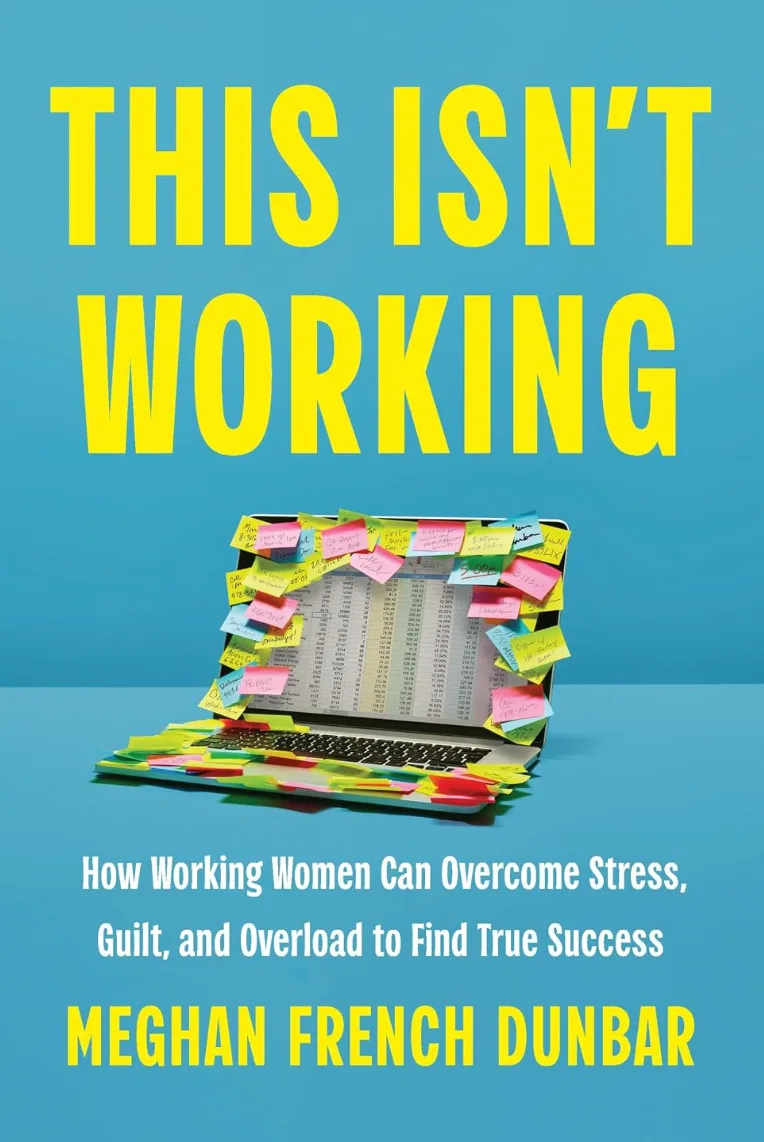
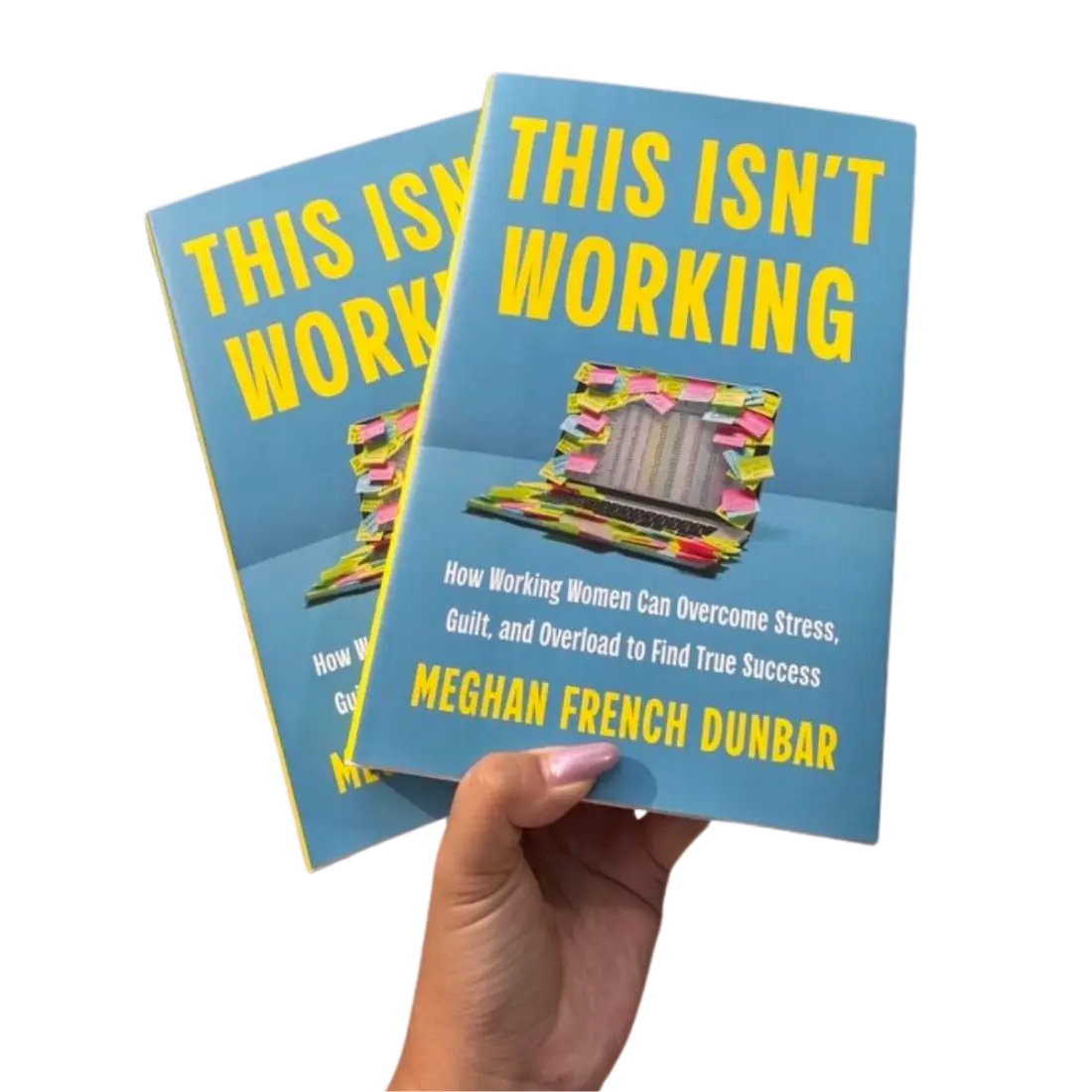
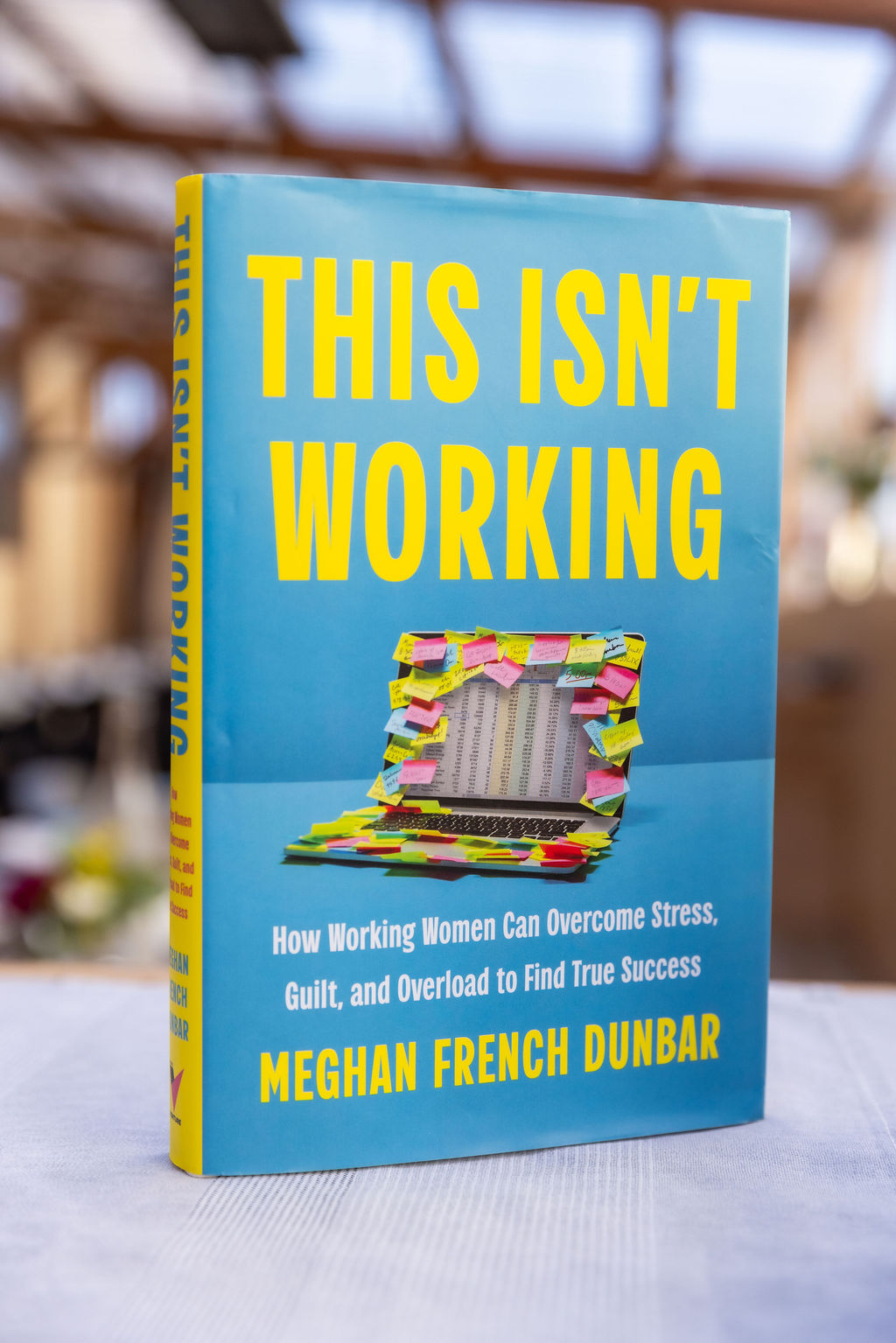
Meghan French Dunbar (00:00): What are the key elements that you would change if you were completely rewriting how we think about ambition and success, starting from scratch? What is the old paradigm? What is the new paradigm that you're proposing?
Amina AlTai (00:11): I love this. The evolution of the paradigm, honestly, is a conversation of unconscious bias — because ambition is one of those culturally complex, politically loaded words that either highlights our benefits or our drawbacks, depending on who we're talking about. Ambitious women are often seen as too much, while ambitious men — that's sort of table stakes. And if you're a person of color, or a person with a disability, or a queer person, we have all types of ideas about what ambition gets to look like and for whom.
So I'd start by saying, and this is what I say in the book, that ambition is neutral and natural. It is for everyone. I define it simply as a desire for growth — a desire for more life, specifically, which I love because I'm always like, I'm here for the aliveness, you know? It's literally just this desire to unfold. So it can't be right for some people and wrong for others.
And though I think ambition is neutral and natural, I think we have two orientations of it. I call one "painful ambition," which is driven by our core wounds. And then there's "purposeful ambition," which is connected to our truth and comes from a place of wholeness. So if I'm rewriting things — we're all skipping over those core wounds and going straight to the purposeful ambition piece.
Meghan (01:21): What are the top two to three core wounds that are most common that you see expressed?
Amina (01:28): There are five core wounds. This is a body of work from a Canadian psychologist named Lise Bourbeau: rejection, abandonment, humiliation, betrayal, and injustice.
Let me back up for a second, because for people who haven't heard the phrase "core wound" — I'm sure most people have spent time in therapy like I have and we're like, we got it, but for those who don't know: a core wound is an initial injury of the psyche. They happen in our formative years, and it's just a very human rite of passage. You could literally have the most gorgeous parents on the planet and you will still have a core wound — at least one — just because we all get them. Even if it doesn't happen in your family system, it could happen on the playground or even vicariously, from watching somebody else have an experience.
So there are these five wounds. And here's the rub: for each wound, we wear a corresponding mask. If you have an abandonment wound, the mask you wear is dependence — you're overly emotionally reliant on the people closest to you. For the high achiever, it doesn't show up in the work context so much, but more in our relationships outside of work.
If you have a rejection wound — which is one of mine — one of the masks is avoidance or withdrawal. You'll avoid conflict, or you'll avoid throwing your hat in the ring because you don't want to be rejected again. (You and I were talking about a cute little rejection I got this morning right before we hit record.)
Betrayal is another one of mine. That's when you felt like your caregivers didn't live up to expectations. The mask you wear there is control.
Humiliation is when we felt like our caregivers were embarrassed of us in some way. The mask is masochism or martyrdom.
And the last one is injustice — when we felt like our individuality in childhood was restrained in some way. The mask there is rigidity or perfectionism — this intolerance for living in an imperfect world.
Meghan (03:19): I'm curious about the connection between those five core wounds and enoughness — like, using success and ambition and achievement as a general mask for stuffing the holes we feel in ourselves. How does that manifest? What does it look like?
Amina (03:39): Exactly what you're alluding to. When we have a hole on the inside — whether that's rejection, abandonment, humiliation, betrayal, or injustice — we often seek the thing on the outside, thinking, that's the way I'll fill the hole. But it never works that way. You can have all the shiny objects on the outside — and this is my story, and I'm sure it's the story of a lot of people listening — you can have all the titles, accolades, achievements. But if you don't do the work on the inside, you're just going to keep chasing. It's an insatiable desire, because the work isn't outside of us. It's inside of us.
Meghan (04:11): I'm going to read a whole bunch of things from your book, because I probably highlighted more words in your book than are un-highlighted at this point. Like every single sentence I was just like, yes. Here we go:
"Late-stage capitalism taught me to derive my value, my self-worth and identity from perpetually competing through jobs and by gathering achievements. I felt like my work wasn't just a job, but my whole personality."
Deep breath. I felt that in my bones. If someone has built their entire identity around their work, how do you begin to divorce that? And where do people derive their self-worth from, if not from their work?
Amina (04:57): I feel like you've got some wisdom for us on this too, so I want to hear what you think. This is some of the foundational work I do with clients. Identity is a prism — like a crystal, right? It has many points and many facets. What we do, especially in the culture we live in here in the West, is over-emphasize what we produce, what we achieve, our titles, our jobs. We over-identify with that piece. We over-develop that identity and under-develop the other parts of ourselves.
So first and foremost, I ask my clients: what are the other aspects of your true self, your wise self? I'm a sister. I'm a mother. I'm an artist. I'm a peacekeeper. I'm a leader. I'm a truth-teller. What are these other aspects of yourself? And then we look at: how deeply are you on the court with those aspects? For most people it's, "I'm not on the court with those other pieces at all. A part of me identifies as a creative, and that's such an untapped part."
There can be a moment of shame — it can feel existential in lots of ways. And then bit by bit we see how we could turn the volume up on those other areas. It requires that we borrow some time from the places we've over-identified — namely, work. That's a negotiation in and of itself. But it's really important work to do, because inevitably we're going to experience identity loss around work. We're going to reach the top of the mountain and it's not going to feel good. We're going to lose our job. Our business will fall. Something will happen. You and I have stories like that. And then — who are we after that?
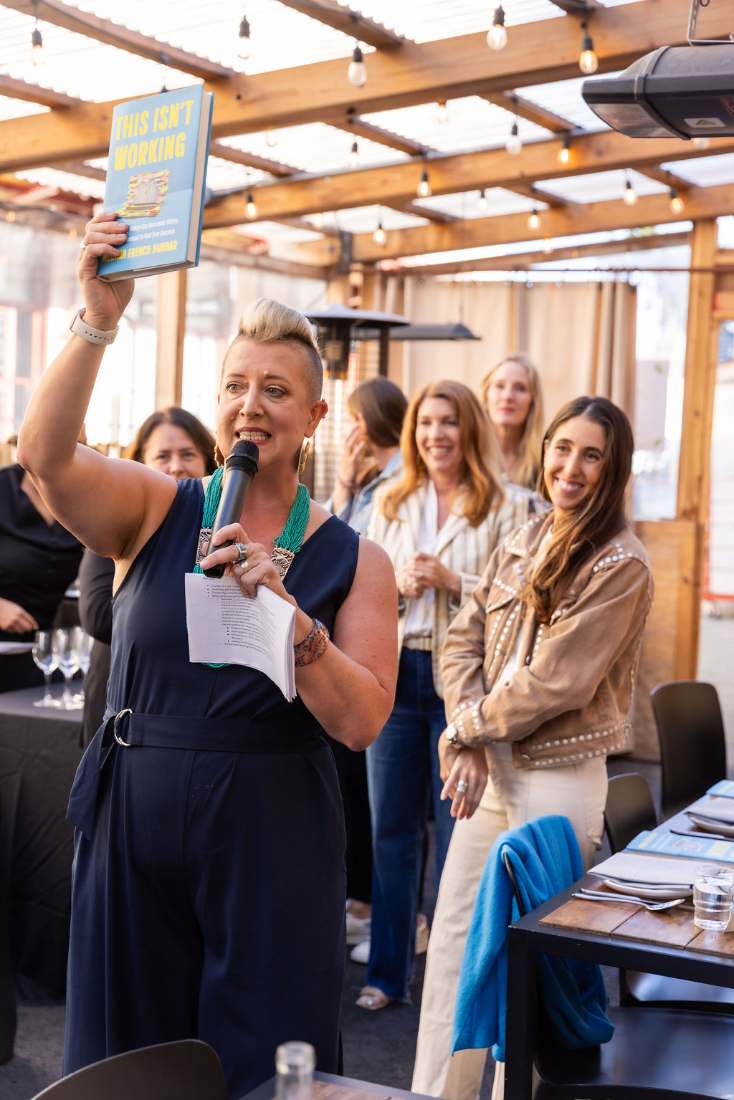
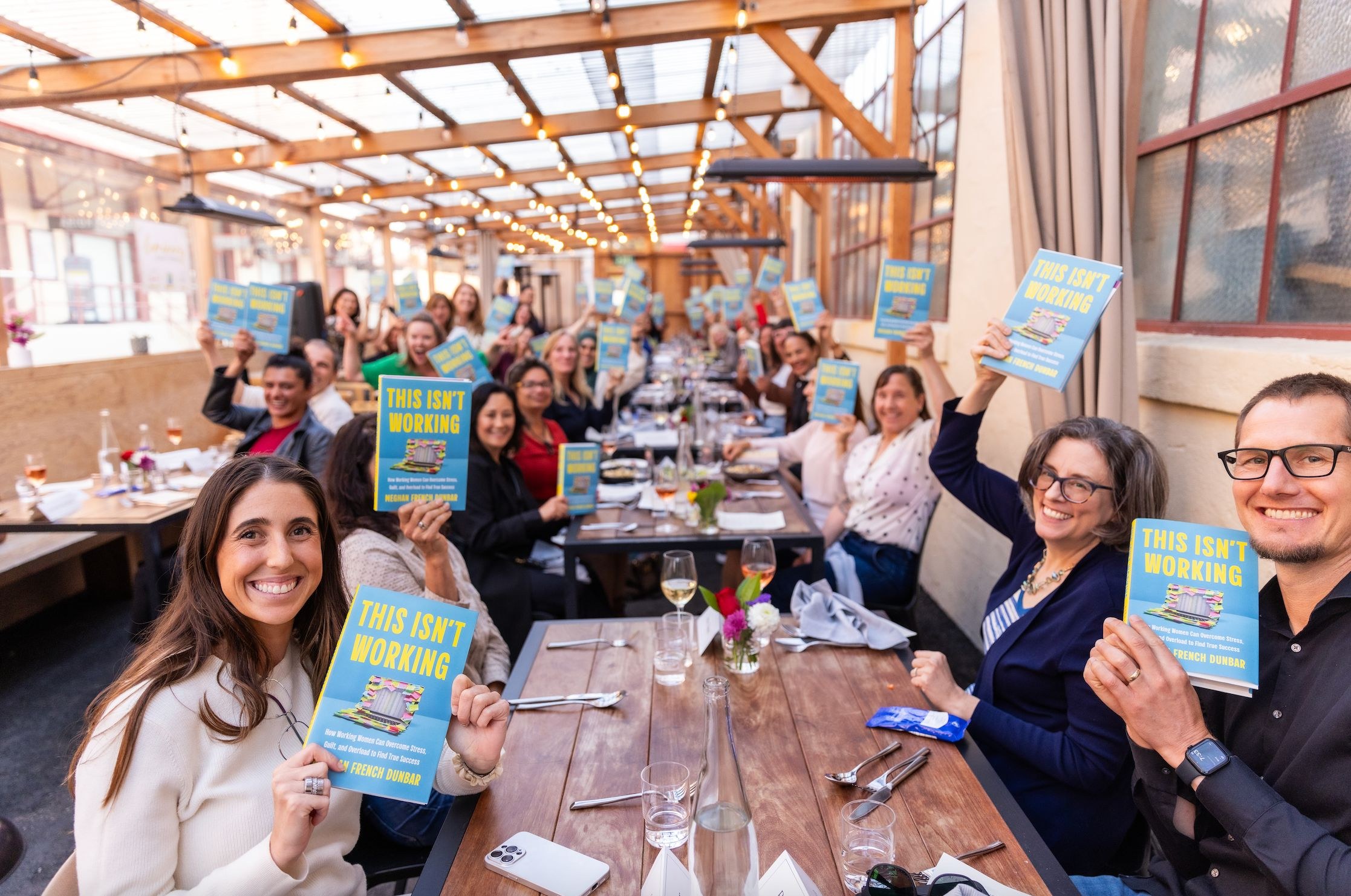
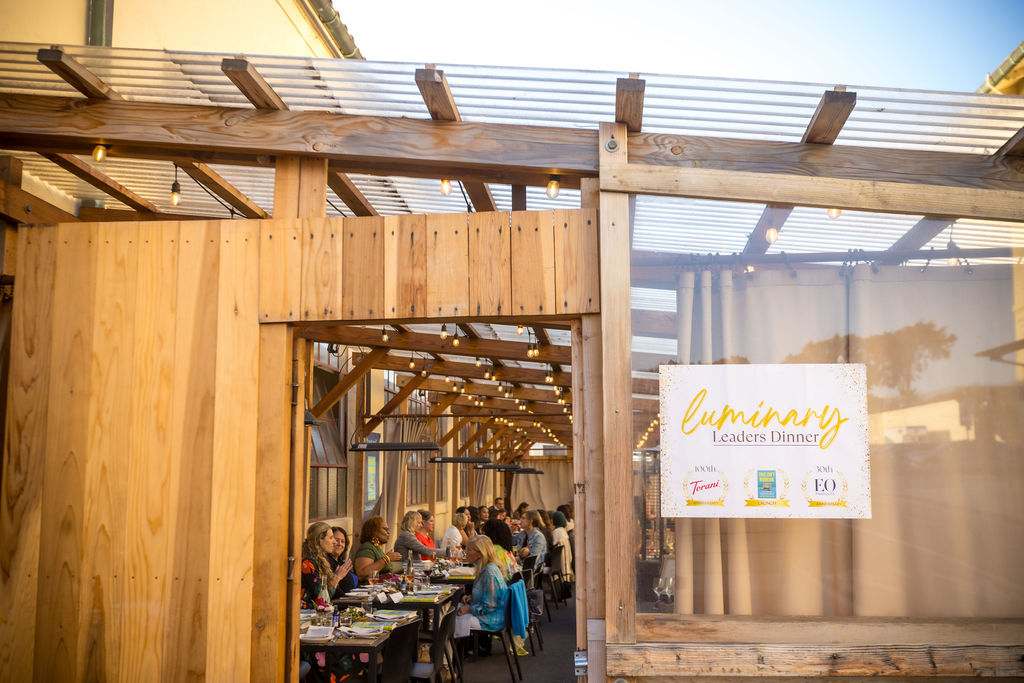
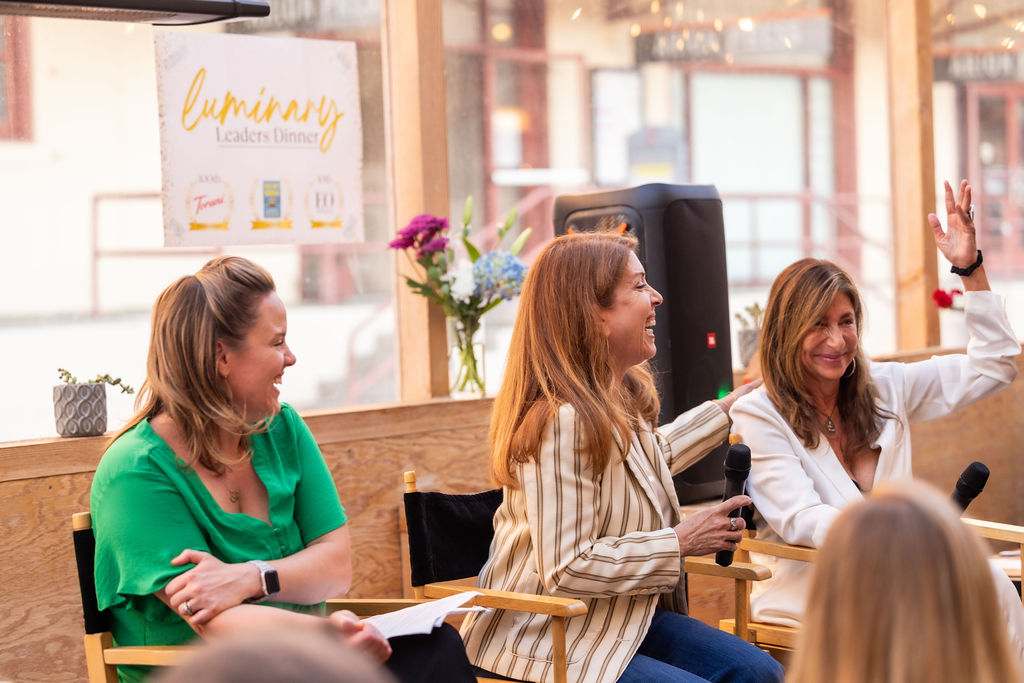
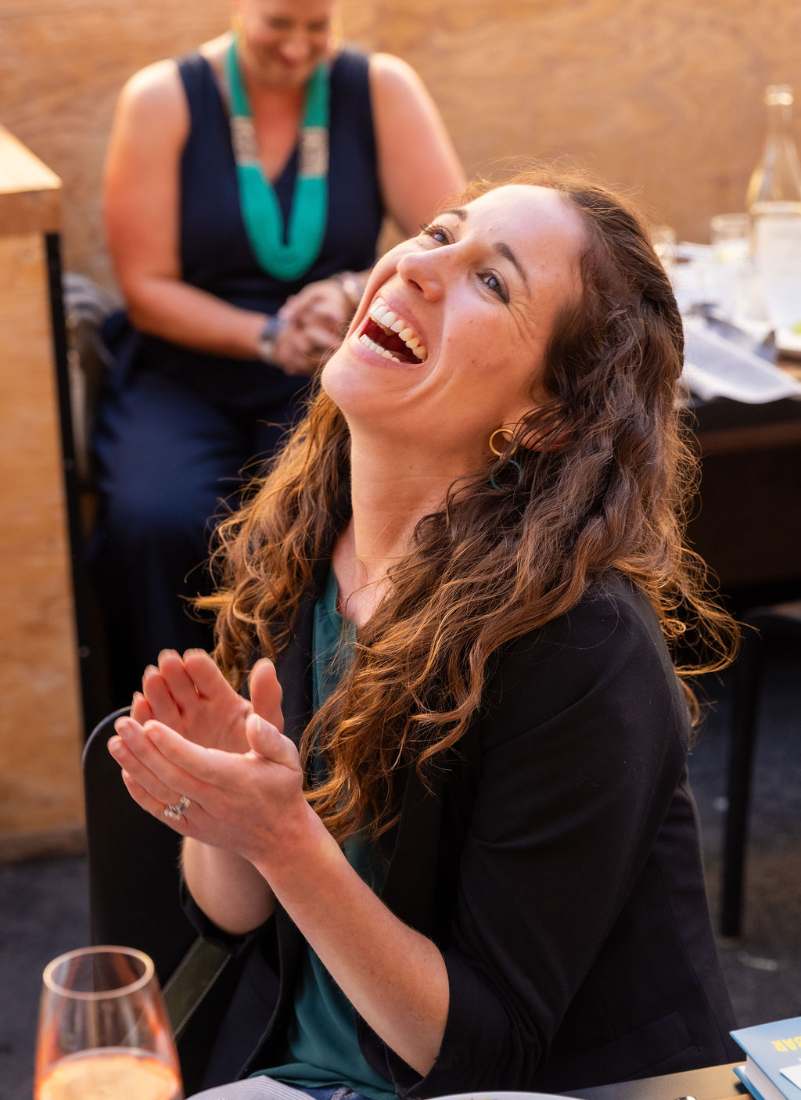
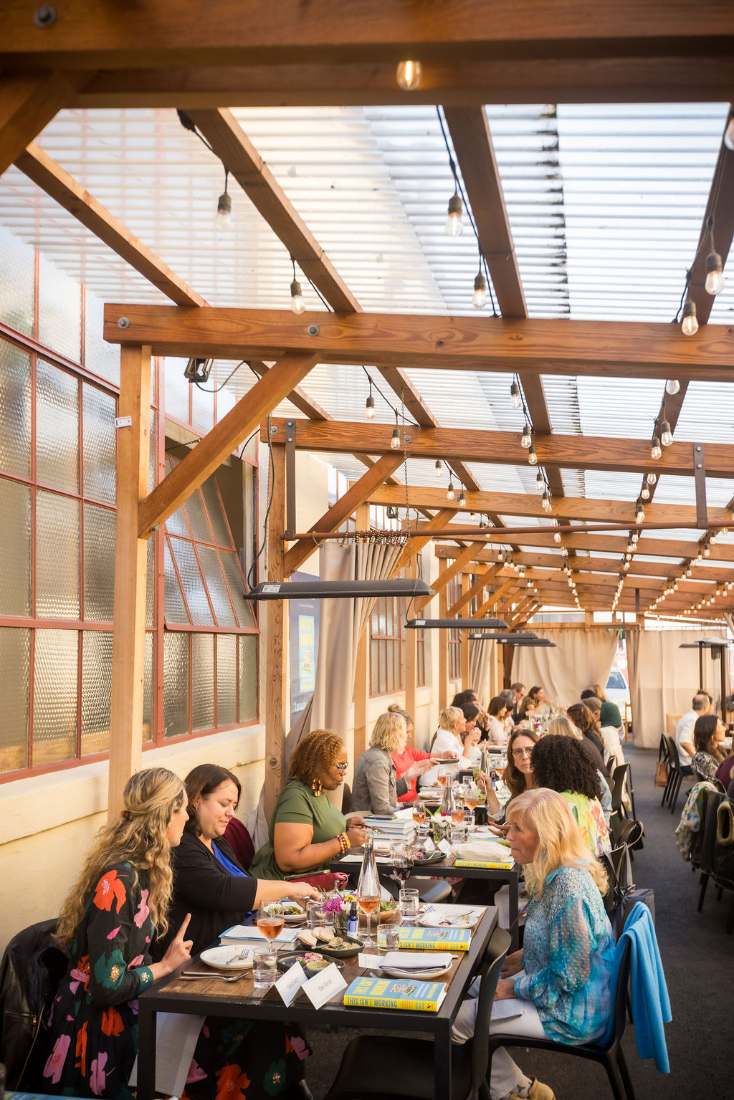
Meghan (06:29): So we co-hosted a dinner in New York with a bunch of delightfully ambitious, wonderful humans. One of the conversations we had was: as you tiptoe into more purposeful ambition and really leverage your full self, a lot of us talked about the need to slow down a bit. There's this tension — I want to do good work in the world and it feels important. Can I scale and grow? There's constant tension between the old paradigm (going, going, going) and the fact that the work feels important. How do you navigate the need to slow down and rest and repair and nurture and cultivate with the need to continually make progress on the things you want to bring to life in the world?
Amina (07:22): Love this question. First of all, I think ambition goes in cycles. We live in a world that tells us ambition is more for more's sake, all the time. Always move the goalpost. Always get the next thing. Meghan, you launched a book this year — where's the next book? Right? Without you taking a beat. I'm sure you have gotten a lot of that question, as have I. And I'm looking at people cross-eyed being like, are you kidding? I just birthed this.
So I think ambition actually goes in cycles like a perennial flower — that's the analogy I've been using. You drop a seed in the ground, you have this desire to grow, you water it, you nurture the inner and outer environment, and then you have this beautiful peak moment. Your book comes out, my book comes out — what a top-of-the-mountain moment. And then the seasons change and the petals fall off, and we wind down and go back underground. Maybe that ground is fallow — which is partly where I feel like I am right now — before we're nourished enough to rise again. We're always in that relationship throughout our life, and in different areas. This could be a peak moment for motherhood, but an underground moment for work. We're in these cycles in lots of places.
The other thing I think about is resting in micro-waves and macro-waves. A lot of times on social media, we glamorize, "I quit my job and took three months off and traveled Southeast Asia." That's just not available to most people. I haven't had one of those moments yet, but I would love to.
Meghan (08:48): (laughs)
Amina (08:49): So I think about the micro ways. Today, can I go sit in the park and look at the leaves? That's so nourishing to my nervous system. First thing in the morning, can I get sun on my face for circadian rhythm? Can I actually take my weekends? Can I actually shut down at six o'clock? What are the small ways, in addition to the big ways, that we can take care of ourselves?
Meghan (09:11): When you're attempting to evolve into a new way of being — I have some beliefs when it comes to rest. I've gotten really good at boundaries. I don't work nights and weekends. But then I have these moments on the weekend where I'm sitting down reading a book for 15 minutes, and I'm like, should I do the laundry? I need to take care of something. I still have a lot of guilt. I've been so frustrated, but also trying to honor the process of some of these beliefs that just stick in us and we carry forward into a new way of being. I'm curious — what are some of the sticky beliefs you've had a really hard time shedding?
Amina (09:55): We live in a world that equates our worth with our productivity. If I'm resting, I'm not producing. If I'm not producing, I'm not valuable. And I think that's something we really need to culturally rewrite, because — what if we just came to planet Earth to be weird and wonderful? And why can't that be enough? You and I are entrepreneurs, and there's so much conversation in the entrepreneurial space of, "well, build another thing, and then more." I'm just like, I'm so tired just watching you do that. I can't do it myself.
Some beliefs I'm still rewiring — I always hesitate to use the word "heal." Like, "I've healed this thing." Because what I've noticed in my own life and with my clients is that at every next level of becoming, every step we take on the staircase, the wounds tap us on the shoulder — just in slightly different ways. Maybe not as loud or dramatic or painful, but still there.
I've done so much work to reform my performance perfectionism. And with the book coming out and there being more eyeballs on my work, I just felt it come up so huge for me. I went down this whole rabbit hole of exploring my attachment trauma and doing more parts work and all the things — seeing why it was there and why it was getting so loud.
That's something I'm constantly rumbling with, especially as a woman of color. The stakes are different. The standards are different. We're told to fail fast and often in entrepreneurship, but we see certain identities held to different standards. I've internalized a lot of that narrative about how I have to show up.
My first job — I have curly hair — I went in one day with my hair curly and my manager was like, "no, you cannot come in with your hair like that." And then I watched them shame somebody else who came in with their hair natural. I was just like, my God, you're not even allowed to have a hair "out of place" — that's not even the right word. Nowadays I blow out my hair just because I've had a whole journey with hair loss — that's another story. But from the beginning I was kind of conditioned that you have to show up this way. And what we know, both from my book and just from being women in the world, is there's so much bias in these standards of professionalism, and then we weaponize them against ourselves. It's a whole thing. What about you?
Meghan (12:18): What's the question?
Amina (12:24): What are the sticky beliefs you're still unwinding?
Meghan (12:29): Yeah, I still have the "rest is not available to me" one. I'll apologize to my husband, who's like, "stop apologizing for just sitting on the deck and enjoying the sunshine for a bit on the weekends." The constant productivity thing.
I also still have some identity wrapped up in my career. Like, this goes into our next question — you asked us on the author's call last week, "how are you all feeling about your career?" And I believe all of us hysterically burst into laughter.
The reason I was in New York, where we had the dinner, was because I was speaking at Fordham University. They asked me to put my title on the name tag, and I didn't — I'm not the CEO of something right now. I'm just, quote, "just an author." And I was like, I feel like people aren't going to take me as seriously in this room. So I still have some identity issues around how my current status is viewed and what it means about how people are going to receive me. It's insane.
Amina (13:54): So wild. They are very sticky. And everyone's beliefs are so different, right? There are people who are like, my god, author is the highest level of achievement.
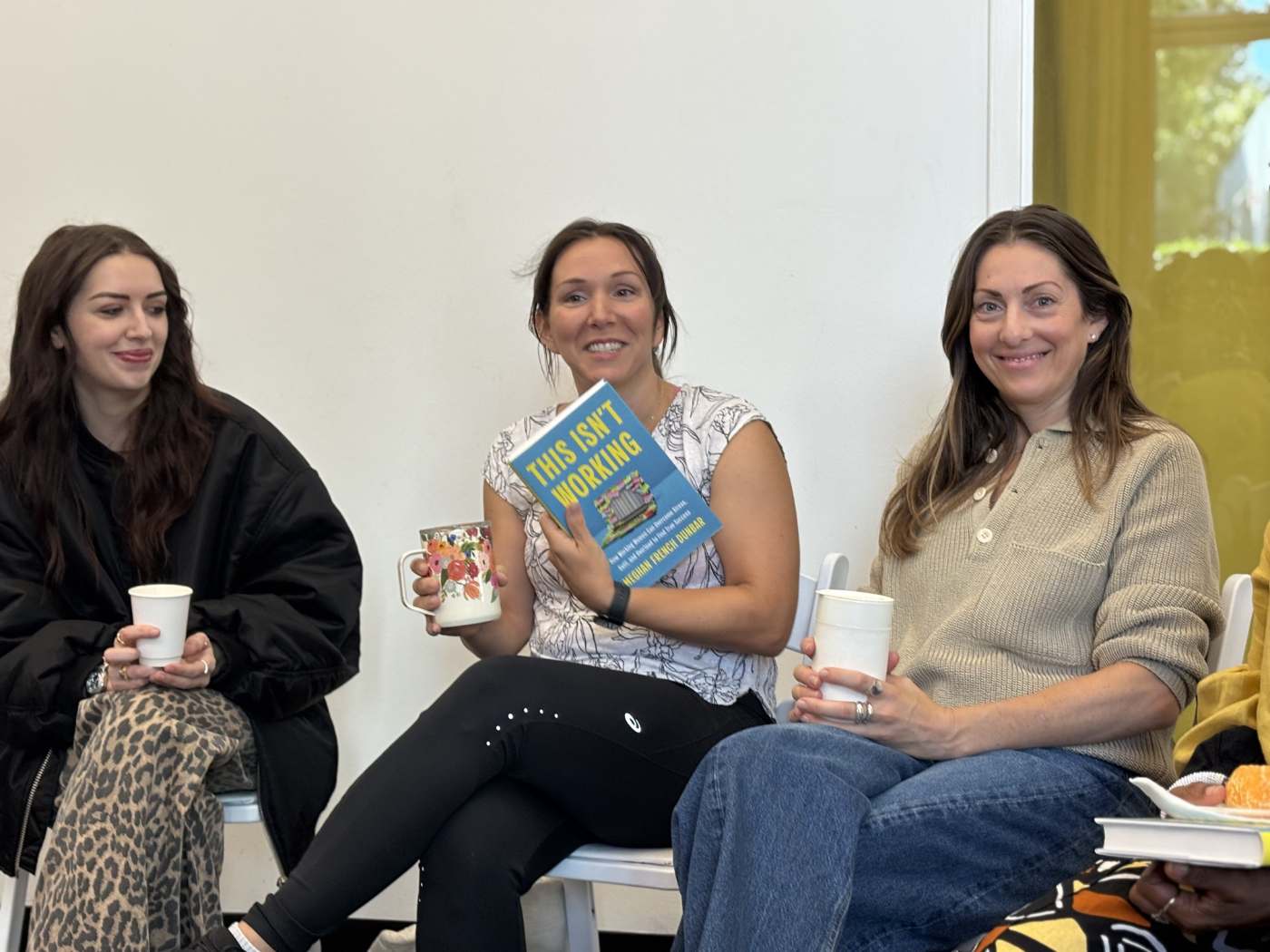
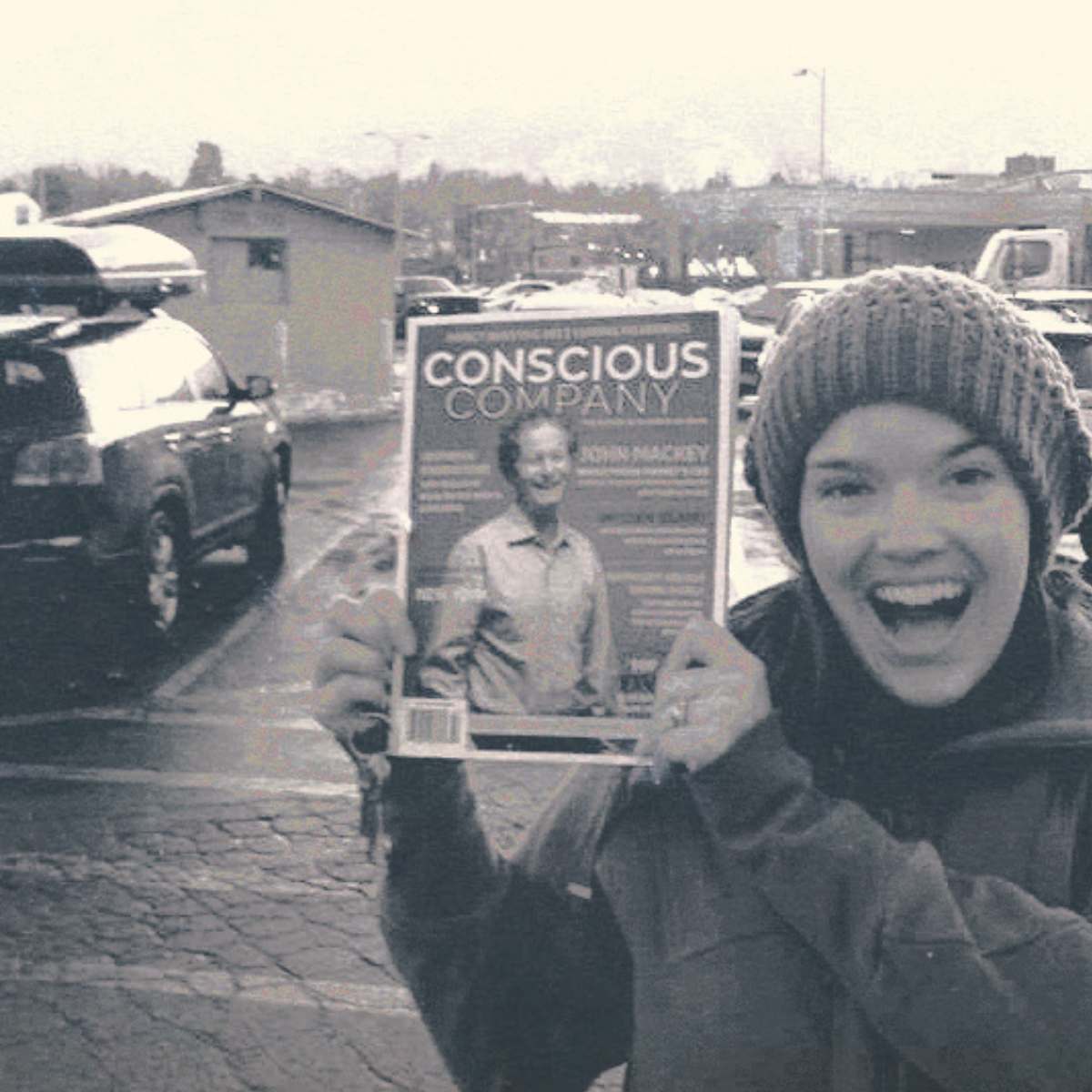
Meghan (14:03): I did a book talk at the Boulder Bookstore — the only bookstore book talk I did. But Boulder Bookstore is an institution. I got there early, my family was going to come after me, so I was by myself when I arrived. My book was in the window. A couple was coming out, and I asked, "can you take a picture of me with my book?" The guy was from Germany, and he just started crying. He said, "you're living a dream that I have aspired to my entire life, but I know I will never achieve."
And I was totally like, "can you take a little picture?" No big deal, heading into the bookstore. This feels like small potatoes to me. And to remember — your story, whatever it is, is someone else's just-beyond-their-imagination.
Amina (14:42): So cool. I'm so glad you had that moment. It is unbelievably special.
Meghan (15:03): Yeah, it was rad. I started my book talk crying because I was like, I'm living a dream.
So — you ask about our careers, and all of us burst into laughter, because I'll speak for myself: there's some (let's call it) ambiguity. I'm figuring things out. I piecemeal things together. I've got speaking and consulting and this thing and that thing, but I wouldn't call it steady at this point. It makes me laugh when people ask me about it, because sometimes it feels very hard and crunchy, and sometimes I'm like, this is fabulous. The question being: when you are working toward a new way of being in the world, it is not easy and it is not particularly comfortable. How do you hold yourself accountable to this new place you want to go and this new way you want to be in the moments when you don't particularly feel comfortable?
Amina (16:04): That's such a great question. I know what I would say to my clients, and I doubt I've navigated these moments with as much grace. The messy middle is called the messy middle for a reason — we're figuring it out. We're trialing and erroring. We're having a hard time with the discomfort of not having the shiny wrapped bow and label. Speaking for myself, I do not thrive in ambiguity. I like to have it neat and tidy — recovering perfectionist.
I think it's really important to say the thing and take the shame out of it. Scientists actually have a way of measuring the vibration of certain emotions, and shame is the lowest vibration. So it gets in our way and intercepts what we actually want. If we're carrying shame about our work or our identity, people will read it. They won't know why. Something will feel off, they won't be able to put their finger on it. So I'm a big proponent of, when I'm feeling shame — how can I out myself on this? It's not a fun thing to do, but I'm going to do it. I'll tell my friends. I'll tell my sisters. I'll put it on social. I encourage my clients to really say the thing.
For example, someone with a nonlinear career path might say, "I'm not the typical hire for this role. I've been an entrepreneur my whole life and now I'm going into corporate. They're going to have pushback." I'm like — say the thing from the beginning. Tell them: "Hey, you're probably expecting a more traditional hire for this role. Let me tell you exactly why my experience is a standout here." Saying the thing is so powerful, because we take the shame out of it and we get to own the narrative. That's one of the most important parts.
Meghan (17:44): This goes to one of my questions. Another quote from you:
"The more we clap into our authentic reason for being, the more chance we have of transforming the systems and structures that repress us and limit our potential."
Say more. Talk about this.
Amina (18:01): Going back to scientists measuring the vibration of emotions — the highest vibration isn't love, which is what a lot of people think. It's actually authenticity. So if we are unabashedly ourselves, then the opportunities at that same level will be able to find us. If we've watered ourselves down, we're complicit in a system, and the opportunities we really desire aren't going to find us.
I was telling you before we hit record about how I was asked to interview at the 11th hour about an executive coaching opportunity. I was like, cool, let me go explore. But the requirement was to not be myself. They literally said, "we're not interested in people who want to dismantle the system. We want people who will work with the quote-unquote 'nuance' of the system." I exited stage left.
Meghan (18:55): Yep. Peace.
Amina (18:57): Exactly. I was very honest about who I am, what I value, what I stand for. There was definitely a small part of me that wanted to be chosen. But if I had chosen something like that, I would miss everything that is meant for me. It's a form of hiding.
Meghan (19:13): How do we particularly think about authenticity? There's a lot of conflating it with just, like, showing up wearing whatever you want. What is your definition of authenticity?
Amina (19:29): Having gone down the rabbit hole around my perfectionism, particularly in the last year, I've done a lot of Internal Family Systems work, and it's kind of changed my life. I feel like before, I saw the world in 2D. Now I see it in 3D. Have you ever done Internal Family Systems?
Meghan (19:46): No — say more, tell me all about it.
Amina (19:48): Check out this book called No Bad Parts. It's a great starting point. In a lot of ways, we think that people have one mind — "I am this way in totality." But in Internal Family Systems, they talk about how we have many parts, and sometimes these parts collude and work together to protect us. And then we also have our true self, our wise self — the unabashed, unadulterated, non-wounded part of us.
I have a controlling part. I have a perfectionistic part. I have a judgmental part. And then I have true and wise self in the midst of all that. So when I think of authenticity, I think of true wise self. Peeling off all the layers of programming, all the wounding. And once we've done that — what are we left with? The true essence.
It's so cool to do this work, because you can see all the parts. And it's interesting — sometimes we have these parts where we're like, "no no, that's the real me. I have this spiritual part." But the spiritual part is actually just a righteous part pretending to be real you. So it's really fun to pull off the layers and see the different masks and personas, and what we're left with when we take them away.
Meghan (20:58): Another quote from you — about systems of oppression. Right at the beginning of the book, you talk about "attempting to outwork the systems of oppression working against us." I was like — this is so powerful. What does this mean?
Amina (21:20): So many of us think we can outwork a broken system. If I'm just smart enough, hardworking enough, the most model minority — I will shine. I'll outwork this broken system. But there is no outworking a broken system — especially one that wasn't designed with you in mind. It's literally a fool's errand that keeps us in a trap. This is the essence of the ambition trap. The more we're aware of that, and the more we find other ways of contributing and bringing forth our sacred contribution, the healthier we will be.
Meghan (21:52): Sacred contribution. Something we discussed at the dinner that I can't stop thinking about — when we're talking about purposeful ambition, a lot of us think about our "one true purpose." There's this concept of the North Star. There's a lot of shame about, "if you don't know your purpose, you're going to feel lost."
You discussed a concept of moving from a North Star to a constellation. This broke my brain, because I've always really identified my purpose with my work. But when we were talking about it as a constellation — the different parts of us, recognizing the big and small and multifaceted and multi-dimensional ways purpose can manifest through us as a mom, or a community member, or a friend — talk about the North Star to the constellation and how it's shown up for you as you've been teasing this out in your own life.
Amina (23:11): I love it. I can't take credit for this — the constellation of purpose comes from my friend Michael Ventura. I thought it was so brilliant I had to quote him and include him in the book.
So many of us think we have this one North Star we have to work toward. I want to be XYZ. I want to be this author. I want to be this CEO. But it's so rigid. And we have no idea, because it's a thousand steps away from us. My friend Meaghan Hellerer, who's also a coach, talks about living directionally versus destinationally. If you live directionally, we're basing it on the North Star — "I want to be the CEO." I don't know why. I just want to. But if we live destinationally, we take one step at a time. And every step clarifies the next.
If we couple that with a constellation of purpose — I'm not aiming for this one star. I've got a couple of brightly burning stars in my universe that together make up a whole ecosystem, and I'm operating inside the ecosystem. Which is a lot more agile, a lot more flowy than the rigidity of this one North Star.
I love this because I'm always changing, always evolving, and I've really struggled with doing this one thing. I'm such a millennial — elder millennial, such a multi-hyphenate. This idea of constellation really suited me, because I could never fit myself in the box and I never wanted to.
For me, I really do think that my work on planet Earth right now is helping people come home to themselves. Peeling off the layers of programming, whether that's the core wounds or the stories we told ourselves about our careers, and coming back to the essence of who we are — and then asking, well, what do I want to contribute from that essence? And I don't just do that in my career. I do that with my friendships. I sit with my sisters and do it. I talk to somebody on the bus and I'm doing it. Every question is an invitation to come home to ourselves. That's a way cooler way to be in the experience — versus, "it's just in my nine-to-five." It's woven. These grand threads of our fate are woven through all parts of our lives.
But can I ask that question of you?
Meghan (25:13): I'm like, what was the question? I'm so good at asking people questions and then listening so intently I forget what was the question.
Amina (25:21): The constellation of purpose, and how it shows up in your life.
Meghan (25:43): For me, I've been really focused on purpose, passion, quality of life. Passion being — where's my curiosity taking me? Constant learning, constant growing, different experiences. Those two things have really driven me. But the quality of life aspect — I didn't quite understand how that fit in until it all blew up and I fell apart.
When I started thinking about quality of life as a way to manifest my purpose as my highest and best self — because it allows me to show up intentionally — all of a sudden the quality of life aspects of cultivating my own joy, having deep and profound, meaningful social connections with people I love, my mental and physical health, the things that feel like nice-to-do, not have-to-do (which are, in fact, the most important things to do) — it helped me be like, that is, in fact, purposeful. Being able to show up.
This morning I woke up in a great mood and I was having a dance party with my two kids before school. I was just imagining — this feels intentional. This is a purposeful moment. I'm showing up as my highest and best right now. I'm showing them a different way that a mom can be, and I'm starting their day off well. It comes down to micro moments. That constellation visualization really helped me be like, it can all be purposeful. It isn't just the one thing. And that was really helpful.
Amina (27:07): So beautifully said. And how wonderful that your kids get to see that role-modeled — a happy, purposeful mom.
Meghan (27:14): Oh my god. Dude, I tell you — I'm so happy I had kids late, because I would have destroyed them had I had them before. Whoa. Anyway. Maturing, getting all things. My god.
Alright. This was a good one. What does ambition look like when it's rooted in self-trust rather than self-correction?
Amina (27:22): You would have left them on a bus somewhere. (laughs)
I mean, I think that's purposeful ambition. Purposeful ambition — I talk about how it's not black-and-white either/or thinking. It's growth mindset. It's not instrumentalizing our bodies to get to the goal, which was my story. It's actually being really kind to our bodies and to everybody else's. Working in a generative way versus an exploitative way. It's collaborative. It's not about shining as an individual. It's not about my need to win. It's about my desire to contribute to a better world. You can see, in the contrast, how much more generative and nourishing that way is.
Meghan (28:21): Marrying that answer with your previous answer — the day-to-day interactions. This is a half-baked question, but so often the first thing we ask someone is, "what do you do?" In terms of the day-to-day practices we can even begin tiptoeing into — to transform the system — what are some conversation starters, or little day-to-day things you do with your language or questions you ask when you're getting to know people, that help people come home to themselves?
Amina (28:55): Oh my gosh. I was at this workshop a couple months ago, and they invited us to introduce ourselves as the descendants of our grandparents and our parents. So I introduced myself: "Hi, I'm the daughter of Ingrid and Bakir. I am the granddaughter of Muhammad Ali and Naima, and Olive and Walter." And that in and of itself cracked people. People were bawling. Like — I am the descendant of these beautiful humans. I have a complicated relationship with some of my relatives too, but that's also true. That's part of my truth, part of my experience, part of who I am. It was a really powerful thing to do, and I loved it so much.
Meghan (29:38): Is that something you have brought — do you ask strangers this?
Amina (29:43): I haven't yet, but I'm leading a workshop in a couple of months, and that was literally — I was like, we're going to open with this. It's so good. Right? Isn't that special? Can you introduce yourself that way? I want to see how you feel.
Meghan (29:50): Yes. Oh gosh. So it's the daughter of, and then the granddaughter of. I'm the descendant of Cindy and Larry French, and the descendant of my grandparents, Joe and Viola, and Jack and Josephine. When I think about it — what comes up for me is perseverance. When you presence those names, there is war, there's immigration, there's so many things people have had to go through. And then great-grandparents, I'm like — Zora, I think. And it puts into perspective the just — the impermanence of it. We're just this little flash in the pan. We're here for a little bit, and we may not be remembered multiple generations down the line. It helps me stay present in a way. What does it bring up for you?
Amina (30:57): It's kind of wild. I love what you're saying — yes, it's a flash. Everybody is a universe. Every life is a universe. And also it's a flash in the pan. It is both things. And it's so wild to think of it that way. Each of these people was a universe. Each of these people was a world. And we are sort of the descendants of those worlds. It's really so massive to think about that — and all the lives they had to live and what they had to overcome for us to be here. It really makes me forget about what I do for a living.
Meghan (31:33): So — we have two more things here. One question I have: a lot of high-achievers I know are so busy on the hamster wheel of success and achievement and all the things that taking the time to actually pause and slow down and consider the questions you invite people to look at — it feels really hard. What are the first little steps people can do when they're feeling overwhelmed?
Amina (32:10): One of my friends is a nervous system teacher, and we volley back and forth on this. Sometimes clarity comes on the meditation cushion. But a lot of the time, clarity comes in motion. You don't have to backpack through Southeast Asia or completely pause. A lot of the time, clarity comes from taking an action.
We just have to go one step at a time. What I've noticed about a lot of the people I'm working with these days is that we're actually in a state of freeze. Taking any kind of action feels really hard. So I try to break it down to the minimum viable. What is the smallest decision and action we could take today that is going to clarify one single thing for us? Not everything — because if we try to clarify the whole purpose of the whole universe, we'll just stop before we get started. What is the smallest thing I could do today, or in the next five minutes, that will just clear one thing up for me?
Meghan (33:07): I love that. So — I'm curious. You've been thinking about ambition for quite some time now. What's exciting you right now? Are you still real lit up by the material you've been working with for so long, or are there additional things catching your curiosity?
Amina (33:28): To be honest — I worked really hard on the book, as I know you did too, and I feel proud of it. I had a podcast recording earlier this morning, and I was rereading some parts and I was like, this is pretty good. You take yourself out of it after a while. First of all, you read it so many times you have it memorized and you can't see the forest for the trees. And then I haven't read it in a year, and I'm like, this ain't bad.
Every astrology reading I've had — from Western astrology to Vedic astrology — ambition is exalted. It's very big in my chart. When I would tell them I was writing a book on ambition, they'd say, "perfect person to write a book on ambition." So I think I'll be a student of it for a long time. I always think there's more to learn.
But I did allude to one thing that was really interesting when we had our dinner. I've been very interested in what ethical entrepreneurship looks like — because I've seen such a lack of ethics in the space, and I've seen a lot of harm replicated. I'm kind of proud of how I haven't had meteoric success, because I'm like — I didn't use those harmful tactics I was looking at and being like, is that all right to do? I'm not saying I want to stay small — it's not one or the other for me. I want to figure out a way to grow that is generative. It's connected to ambition, but it takes the conversation a little further into: how can we grow in a way that brings everybody along, doesn't hurt people or the planet, and is kind?
Meghan (35:14): Yes, yes, yes, yes, yes, yes, yes. That's the best place to start. I'm curious — is there anything you wish I had asked you about?
Amina (35:16): I want to know what you're thinking about too. I know it's a tricky question, but I know there's stuff.
Meghan (35:34): I had the same experience — a woman read me a part of my book the other day. Two things: one, I didn't realize I wrote it. Two, she said it out loud and I was like, "that's good." She was like, "this is from your book," and I was like — that's hilariously awkward, and congratulations to me. I felt great about it.
But I could talk about this stuff until the sun comes home. I'm still real jazzed up about these concepts. And just recently, I've been working deep in one company and letting my geeky business brain go really deep into codifying their operating systems that are, in fact, doing what you were just talking about on the ethical entrepreneurship side of things. Like — the best business case we can come up with that proves the case for improving work for all and uplifting humans through the power of business. I'm finding some of them recently, and my brain is on fire. I love it so much.
Amina (36:49): That makes me so hopeful. And also — I'm coming to you for case studies.
Meghan (36:53): God, I got you. My gosh — Torani Syrups. I feel like I should be their spokesperson at this point.
Anything else? Did I have anything wonderful on my list of questions I kind of abandoned? No, this is so good. You're so good. I know you do this so much, but you're so freaking good at this.
Amina (37:17): As are you, my friend. It's always so lovely to sit with a journalist too, because I feel like you ask the best questions. It's so weird — we've spent so much time together now, I'm like, didn't we do this already? You're so familiar. It's lovely.
Meghan (37:23): Oh god, I just love it. Well — I should ask. Besides going out and buying the incredible book that I've read twice now — where do people find you? How can people support you, work with you, all the things?
Amina (37:46): Thank you so much for asking. You can get the book — The Ambition Trap: How to Stop Chasing and Start Living — everywhere you buy books, whether that's your favorite indie bookstore or a national chain. You can learn more about me on my website, aminaaltai.com, or on Instagram at @aminaaltai. I'm sure the spelling will be in the show notes. If you're interested in coaching or inviting me to speak, please drop me a message.
Meghan (38:04): Yes, yes, yes. Alright. Thank you. We're going to stop.
Amina (38:16): Thank you.