The Anti-Overwhelm Playbook: How to Stop Drowning in Busy | Unbehaved
If you’re constantly overextended, feel guilty when you rest, or exhausted by the pace of life — this is for you — the one to send anyone who looks fine on the outside but is frantically pedaling underneath.
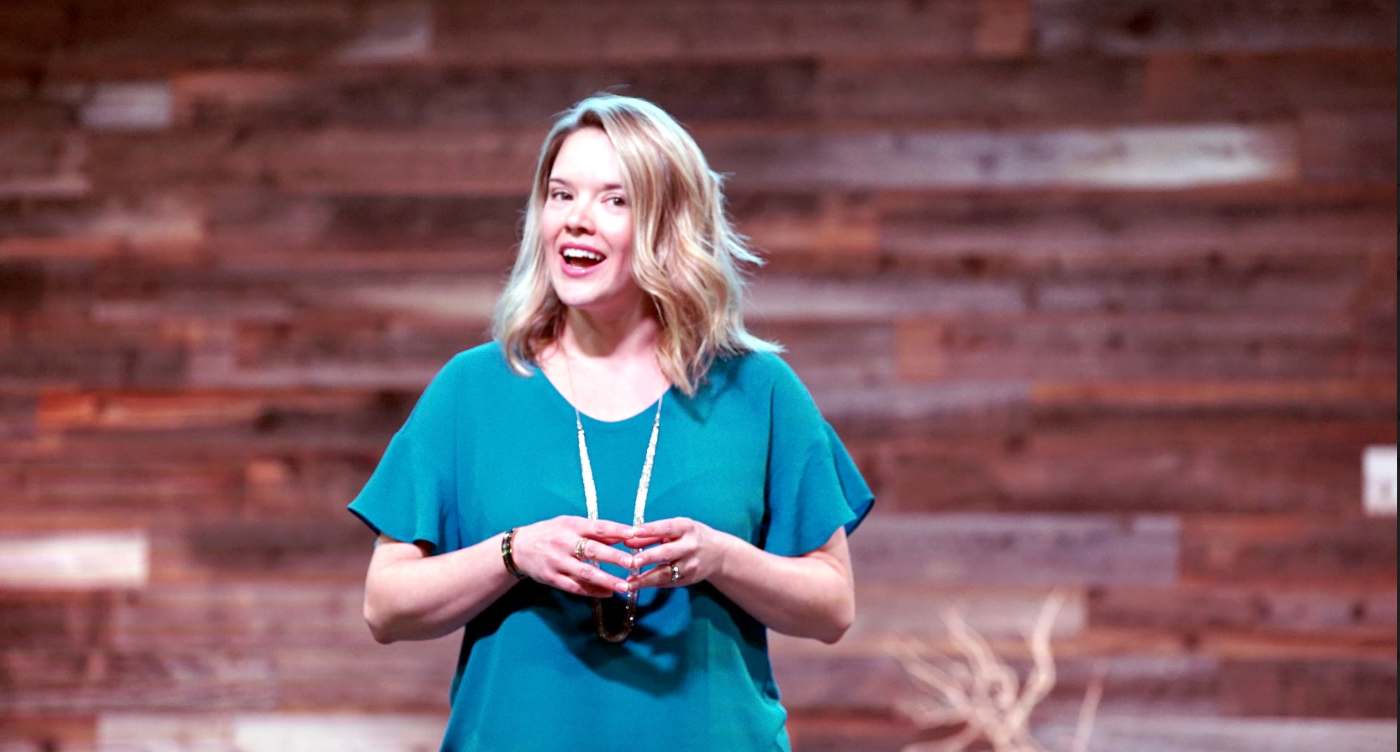
Unbehaved* host Meghan French Dunbar opens with the story of Michelle — a woman who walked into a leadership workshop already having done a run, sent a stack of emails, coached her kid's baseball team, and prepped for a multi-million dollar contract by 8 AM. She made the whole room feel deficient on contact. By day three, Michelle broke down at the table and said: "I look like a swan. From above I look fine. Underneath I'm frantically pedaling. And I'm so tired of holding it all."
That sentence is the whole episode.
Meghan lays out why so many women are drowning in busy — from Gabor Maté's research on the top predictors of disease (self-sacrifice, suppression of anger, excessive concern about social acceptability), to Katherine Goldstein's "modern motherhood is a Ponzi scheme" framing on guilt as social control, to the research showing you need to be resting 42% of your life to function at your healthiest. Almost none of us are close.
Then she walks through the four essentializing practices — a framework she coined for reclaiming your time, relationships, inputs, and behaviors — including her own Impact Energy Matrix for saying no, Vicki Saunders's "relentlessly cleaning your closet of relationships," and the question she and her husband ask before consuming any content: "Is this feeding my soul in a good way?"
* [Editor's note: This episode originally aired under the show's former name, "Better Than This." The show is now "Unbehaved."]
WHAT WE COVER
The Michelle-the-swan moment — the woman in the workshop whose breakdown named what every high-achieving woman is quietly feeling
Gabor Maté's research: the top three predictors of disease include chronic self-sacrifice, suppression of anger, and excessive concern about social acceptability — all of which women are conditioned into
Katherine Goldstein's Ponzi-scheme framing on modern motherhood — and how guilt functions as a form of social control that keeps women too overwhelmed to demand change
Why "busy as a badge of honor" is actually just exhaustion in a nicer costume
Why the less overwhelmed you are, the better you show up for everyone — and how depletion silently degrades your leadership, parenting, and every relationship
Practice 1: Essentialize your time. Meghan's coined framework: the Impact Energy Matrix — a 2x2 for deciding what to say yes to
JOMO (the joy of missing out) as the reframe for how to actually feel about a no
The stat that will change how you say no: your body needs 42% of your life to be at rest (not sleeping — resting). Most of us are not even close.
Practice 2: Essentialize your relationships. Vicki Saunders on "relentlessly cleaning your closet of relationships that don't serve you."
Julie Van Ness's line: "who you choose as your friends decides your future."
Parneet Pal's research: the #1 predictor of long-term behavior change is who you surround yourself with
Why loyalty to depleting relationships is a trap — and how to release it
Practice 3: Essentialize your inputs. The supermodels documentary that triggered a spiral — and the one question Meghan and her husband now ask before consuming any content: "Is this feeding my soul in a good way?"
Libby Rodney (Harris Poll) on curating only positive social media content
The stat: the average person consumes 2 hours of content per day. That's a lot of incoming — and you're allowed to put a strainer on it.
Practice 4: Essentialize your healthy behaviors. Michelle Pusateri on the moment she got sober and rebuilt her career
Why the "why" behind any behavior change matters more than the change itself
PULL QUOTES
"I have this perfect life and this perfect marriage and this perfect job, but I feel like a swan, barely afloat..." — Michelle
"I feel like modern society and motherhood is some form of Ponzi scheme. You feel so overwhelmed by what's being asked of you that you don't have the bandwidth, community, or wherewithal to demand change. The expectations we put on women manifest for a lot of us as guilt, which is a form of social control. Guilt makes you quiet. It makes you shrink. It makes you not want to talk about things." — Katherine Goldstein
"Not listening to self in order to prioritize others' needs is a significant source of the health-impairing roles women assume." — Dr. Gabor Maté + Daniel Maté, The Myth of Normal
"Who you choose as your friends decides your future." — Julie Van Ness, CEO of Real Leaders Magazine
"The number-one predictor of long-term behavior change is who you surround yourself with." — Parneet Pal, physician educator
"Instead of FOMO — JOMO. The joy of missing out. Actually using the time when you say no to rest, to restore, to fill your cup back up."
"When we look at how much rest our bodies need, they predict it's somewhere around 42% of our life. We should be resting in order to be able to be the healthiest, most intentional version of ourself."
"Is this feeding my soul in a good way?" — the question that changed how Meghan consumes content
CHAPTERS
00:58 — Cold open: today's topic is overwhelm
02:00 — Why working women are disproportionately drowning in busy: patriarchy + productivity culture
03:30 — Gabor Maté's top predictors of disease: self-sacrifice, suppression of anger, concern about social acceptability
05:00 — Katherine Goldstein: "modern motherhood is a Ponzi scheme" — and guilt as social control
07:00 — The Michelle-the-swan moment in the leadership workshop
09:30 — Why depletion silently degrades your leadership, parenting, and relationships
11:00 — Introducing the framework: essentializing
11:30 — Practice 1: Essentialize your time
12:30 — The Impact Energy Matrix — Meghan's coined framework
14:00 — JOMO and the 42% rest stat
17:00 — Practice 2: Essentialize your relationships
17:30 — Vicki Saunders on cleaning your closet of relationships
19:00 — Julie Van Ness + Parneet Pal on who you surround yourself with
22:00 — Practice 3: Essentialize your inputs
22:30 — The supermodels documentary + the mirror moment
24:00 — "Is this feeding my soul in a good way?"
26:00 — Libby Rodney on curating positive content
28:00 — Practice 4: Essentialize your healthy behaviors
30:57 — Michelle Pusateri's sobriety story
34:00 — Why the "why" behind behavior change matters
35:30 — Recap: time, relationships, inputs, behaviors
37:00 — Season 1 wrap-up + sign-off
RESOURCES MENTIONED
People + companies referenced:
Katherine Goldstein — journalist; source of the Ponzi scheme framing on modern motherhood
Dr. Gabor Maté + Daniel Maté — The Myth of Normal; the three predictors of disease
Eve Rodsky — Fair Play; research on emotional + domestic labor in heterosexual households
Vicki Saunders — founder of Coralus (formerly SheEO); cleaning her closet of relationships
Julie Van Ness — CEO of Real Leaders Magazine
Parneet Pal — physician educator on behavior change
Libby Rodney — Harris Poll; on curating positive content
Michelle Pusateri — pastry chef; source of the sobriety-and-career-change story
Books + frameworks referenced:
The Myth of Normal by Gabor + Daniel Maté
Fair Play by Eve Rodsky
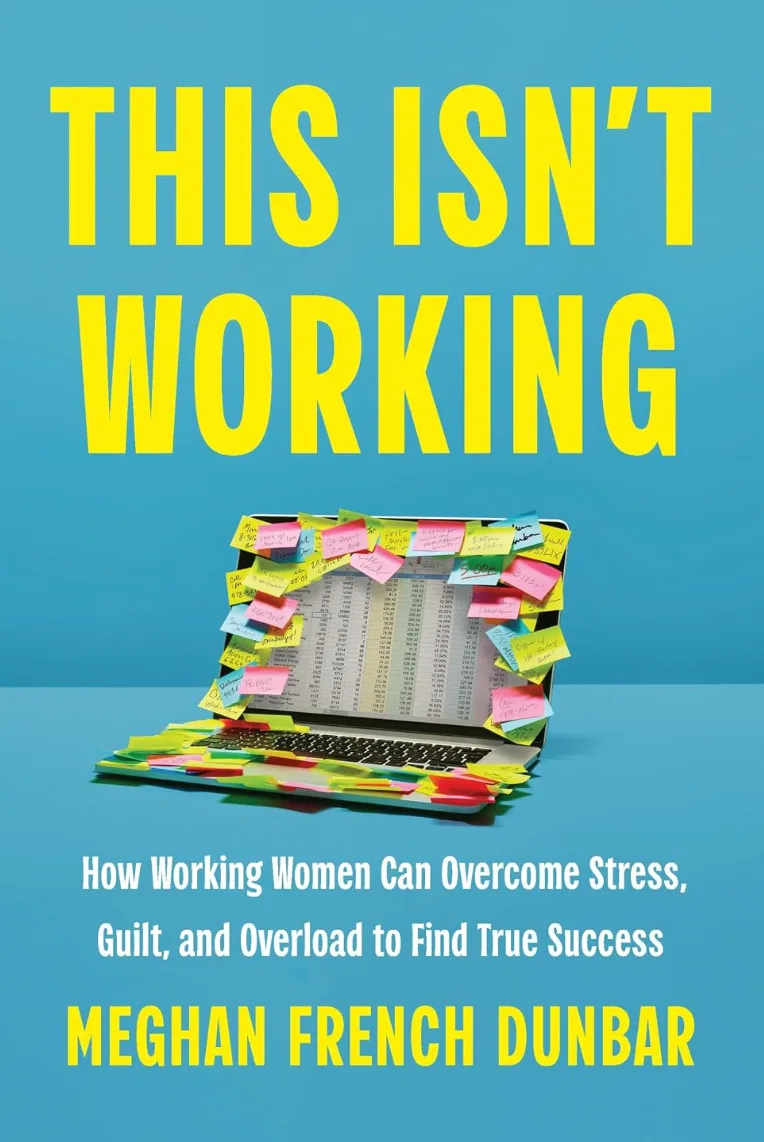
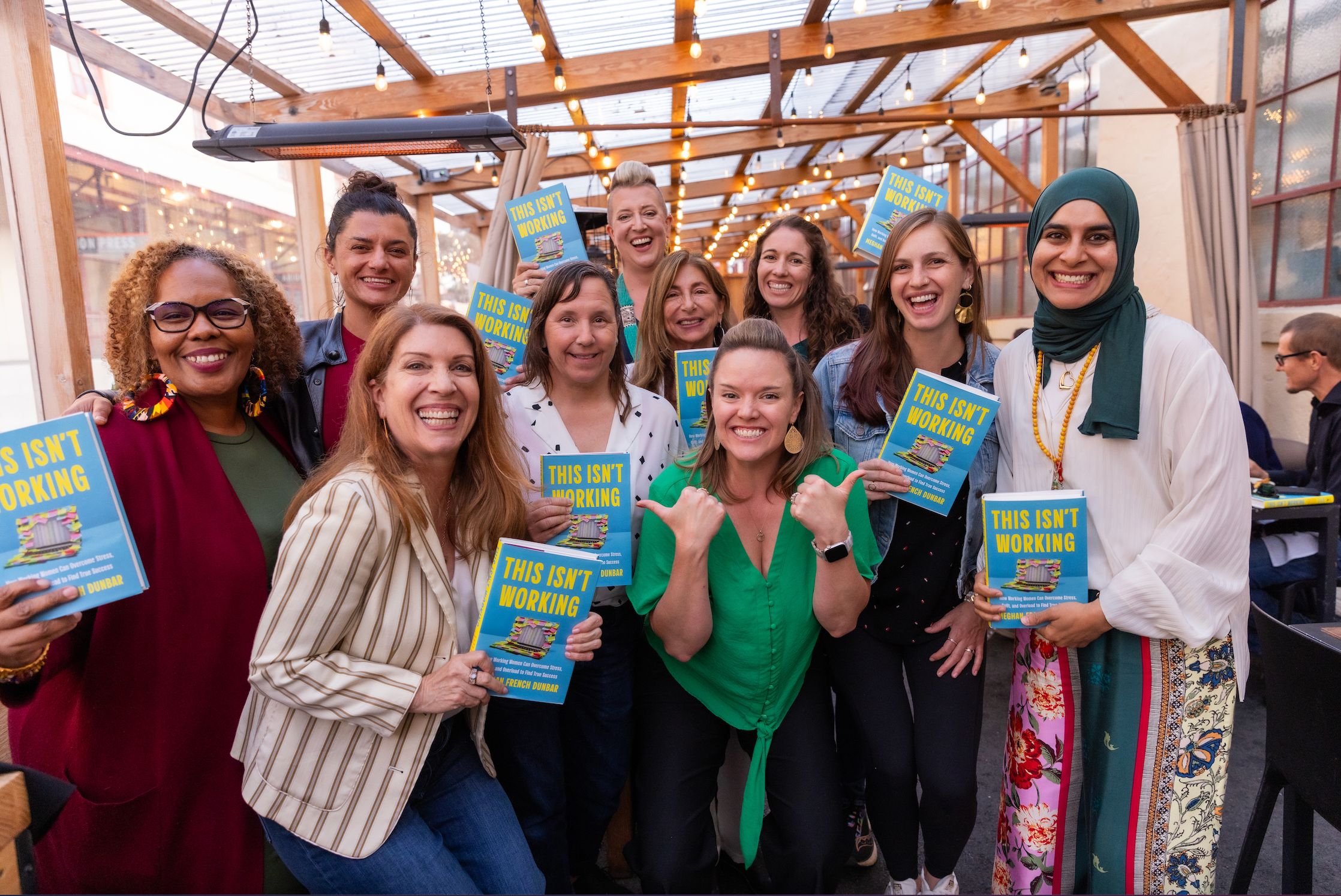
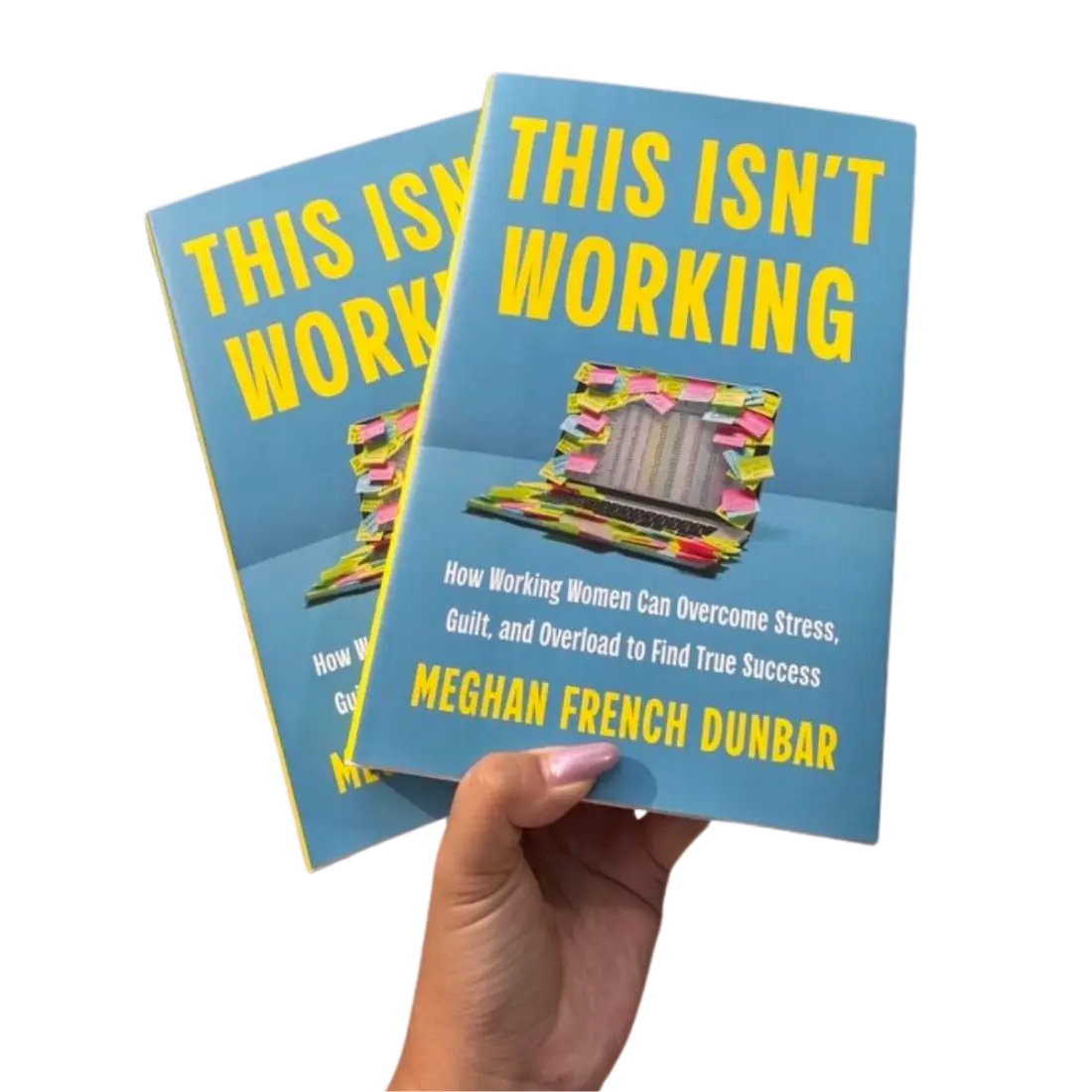
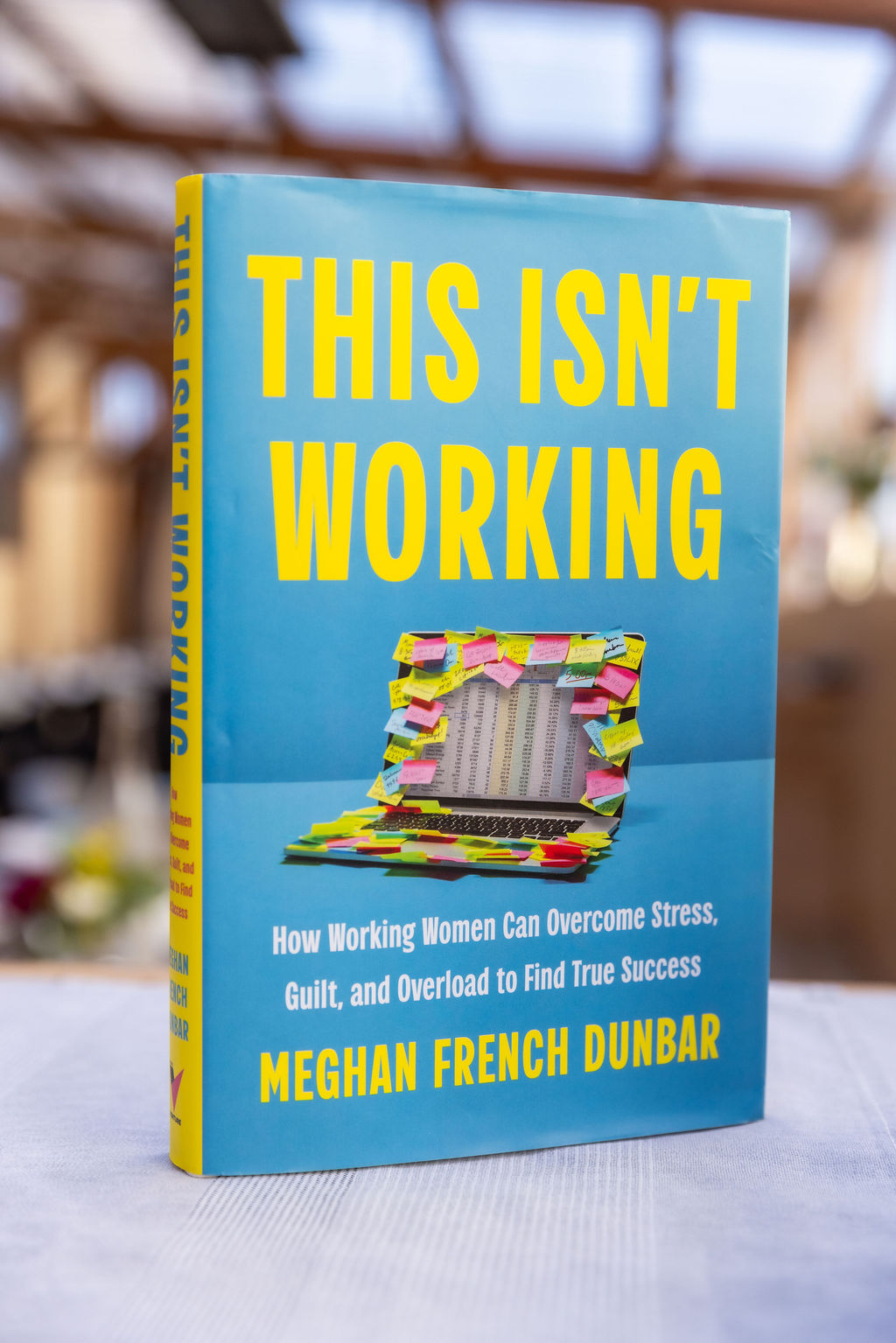
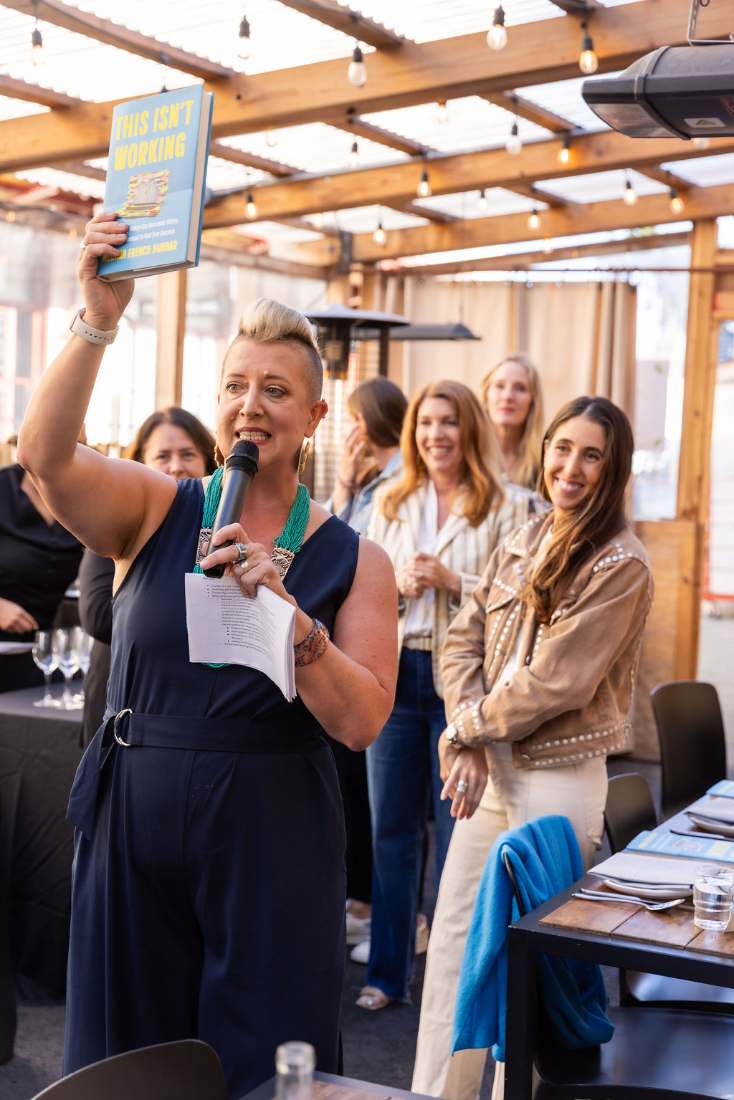
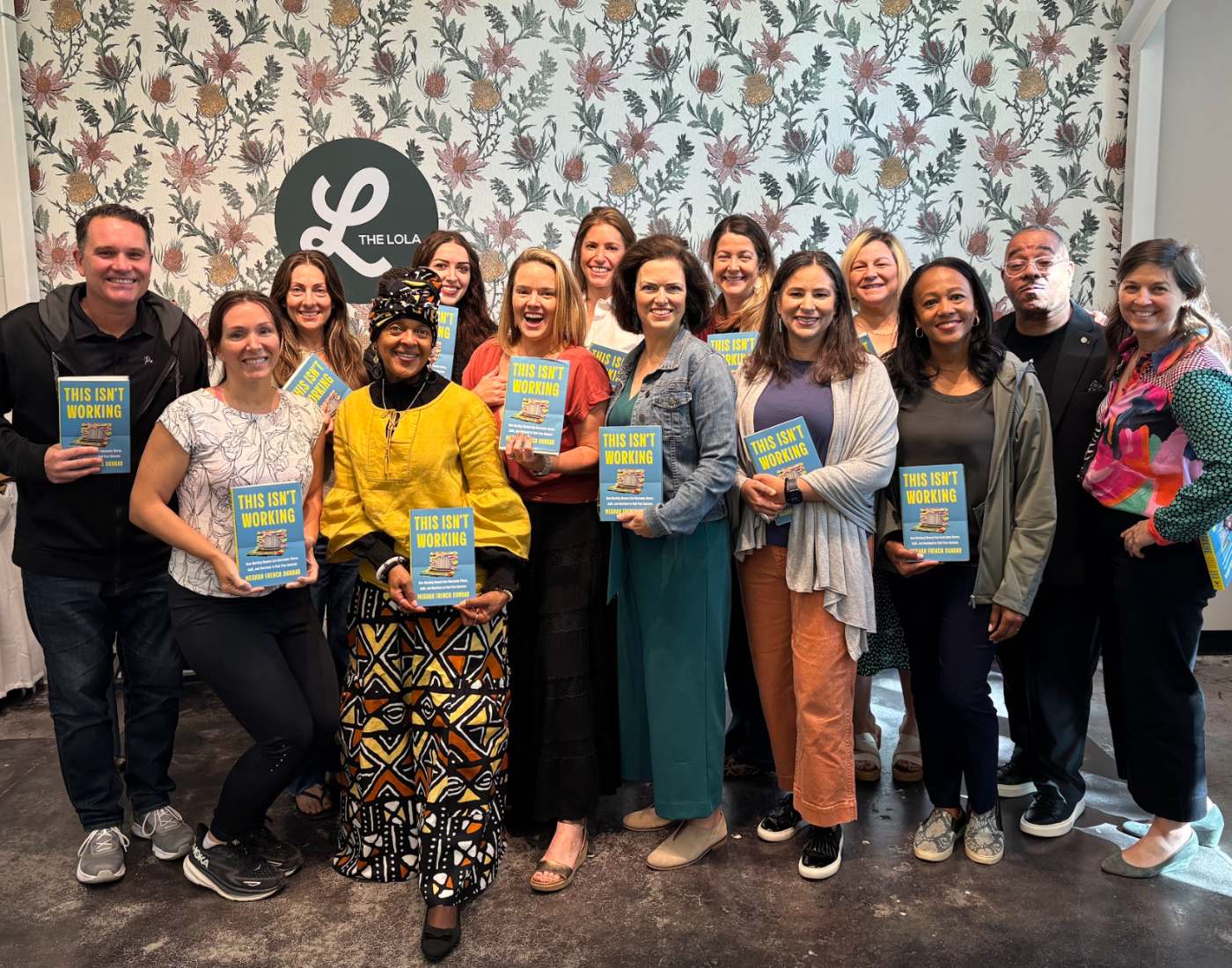
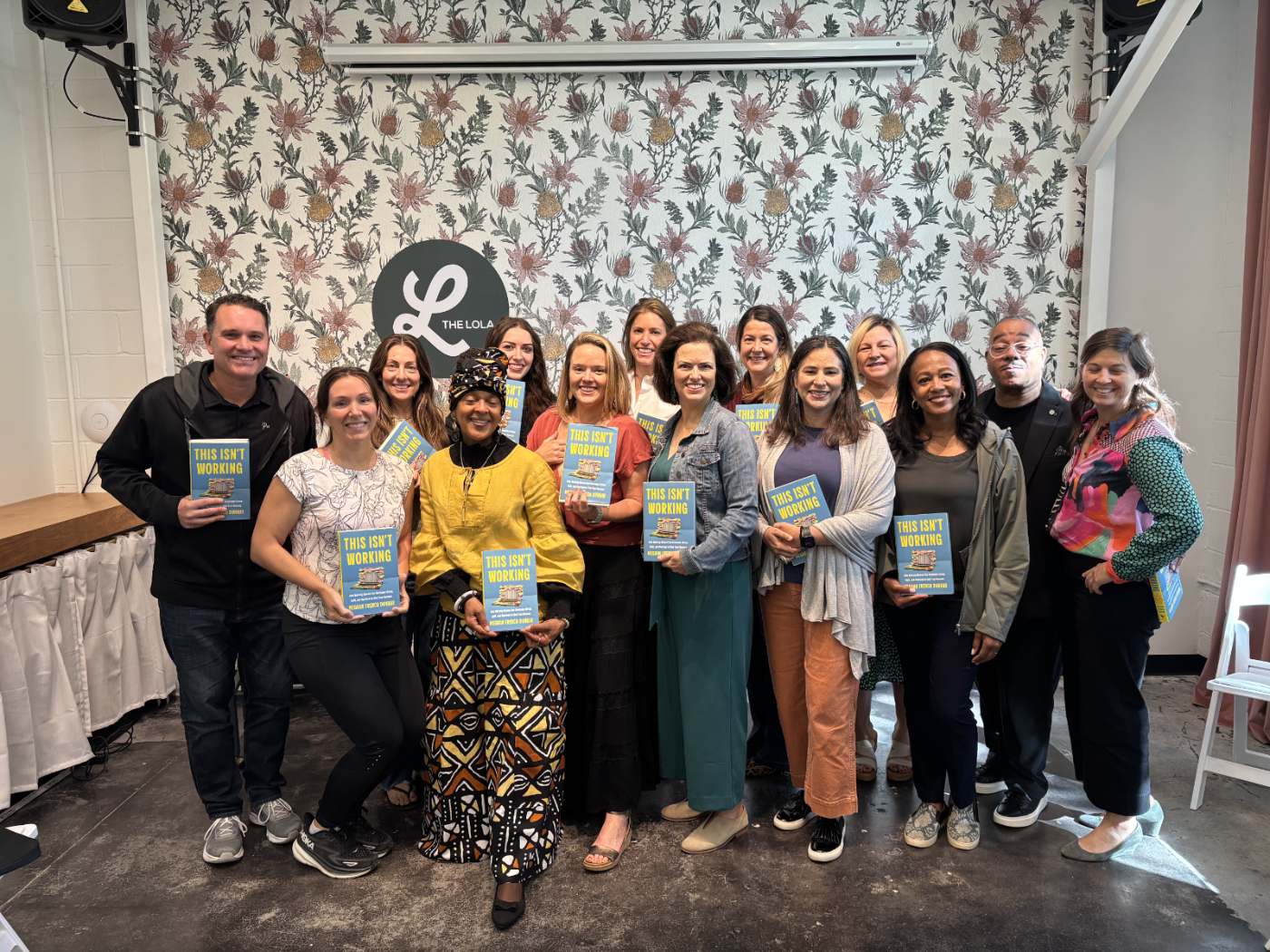
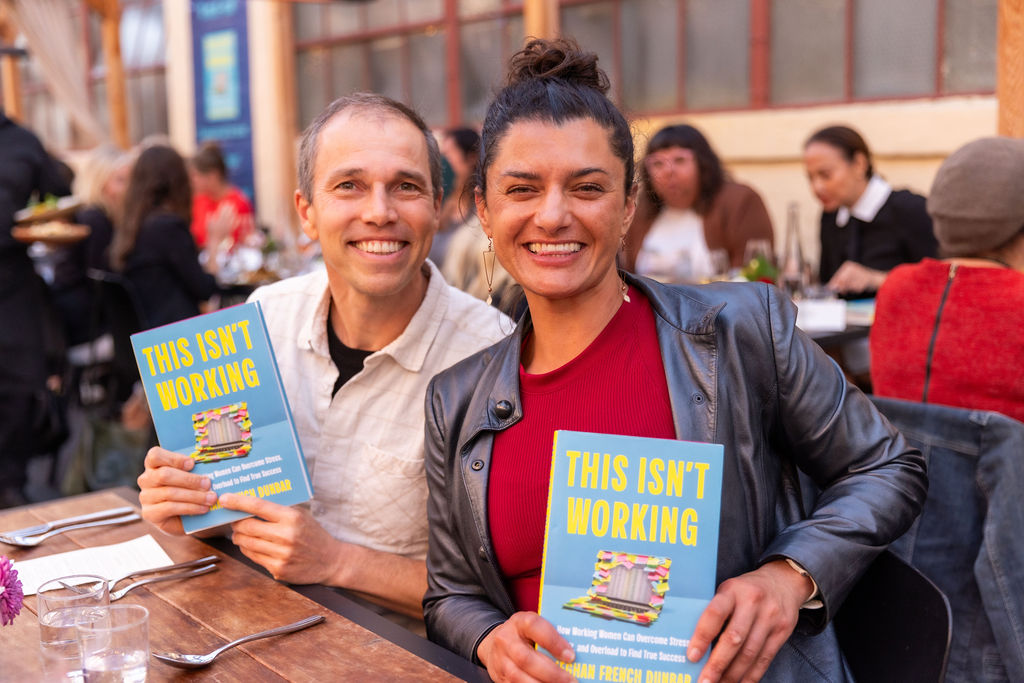
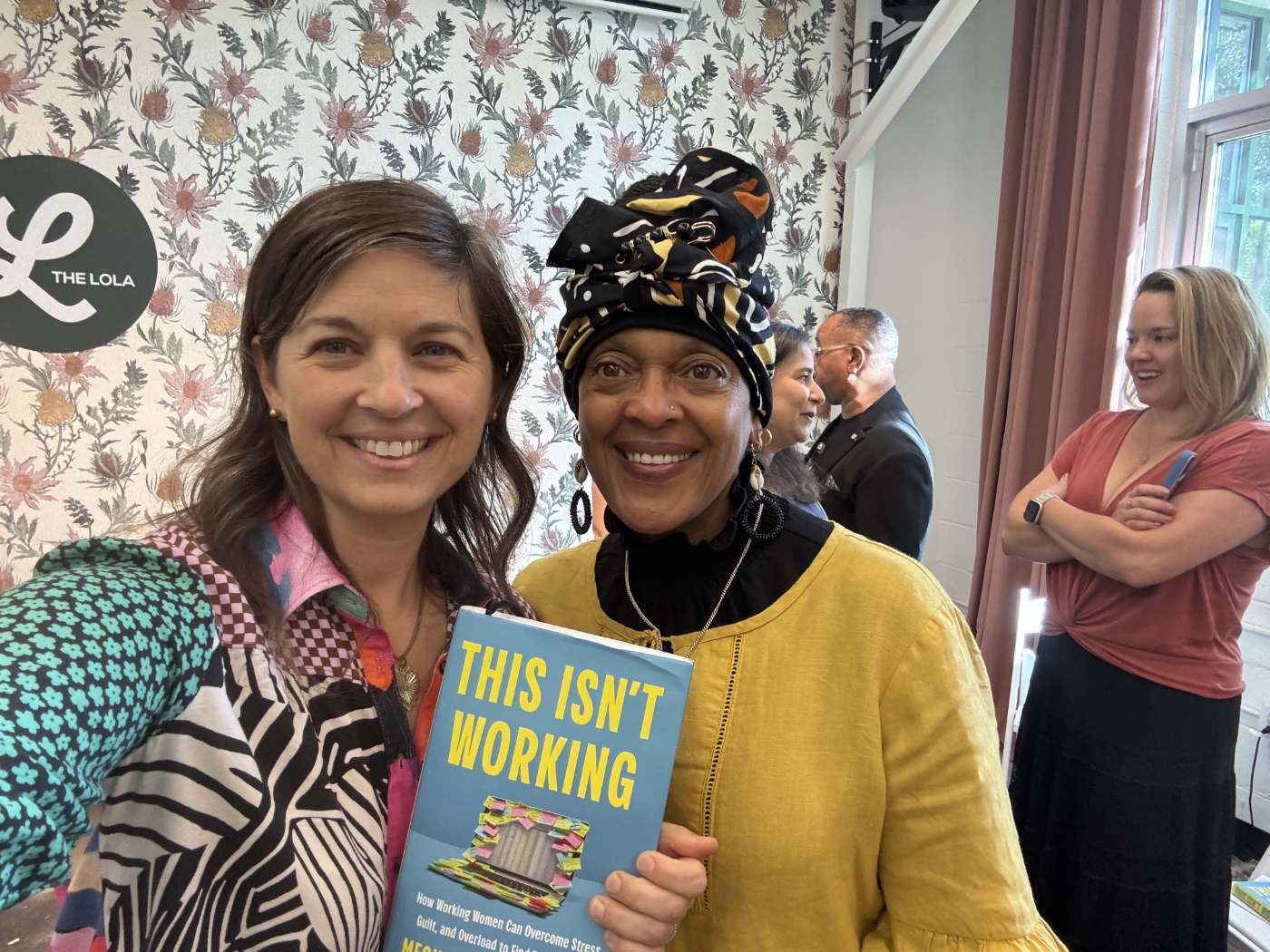
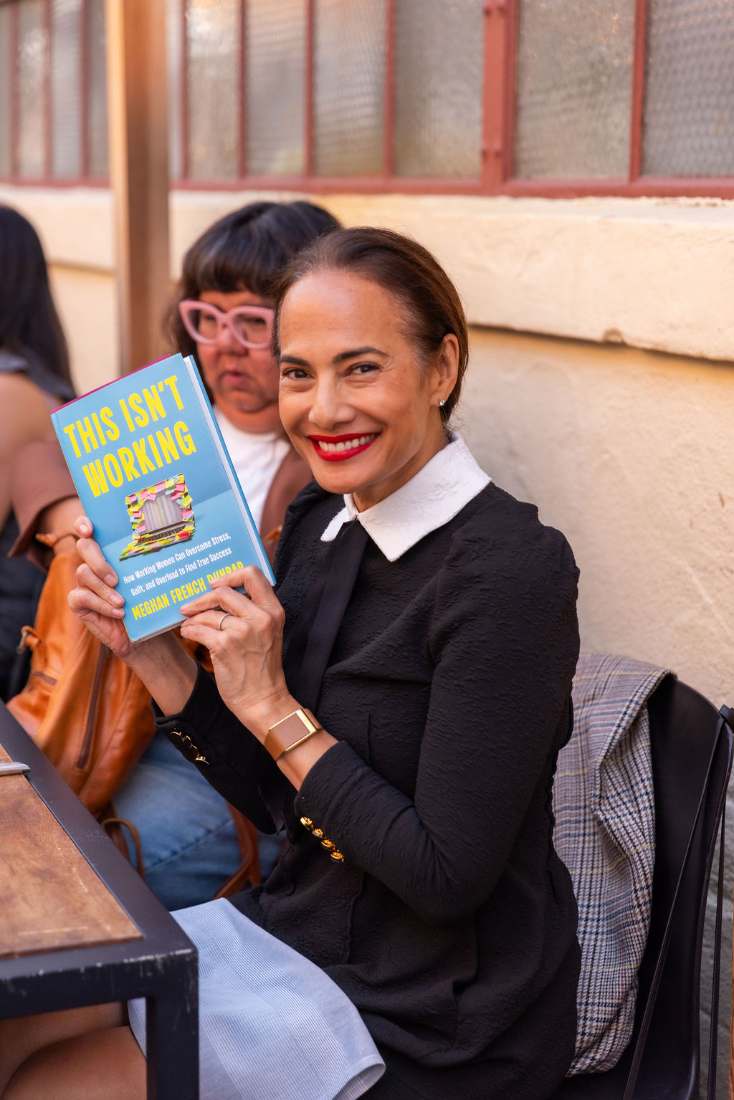
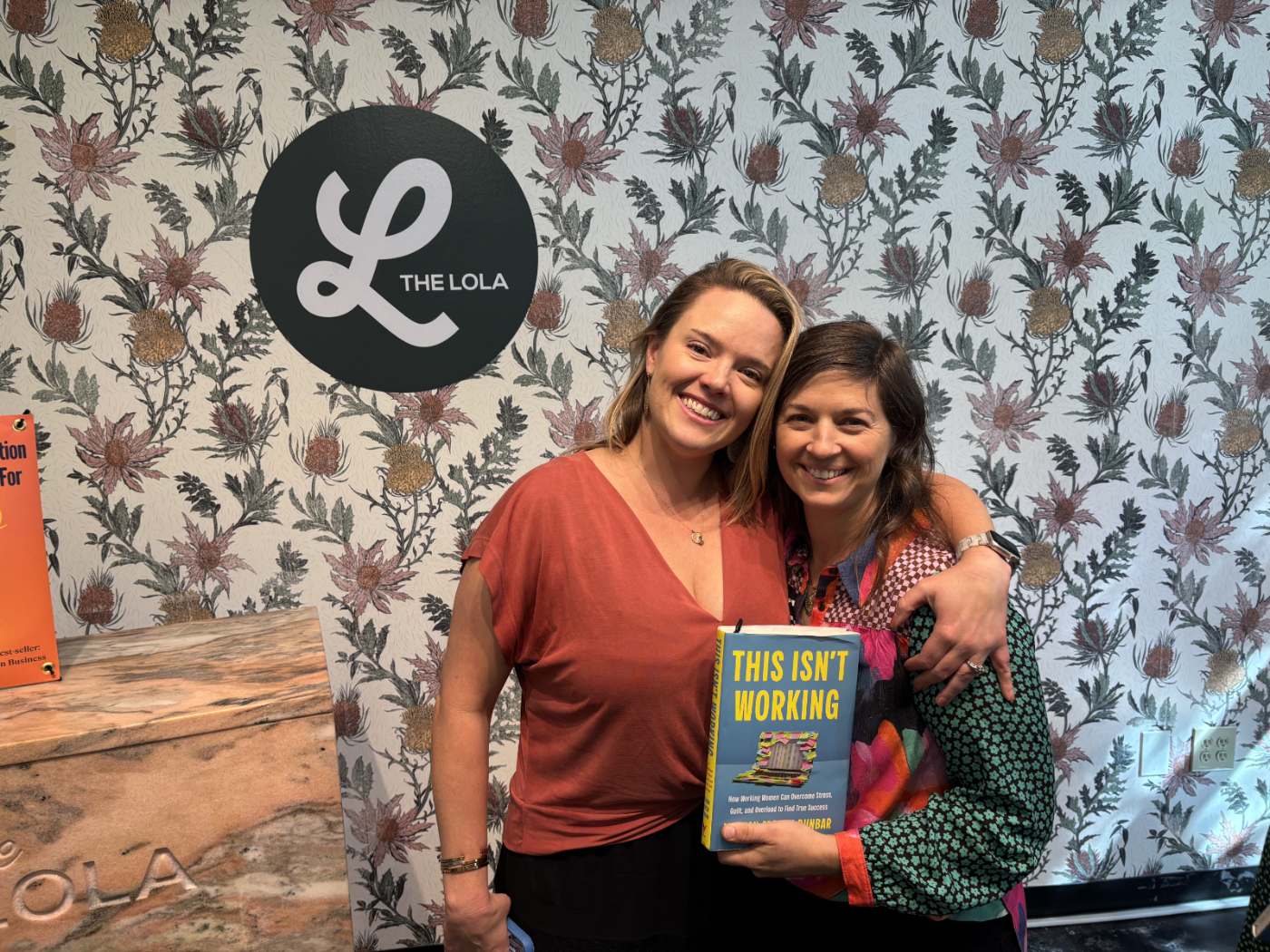
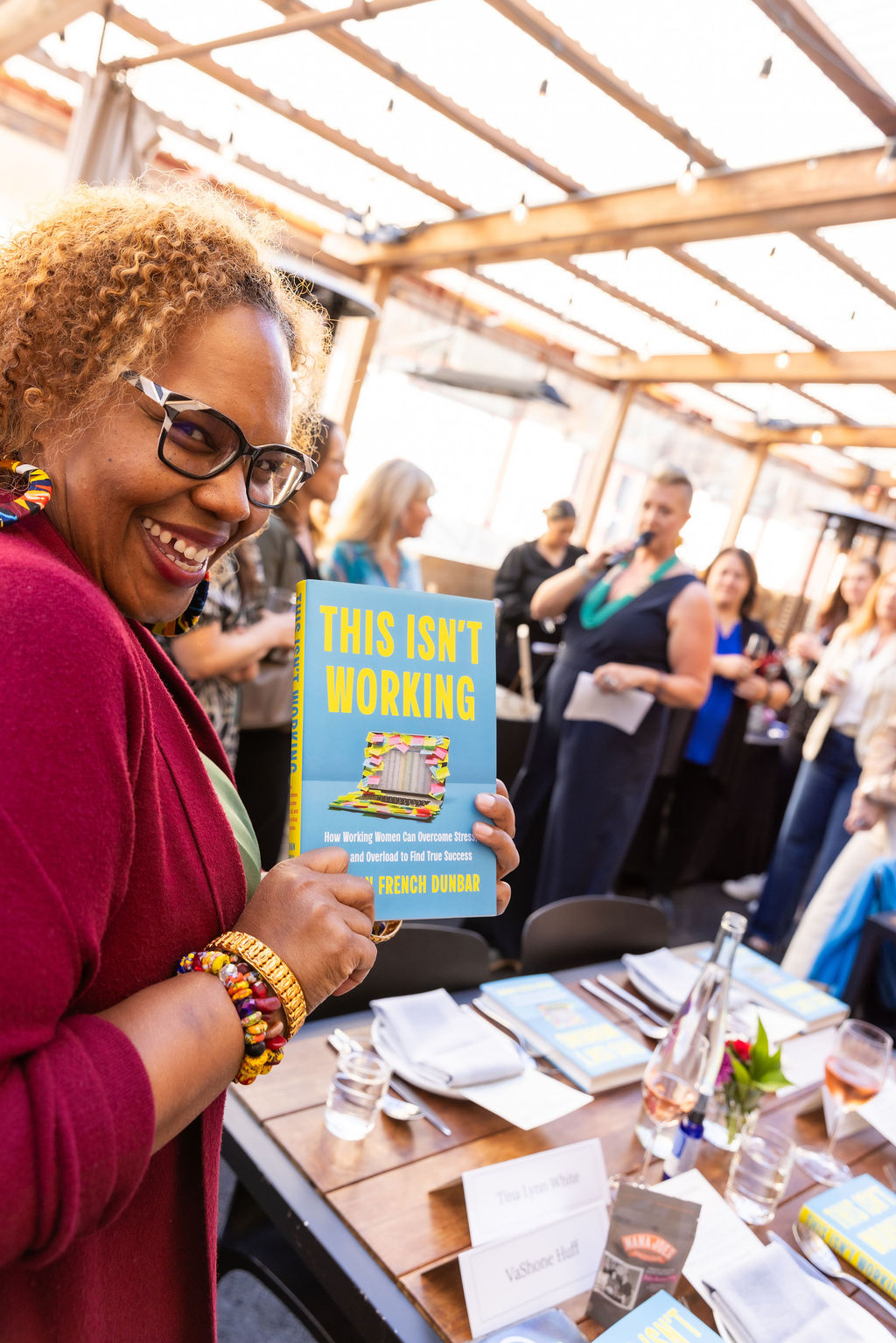
This Isn't Working by Meghan French Dunbar (Hachette, 2025)
The Impact Energy Matrix — Meghan's coined 2x2 framework for deciding what to say yes to
JOMO (Joy of Missing Out) as a reframe of FOMO
The 42% rest stat
Harvard's Human Flourishing Program (revisited)
CONNECT WITH MEGHAN
Book: This Isn't Working — available wherever you buy books
Website: meghanfrenchdunbar.com
Substack: https://meghanfrenchdunbar.substack.com/
FULL TRANSCRIPT
[Editor's note: Lightly cleaned for readability. Preserves original voice + delivery.]
Meghan French Dunbar (00:58): Hello, friend.
Today we're going to talk about something that will both improve your mental health AND improve your leadership and how you show up — inside the workplace and outside of it. Dealing with overwhelm. How do we actually get to a place where you can reduce the volume on the chronic stress that comes from feeling overly busy, overextended — pretty much having way too much on your plate at all times?
We're going to get into the key practices I've seen extraordinary business leaders bring into their own lives — because this is 100% impacting your quality of life. And we're going to talk about why so many of us are feeling this way, specifically as working women.
Why are we drowning?
Even if we're working, we're expected to do the vast majority of things outside the workplace. Eve Rodsky's research in Fair Play found that even in the most equitable heterosexual households, women still take on a disproportionate amount of domestic and emotional labor. Kids. Caretaking for friends and family. Social obligations. Birthday parties. All of it.
Inside the workplace, we're under a microscope of judgment. Our work is doubted. We're judged as having less leadership capability. Judged for our appearance, our children's appearance, our personality — more than men. Constant microaggressions. Being mistaken for junior employees.
Both inside AND outside the workplace, we're constantly being judged.
Meghan French Dunbar (~03:30): From The Myth of Normal — Gabor and Daniel Maté identify three characteristics that predispose us to disease more than anything else:
A compulsive and self-sacrificing doing for others
Suppression of anger
Excessive concern about social acceptability — aka external judgment
They go on: "Not listening to self in order to prioritize others' needs is a significant source of the health-impairing roles women assume. It is among the medically overlooked but pernicious ways in which our society's 'normal' imposes a major health cost on women."
We've normalized this. Women taking on everything. Saying yes to everything. Putting our needs last. It has a 100% correlation with the fact that women are contending with increased mental health disorders compared to men.
I was talking with Katherine Goldstein — journalist who covers modern motherhood — and she said something that blew my mind:
"I feel like modern society and motherhood is some form of Ponzi scheme. The expectations we put on women manifest for a lot of us as guilt — which is a form of social control. You feel so overwhelmed by what's being asked of you that you don't have the bandwidth, community, or wherewithal to demand change. Guilt makes you quiet. It makes you shrink. It makes you not want to talk about things."
I was trying not to cry as she said this. Because this has been my experience. And so many women I know. Constant guilt. Take time for yourself → guilty. Miss a kid's birthday → guilty. Someone's coming over and your laundry is all over the place → guilty.
Her point: when we're feeling that guilt, we're too overwhelmed to even talk to each other about it.
So here we are. Talking about it.
Meghan French Dunbar (~07:00): Which brings me back to one person I met a few years ago at a women's leadership workshop.
We started at 8 AM. This woman Michelle walked in — already in her running gear. Grabbed fruit and nuts from the breakfast bar. Sitting down at the table, mile-a-minute, telling us she'd already been on her run, already sent a stack of emails, already coached her kid's baseball team, already on the phone with a multi-million dollar prospect.
She made the rest of us feel deficient on contact. I was legitimately sitting there thinking — my god, I brushed my teeth and made it here on time.
Three full days. Big intensive workshop. And by day three — after we'd actually started talking about the judgment and guilt we were carrying — Michelle broke down at the table.
She said: "I can't do this anymore. It seems like I have this perfect life, this perfect marriage, this perfect job — but I feel like a swan. Barely afloat. It looks so nice up on top of the water. But underneath I'm just frantically pedaling my feet. And I'm so tired of holding it all."
I feel like any woman around the world would feel that sentiment in her bones. Even the women who look like they have it all together are just frantically trying to stay afloat. We're comparing our busyness. Wearing our stress as a badge of honor.
Let's make a little agreement — we're not going to do that anymore.
We're going to turn that dial DOWN.
Why? One of the top predictors of chronic stress AND one of the top six causes of burnout is overwhelm and overwork. Too much on your plate.
Meghan French Dunbar (~09:30): Fortunately, I got to talk to a lot of women leaders who are pushing back against the narrative that we have to say yes to everything and hold everything on our own. They gave me practices that have changed my life.
The less overwhelmed you are, the more you're able to show up present, engaged, intentional. As I ran my first organization, I was a workaholic — nights, weekends, travel — with zero attention to my mental or physical health. Blinders on. Chronic depression. Chronic stress. I couldn't show up in a good way.
Think about someone you love when they're overwhelmed, stressed, and exhausted. Very few people can be depleted and still show up authentic, grounded, present. But that's what we need to be as leaders. It requires being grounded and healthy. When you're exhausted, you can't access that.
I had a profound realization: I was not making the best decisions. I was not effective with my team. I was not happy. Not showing up as a good friend, spouse, or community member. If I'm going to be the best version of myself, I'm going to need to make changes.
I've couched these practices under one term — essentializing. It's a word I basically made up, but it gets to the heart of it. Like pruning. Get all the dead stuff off so you can flourish. Support only the most essential elements of your life.
Meghan French Dunbar (~11:30): Practice 1: Essentialize your time.
This might just be my experience, but I imagine it'll resonate. I feel pressure to say yes to so many things — speaking engagements, volunteering at my kids' school, dinner invites, fundraisers, kids' birthday parties, helping my parents. Every invitation, I feel like I need to say yes. That if I don't, I'll be disappointing someone.
I'm a people pleaser. I do NOT like to disappoint.
So I built myself a little framework I call the Impact Energy Matrix. Two variables on a 2x2:
X-axis: Will this renew or deplete my energy?
Y-axis: Is this meaningful/impactful or am I saying yes because of image (worried about judgment or disappointing someone)?
Renews + Meaningful = HELL YES. Sweet spot. Absolute yes.
Renews + Not particularly meaningful (concert, girls' night out) = YES. It fills my cup.
Depletes + Meaningful (sitting with my dad through chemo) = YES. Not renewing, but deeply meaningful.
Depletes + Image-driven (saying yes because I'm worried someone will judge me) = NO. This is the no I've had to practice.
Two things that helped me get over the guilt of saying no:
Research shows people are not as disappointed as we imagine they'll be when we decline social invitations. Deep breath. Thank you.
Instead of FOMO — one of the women I interviewed talked about JOMO. The joy of missing out. Actually using the time you save to rest, restore, fill your cup back up.
And one research beat that blew my mind: your body needs to be resting roughly 42% of your life to function at your healthiest. Not sleeping. Resting. Most of us are nowhere close.
When I actually say no now, it's from a place of intention, using the matrix. And I don't feel guilt — because people aren't as disappointed as I imagined, AND it's so I can be the best version of myself for everything I care about.
Practice saying no. Even one little no this month you would have traditionally said yes to. Protect your energy.
Meghan French Dunbar (~17:00): Practice 2: Essentialize your relationships.
This is a tough one. Vicki Saunders told me she "relentlessly cleans her closet of relationships that don't serve her."
That moment I saw the connection — Vicki is one of the most optimized leaders I've ever met. She shows up intentional. Impactful. Grounded. Impressive every time. I used to think she was some sub-species of human. She's not. She just intentionally essentializes. Distills relationships down to who supports her being her highest and best self.
So many of us fall into the trap of staying in relationships out of obligation — even though there are people who consistently take more energy than they give. Energy vampires. People who don't reciprocate. Are there relationships in your life like that?
I used to have a handful. I felt loyal — "I can't not have them, they're my friend" — even though every conversation left me miserable.
The people you allow in your life are a huge predictor of the quality of your life and your mental health.
Julie Van Ness (CEO of Real Leaders Magazine): "Who you choose as your friends decides your future."
Parneet Pal (physician educator): "The number-one predictor of long-term behavior change is who you surround yourself with."
So — relentlessly clean your closet. AND actively seek out and spend more time with people who lift you up. I have people in my life where every time we hang out, my heart feels like it's going to explode. I optimize how much of my life I spend around those people.
Releasing depleting relationships doesn't have to be dramatic. It can be a gradual moving away. Increasingly declining invitations. Constantly re-assessing: is this relationship loving me back? Is it bringing me energy or depleting me?
This is also true in your work life. Clients who consistently drag you down. Coworkers who deplete you. Is there a way to insulate yourself from them a little more?
Don't feel an outsized sense of loyalty to people who are bringing you down.
Meghan French Dunbar (~22:00): Practice 3: Essentialize your inputs.
A few years ago I got back from a trip, took a COVID test, tested positive. My mother-in-law was in town so I went straight to a hotel to quarantine. Three days in bed feeling terrible.
I made the brilliant decision to start the Apple TV Super Models documentary — Cindy Crawford, Naomi Campbell, all the 90s icons. Two episodes in, I went to the bathroom and looked in the mirror.
The juxtaposition — my reflection with what those supermodels looked like in real life — was stark. A bleak contrast. I already felt terrible from COVID. Now I started spiraling. Everything on my face was the worst. Everything was too big.
Fortunately, I had the wherewithal to catch it. And I came back to a question my husband and I have been asking each other since COVID isolation. Any time we're consuming any content — show, podcast, social media, whatever's going into our eyeballs:
"Is this feeding my soul in a good way?"
We have abandoned entire TV series two or three episodes in. "Wait — is this feeding our soul in a good way?" Many times the answer is "no. This is making me terrified" or "this is all about a serial killer and I don't want to watch this."
That simple question has 100% reframed how I think about the information I let in.
Other women I've talked to have similar practices. Libby Rodney (Harris Poll) talked to me about only posting positive stories on her social media. Another woman only follows positive social media accounts.
The average person consumes 2 hours of content per day. That's a LOT coming in. You are entirely allowed to put a strainer on what gets in. Only allow in things that are positive. Educational. Informative. Things that are actually improving how you think and feel.
Simple practice. Profound impact over time.
Meghan French Dunbar (~28:00): Practice 4: Essentialize your healthy behaviors.
Context-dependent for everyone. But most of us have — let's call it an unhealthy behavior or two — that we engage in especially when we feel overwhelmed and stressed.
Here's how Michelle Pusateri talked to me about her relationship with alcohol.
Michelle Pusateri (30:57): [Michelle, on her journey from bartending to pastry chef] When I was in the service industry, I got caught up in the lifestyle — the parties, the staying up all night, the drinking, drugs. I didn't realize how much of a toll it was taking until I started looking at going to culinary school.
I got a job at the Fairmont Hotel in pastry with someone from culinary school. I moved to a new house. I was like — something has to change. If I really want this career in pastry, I need to do something different. I said: I need to stop drinking.
From that day forward, I went to my first AA meeting. I stopped drinking. Started working at hotels. And I literally have not done a drug, smoked a cigarette, or had a drink since that moment — because I knew I had to change my life. If I wanted a career and to do something meaningful, I had to look at my behaviors and grow up a little.
Meghan French Dunbar (32:55): For Michelle, she just couldn't drink anymore. So she got essential about it. Took the behavior out of her life entirely.
There are all kinds of unhealthy behaviors: staying up late playing video games, skipping sleep. For me — I can have a cocktail occasionally. But if I drink more than two nights in a row, I start feeling sluggish AND depressed. My mental and physical health slowly degrade.
So I put boundaries on myself. Two drinks max in a week. My little healthy guardrails.
A lot of this comes down to paying attention to your body. Once I acknowledged that if I don't get physical activity every day I feel bad, exercise became an entirely new thing for me. Up until a few years ago, I only exercised because of body image. When I started to realize the impact physical activity has on my mental AND physical health, there was a deeper WHY. Skipping a workout — fine. Skipping a week of workouts — not good.
Notice: when are you feeling your healthiest, and what behaviors support that? When do you consistently feel unhealthy, and what behaviors led there?
What are boundaries or guidelines you can give yourself to minimize the behaviors that don't serve you?
Meghan French Dunbar (~35:30): Recap.
Time. Say no more often. Essentialize your time. Relationships. Distill down to the ones that re-energize you. Inputs. Be more intentional about the content you consume. Behaviors. Notice unhealthy patterns; put gentle guardrails around them.
Four things. Practice, not perfection. The more you dial these up, the less overwhelmed, busy, stressed, and anxious you feel. And it helps you show up better with everyone around you AND with yourself. The more I nurture and cultivate my wellbeing, the better I feel about myself.
I invite you to bring these practices into your life as much as possible.
Love to hear about it if anything strikes a nerve or you're putting practices into play.
And — this is the last episode of Season 1 of Better Than This.
We're wrapping up. Taking a little break. Please know how grateful I am that you've spent this time with me. It means more than I can express.
More soon. Until next season — be well.
I'll talk to you soon. Bye.