Cindy Gallop: Your "Safe" Job Isn't Safe | Unbehaved
"Too many people make the mistake of thinking that a job is the safe option. It's not."
Cindy Gallop was 45 when she sat down on her birthday to take stock, realized she'd given sixteen years to the same advertising agency, and resigned as chairman of BBH New York with no job to go to and no idea what came next. Twenty-one years later, she has never regretted it. The one thing she'd tell her younger self: start working for yourself a damn sight sooner.
Then there's her grandmother's saying, which opens this episode: the fool says evil cannot touch me, but drop by drop the pitcher fills. Cindy's version, for every woman currently telling herself she can stick it out two more years — the timeline is not the point. Every daily micro-sexism and microaggression is eroding your confidence and your belief in what you're capable of. Get out now.
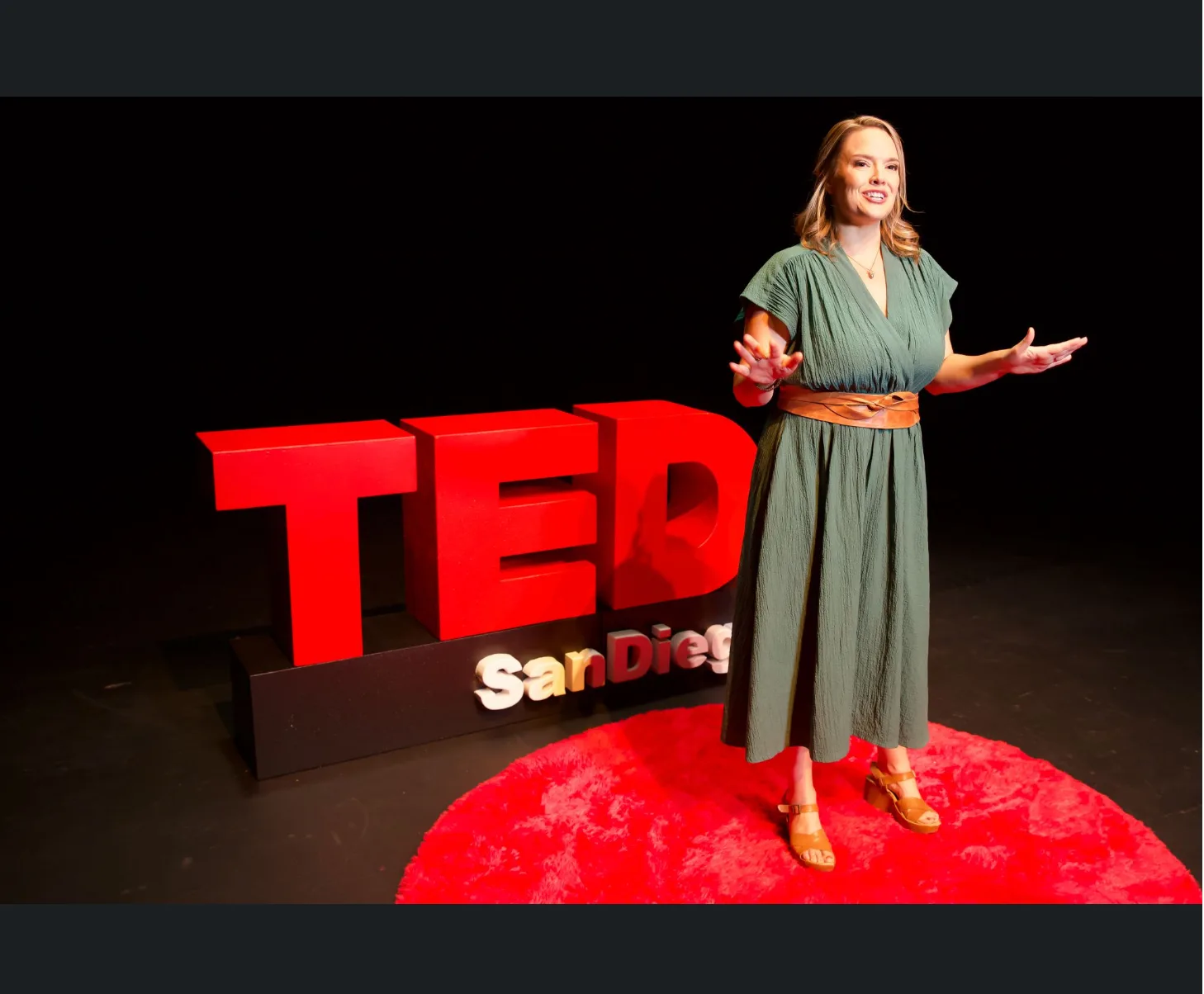
What she built instead, starting at 45 and from nothing, is Make Love Not Porn — a real-world sex video sharing platform she launched from the TED stage in 2009, in a talk that's since been watched nearly three million times. Seventeen years later she's still fighting for it, and her LinkedIn headline still says "I like to blow shit up." She's 66. She is nowhere near done.
CONTENT NOTE: this episode touches on sexual assault. It isn't the focus, but it comes up more than once. Take care of yourself.
WHAT WE COVER
- Why a job is the riskiest place to put your future — "whose hands would you rather place your future in?"
- Her grandmother's pitcher, and why "I'll stick it out two more years" might be the most expensive sentence in your working life
- "There is only one thing holding women back in every industry, and that is insecure men"
- Why she calls her own award-winning career luck — including never having been harassed in a way that ended it
- At 32 she stopped looking for "the one," and had, in her words, a whale of a time for the next thirty years
- Red hot rage as a renewable resource: nice girls don't get angry, and that's exactly why we should
- Algorithmic suppression as economic oppression — and the moment I admitted I'd turned a platform problem into a story about my own writing not being good enough
- Giving the first public talk anyone had given on porn as sex education, to a room that went completely silent — and what Robin Williams said to her at the coffee break afterward
- What it actually costs to build a business the infrastructure refuses to serve: debanked three times in two months, 12% of monthly revenue to payment processing against a 3% standard, and a total ban on advertising anywhere
- The letters that keep her going — from young people, from couples, and from survivors who say it helped them reclaim their bodies
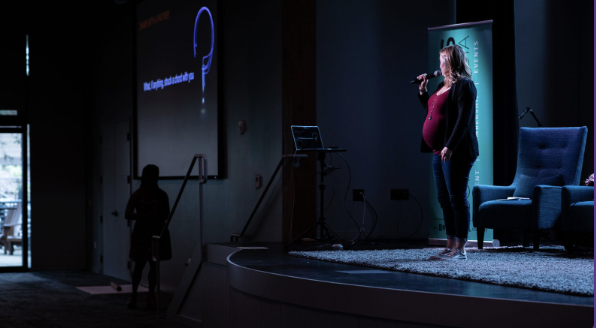
- Liquidating her retirement fund at 66 to keep it alive, and why she's going back out to raise again anyway
- Her permission slip, and the one small thing she promises will change your life: say what you actually think. Out loud. Starting today.
ABOUT THE GUEST
Cindy Gallop is the founder and CEO of MakeLoveNotPorn, the world's first and only user-generated, human-curated, real-world sex video sharing platform — launched at TED in 2009 as a direct counterpoint to the harmful scripts of mainstream pornography.
Before founding MLNP, Cindy spent decades in advertising, including starting up the New York office of Bartle Bogle Hegarty (BBH) in 1998 and serving as its chairman. She was named Advertising Woman of the Year in 2003. She is also the founder of IfWeRanTheWorld, a co-action software platform launched at TED 2010.
Business Insider named her one of the 15 Most Important Marketing Strategy Thinkers Today (alongside Malcolm Gladwell and Seth Godin), and Campaign named her their Top Trailblazer for both 2016 and 2017. She is the author of Make Love Not Porn: Technology's Hardcore Impact on Human Behavior (TED Books).
Her 2009 TED talk has nearly 3 million views. She has been fighting the systemic barriers to funding, banking, advertising, and scaling MakeLoveNotPorn for 17 years — and she is currently gearing up to raise a new round of equity funding to scale the platform's mission of helping end rape culture globally.
PULL QUOTES
"The fool says evil cannot touch me, but drop by drop the pitcher fills."
— Cindy's English grandmother, quoted by Cindy throughout her life
"Every daily micro-sexism, micro-aggression, micro-racism is eroding your self-confidence, taking away your belief in what you're capable of, and destroying your soul. Get the fuck out now."
— Cindy Gallop
"Too many people make the mistake of thinking that a job is the safe option. It's not."
— Cindy Gallop
"I'm not looking for the one anymore. And my God, the relief."
— Cindy Gallop, on the day in her early 30s she opted out of the search-for-a-partner trap
"There is only one thing holding women back in every industry, and that is insecure men."
— Cindy Gallop
"Tell me it can't be done, I'm gonna fucking well show you. Put a barrier in my path, I'm gonna fucking well show you. I take all that daily demoralization, discouragement and depression, and I turn it into motivation and inspiration."
— Cindy Gallop
"I have destroyed myself financially to keep this business going."
— Cindy Gallop
"I am driven by red-hot rage."
— Cindy Gallop, on how she keeps posting on LinkedIn despite algorithmic suppression
"Algorithmic suppression is economic oppression."
— Cindy Gallop
"Say what you really think. No, really, say what you really think. Because we don't. Every day we suppress what we really think. Starting today, just start saying what you really think out loud. It'll change your life."
— Cindy Gallop
CHAPTERS
00:00 — Cold open: the grandmother's pitcher metaphor + "get the fuck out now"
00:34 — Meghan's intro (with content warning about sexual assault)
02:56 — Interview begins: "Cindy fucking Gallop"
03:15 — Growing up with a Tiger Mother in Brunei
05:17 — Opting out of the "search for the one" trap in her early 30s
08:05 — The 45th birthday review that led her to leave BBH
10:00 — Why "working for yourself" is the actual safe option
12:28 — Cindy's coaching practice + why she tells women to work for themselves
13:00 — The ONE thing holding women back in every industry: insecure men
14:00 — The grandmother's saying + "Get the fuck out now"
15:29 — Being "incredibly lucky" at BBH — and what Cindy means by that
17:46 — The 2009 TED talk + the nervous laughter
20:18 — The Robin Williams coffee-break story
22:18 — 17 years of business barriers to keeping MakeLoveNotPorn alive
28:04 — The three things that keep Cindy going (including "I have destroyed myself financially")
33:07 — Not giving a shit what family and friends think
34:35 — The loneliness question — and Cindy's honest answer
37:22 — LinkedIn algorithmic suppression as economic oppression
38:34 — Why Cindy is "driven by red-hot rage"
40:00 — Proxy bias explained: how LinkedIn's "unbiased" algorithm actively suppresses women
42:00 — Why Cindy still hasn't been able to raise the funding she needs — and the opportunity cost
43:48 — The one thing Cindy wants from the universe right now
44:41 — The permission slip: "Say what you really think."
46:45 — Where to find Cindy + how to support MakeLoveNotPorn
48:16 — Unbehaved Lessons of the Day
50:00 — Sign-off
RESOURCES MENTIONED
People + organizations referenced:
- Cindy Gallop — Founder and CEO of MakeLoveNotPorn, founder of IfWeRanTheWorld
- MakeLoveNotPorn — makelovenotporn.com — the world's first and only user-generated, human-curated, real-world sex video sharing platform
- MakeLoveNotPorn.Academy — makelovenotporn.academy — Cindy's new zero-to-18-and-beyond sex education platform (in early beta)
- Dear Cindy — cindygallop.substack.com — Cindy's advice Substack (archives full of advice on business, life, dating, relationships, beauty, travel)
- Bartle Bogle Hegarty (BBH) — the advertising agency where Cindy worked for 16 years, including starting up the New York office in 1998
- Jane Wurwand — co-founder of Dermalogica, referenced by Meghan for her definition of success as "choices, opportunities, and freedom"
- Robin Williams — comedian who riffed on MakeLoveNotPorn during a TED coffee break in 2009
- Martyn Redstone — AI tech specialist in Europe who identified LinkedIn's "proxy bias" problem
- TED — where Cindy launched MakeLoveNotPorn in 2009 (talk now has nearly 3 million views)
Concepts + frameworks referenced:
- Proxy bias — the dynamic where an algorithm trained on historical patterns (business credibility defined by white male output) actively suppresses women and marginalized groups even when "unbiased" by design
- Microactions — small, simple, easy-to-do actions that cumulatively create enormous change (from Cindy's first startup, IfWeRanTheWorld)
- The one microaction that changes everything: Say what you really think.
CONNECT WITH CINDY
- cindygallop.com
- MakeLoveNotPorn.com (subscriptions start at $10/month)
- MakeLoveNotPorn.Academy
- Dear Cindy on Substack: cindygallop.substack.com
- LinkedIn: linkedin.com/in/cindygallop
- Twitter/X: @cindygallop
CONNECT WITH MEGHAN & UNBEHAVED
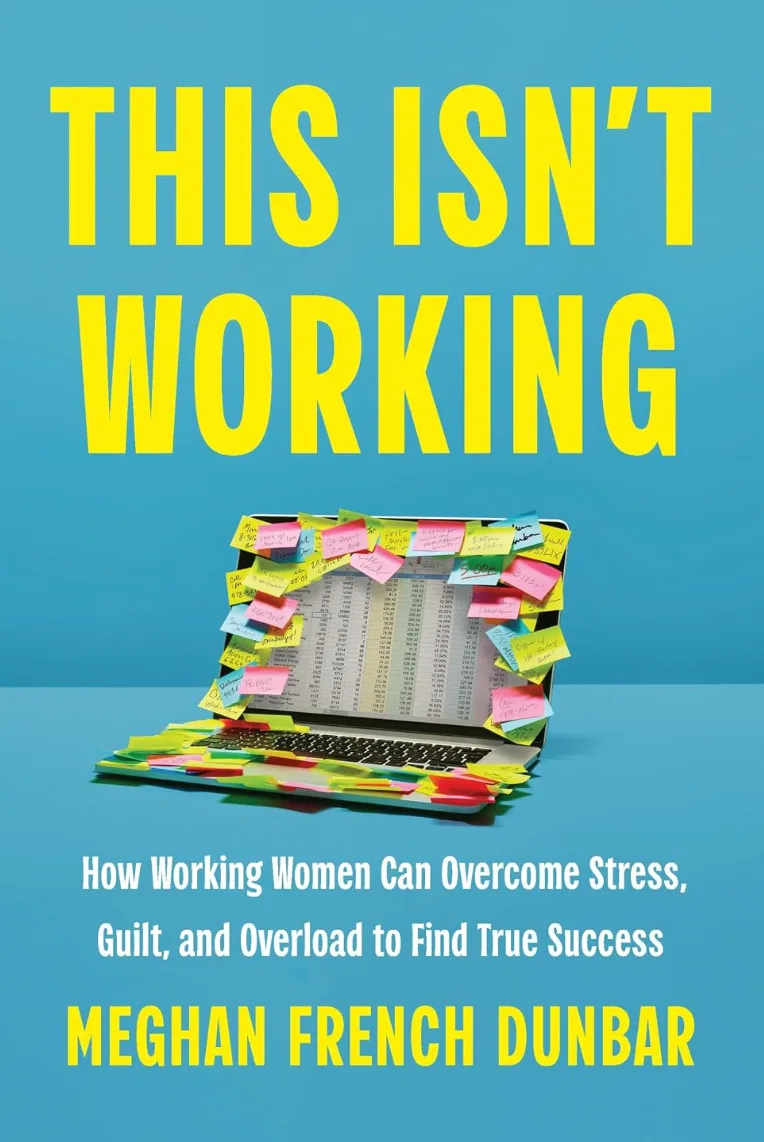
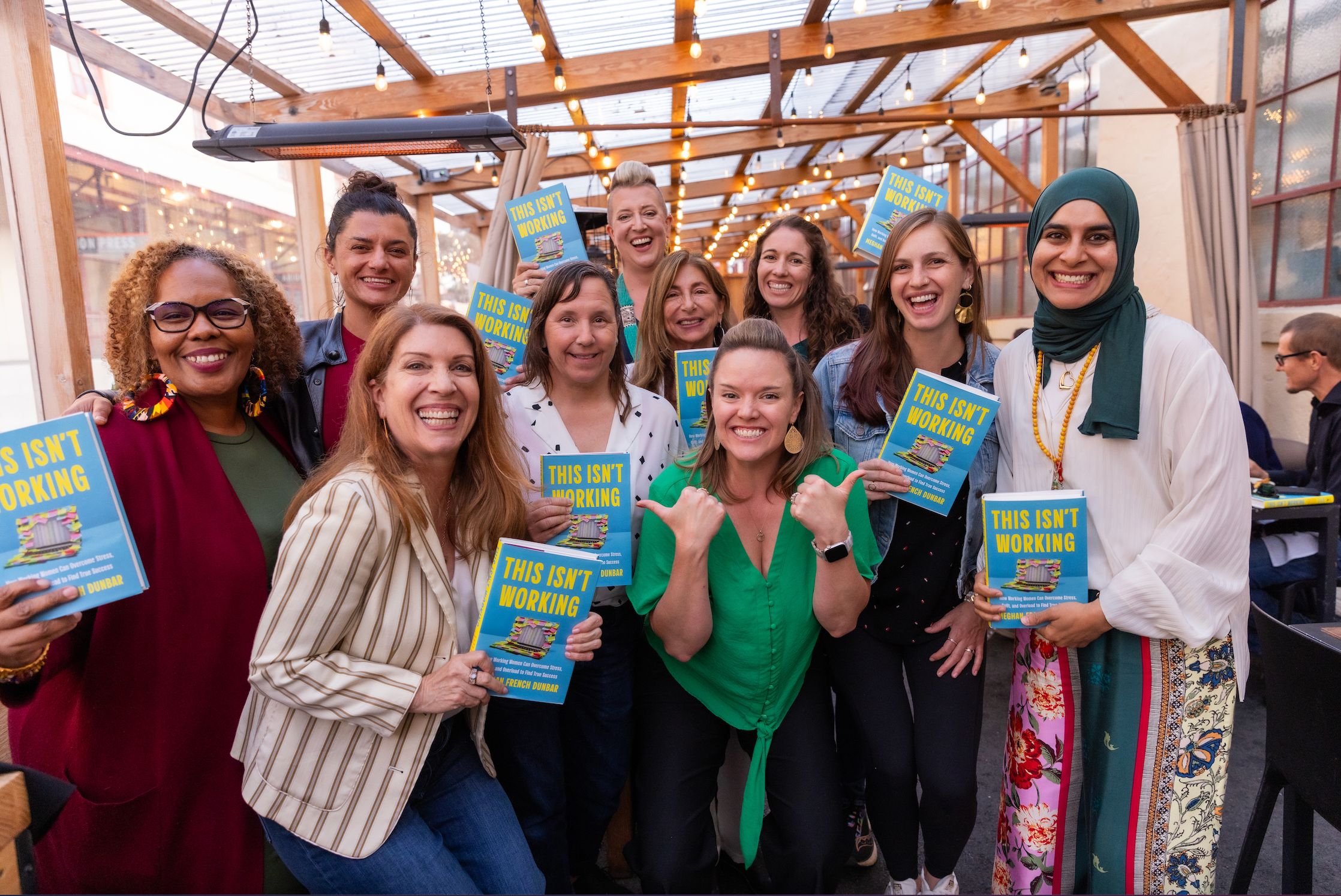
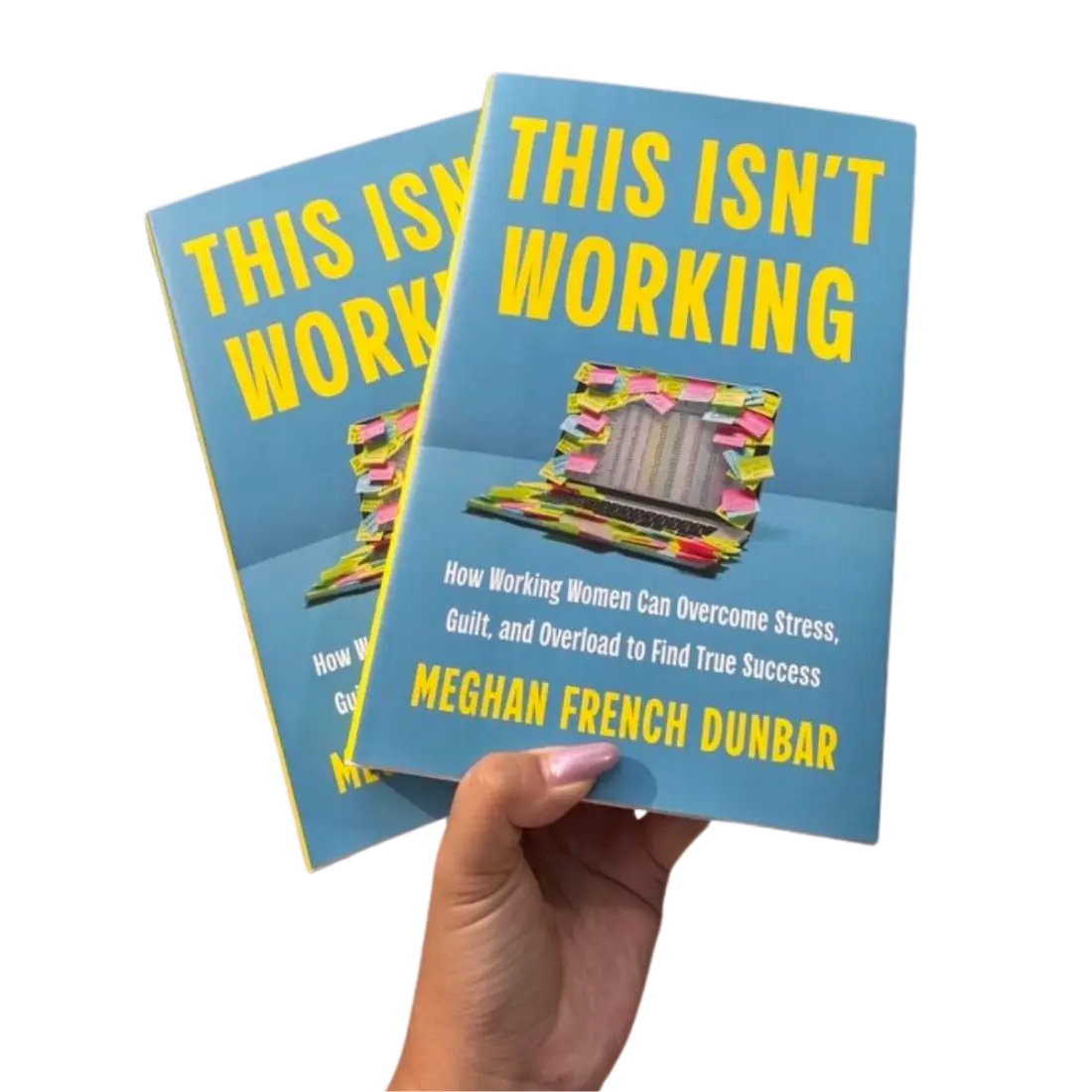
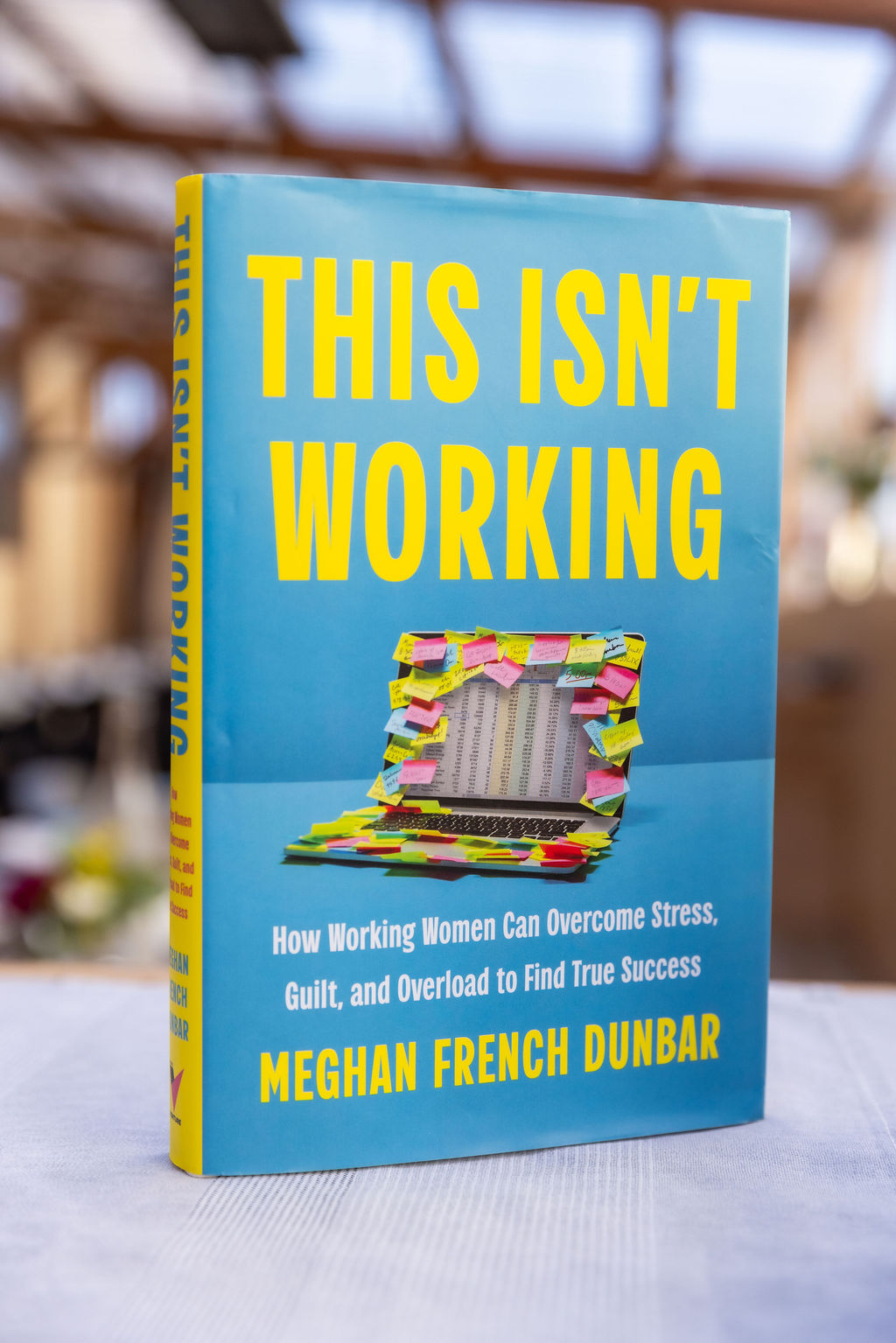
- Book: This Isn't Working
- Website: meghanfrenchdunbar.com
- Substack: meghanfrenchdunbar.substack.com
- Instagram: @meghanfrenchdunbar
- LinkedIn: linkedin.com/in/meghanfrenchdunbar
FULL TRANSCRIPT
COLD OPEN
Cindy Gallop (00:00)
There was one saying of my grandmother's: the fool says evil cannot touch me, but drop by drop the pitcher fills.
And what I say to the women in this situation is, you may think you can stick this out for whatever period of time, but I'm here to tell you that every daily micro-sexism, micro-aggression, micro-racism is eroding your self-confidence, taking away your belief in what you're capable of, and destroying your soul. Get the fuck out now.
---
MEGHAN'S INTRO
Meghan (00:34)
Hello, lovely human. I'm Meghan French Dunbar, and welcome to Unbehaved.
You just heard from the one and only Cindy Gallop. And if you don't know her yet, brace yourself. Her title on LinkedIn legit says, "I like to blow shit up." She's pretty much the poster child for Unbehaved and who I want to be when I grow up.
But before I go any further, I do want to note that today's conversation touches on sexual assault. It's not the focus, but it does come up more than once. If that feels too heavy right now, I see you. Take care of yourself. You don't need to listen to this one today.
So back to Cindy. Cindy built an award-winning career in advertising, and then she walked away from it all at age 45 to explore a new purpose — something she decided to, you know, just casually announce from the main TED stage in 2009, in a talk that has garnered nearly three million views since. Her new purpose? Porn. Yes, porn.
Specifically, she'd noticed that young people were learning about sex from hardcore porn. A lot of that porn treats aggression, objectification, and the absence of consent as normal — a dynamic that promotes rape culture. Research has since linked that content to harmful beliefs about sex and consent. So she built the alternative: Make Love Not Porn. The platform shows real people having incredible, communicative, consensual sex — modeling what fantastic sex can and should look like.
She has spent 17 years building it against more roadblocks than any founder I've ever met. And it is working. Every day, people write to her to say that it's changed how they approach sex, or it's saved their relationship. Survivors of sexual assault tell her it's helped them reclaim their bodies.
And it absolutely breaks my heart how relevant this entire conversation is after the Cornell case that made national headlines last week.
But this conversation goes way beyond porn. We get into why she thinks sticking it out at your job isn't actually the safe option. The specific belief she let go of that unlocked the life she actually wanted. What keeps her going on those days when it feels like the odds are stacked against her. And the single small thing that you can do today that will change your work and your life.
I'm so damn thrilled you're here. Let's get into it.
---
THE INTERVIEW
Meghan (02:56)
I honestly feel like I need to start this by saying, like, "Cindy fucking Gallop," but I probably don't — you've probably changed your middle name at this point. I want to go back to young Cindy. What was your idea of success growing up, and where did that come from?
Cindy Gallop (03:15)
Honestly, I think given the generation I am, my idea of success didn't even come into it. I am half English, half Chinese. My father was English. My mother was Malaysian Chinese. I was born in the UK, but when I was six, we moved to Brunei in Borneo. So I grew up in Asia. And I was very much subject to the especially Asian syndrome of a childhood characterized by massive academic pressure. My mother was Tiger Mother par excellence. My father was very old-fashioned Brit. It was "come top of the class or don't come home."
So it's very much — success was you studied really hard, you went to a good university — in my case, Oxford, Somerville College, which I graduated from. So I didn't even myself think about what I deemed success. And again, bear in mind, I'm 66. This is long before the age of the internet, and absolutely no social media and other characterizations of success around me.
Meghan (04:29)
So this contrasts so starkly with where you are today, the anti-status-quo. And so I'm curious — was the unbehaved ethos there from the start? Was there a part of you that was quietly rebelling against having to be the top of the class and everything being the best and achievement-oriented? Or did that come later?
Cindy Gallop (04:50)
I think that really just came with growing older. I always say that my life is a series of accidents. Nothing was consciously or intentionally planned. So — entirely organic.
Meghan (05:04)
Are there any beliefs that you had as a child or as an adolescent or a young adult that you are very clear that you left behind or that were holding you back in some reason?
Cindy Gallop (05:17)
Only all the usual ones for girls and women, and again, especially growing up with a Chinese mother growing up in Asia. The presumption was absolutely that as a woman, you get married, you have children.
And in my teens and early twenties, I presumed that at some point I would. And then gradually over time I realized I had no desire to be married and I had no desire to have children. And also, from the moment we're born as girls and women, everything around us tells us that our entire life is a search for the one. Every fairy tale, every aspect of popular culture. And the real bummer about that is we spend our teens and our 20s going to every social occasion thinking "will he be there" — and I speak as a straight woman. And the aggravating thing about that is that first of all, it means you spend bloody hours on makeup, outfits, getting ready. What a waste of time.
You go to that event, the search for the one forces you to compete with other women, a dynamic that I deplore. And at the end of the night you schlep home going, "he wasn't there again tonight, maybe next time." And sometime in my early 30s, I went, "fuck this. I'm not looking for the one anymore." And my God, the relief.
I could just go to social occasions and enjoy myself. So I exhort everyone to think about what would really make them happy, because maybe it's not the search for the one, and maybe that needn't define everything you do and everything you're hoping for.
Meghan (07:11)
I love this. Because I also feel like there's this dynamic of people saying, "once you stop looking for him, that's when he comes." And your story is very much, once I stopped looking for the one —
Cindy Gallop (07:24)
I had a whale of a time!
Meghan (07:27)
And I still am having that whale of a time 30 years later. I love this.
Cindy Gallop (07:30)
Yeah, exactly. Exactly.
Meghan (07:34)
So I want to talk about leaving this huge career that you built for yourself. You had essentially made it to the upper echelons of the advertising elite. You were influencer, award winner, all of these things. And you stepped away from it all. What was the point in there where you were deciding "I want to pivot"? And what gave you the courage to actually walk away from such an established career?
Cindy Gallop (08:05)
So there wasn't. Again, as I've said previously, nothing about my life has been planned and intentional. I turned 45 back in 2005 and I'd always thought of 45 as kind of a midlife point. Obviously, by the way, in the happy assumption one lives to be 90 — fingers crossed. But in the couple of years running up to my 45th birthday, I thought: one's 45th birthday is the moment when you should pause, take stock, reflect and review — where have I been, where am I going, all that good stuff.
So on February 1, 2005, my 45th birthday, I duly did that. And that was the point at which I went, "my God, I've just worked 16 years for the same advertising agency." Absolutely wonderful advertising agency, Bartle Bogle Hegarty — BBH. I'd worked for them in London. I'd gone out to Singapore to help start up and run the Asia Pacific office. I'm here in New York because I came here in 1998 to start up their American office for them. But honestly, the years had flown by, and I went, "bloody hell, 16 years. I think it might be time to do something different."
And then the issue was: I hadn't the faintest idea what. Because I had said to people over the years, I don't plan to work in advertising forever, don't plan to work at BBH forever, but advertising is a really great industry to work in to come across what you want to do next. Because when you work in advertising, you come into contact with so many different industries, companies, people, brands, organizations. And so I guess I'd always thought that my next big thing would bubble up from the ether one of these days. And there I was at the age of 45, and it hadn't.
So vast amounts of thought and angsting ensued, and eventually I went, "if I want to review every possible option open to me for what is effectively the second half of my life, maybe the best thing to do is to put myself on the market very publicly and go, okay guys, here I am, what do you got? And see what comes."
So I took a massive leap into the unknown. I resigned as chairman of BBH New York in the summer of 2005 without a job to go to. And honestly, it was the best thing I could have done with my life.
I say that because, referencing what I mentioned earlier, Meghan — I am of the generation where you basically went to school, you studied hard, you got a good degree, you got a good job. The word "entrepreneurship," the concept of working for yourself, did not come into it at all. When I'm asked in interviews if I have any regrets, I don't — but honestly, the one thing, if I was gonna talk to my younger self, the one thing I would have said is: start working for yourself a damn sight sooner. Because I am now evangelical about being your own boss.
Too many people make the mistake of thinking that a job is the safe option. It's not. Because in a job, you are at the complete mercy of management changes, industry downturns, marketplace dynamics. I say to people — whose hands would you rather place your future in? Those of a large corporate entity who at the end of the day doesn't give a shit about you, or someone who will always have your best interests at heart — i.e., you?
And so that's how I began working for myself.
Meghan (11:49)
Jane Wurwand, the co-founder of Dermalogica, told me that her idea of success has transitioned into being choices, opportunities, and freedom. And that's such a big element of working for yourself. I've worked for myself for quite a long time now. And the thing that I run into when I stand on my soapbox and tell other women that I want them to do this is: this believing in themselves, or "I'm too old to change," or "that's too scary."
How do you move people through this worrying about this feels scary because it's change — toward a place of "you can fucking do it"?
Cindy Gallop (12:28)
Well, I have a personal coaching practice and I coach women and men across a whole range of industries. My only criteria for who I work with is: you need to have something you need help with and I help you. It doesn't matter who you are or what stage you're at. But I bring that up because I coach — especially, and by the way, I have this conversation with men as well, but I especially have with women — I coach many brilliant women who have no idea how brilliant they are. Because for their entire careers they've been held back by men, kept down by men, had their careers sabotaged by men, had their ambitions derailed by men. And I make this point publicly, very vocally:
There is only one thing holding women back in every industry, and that is insecure men. Insecure men can do a huge amount of damage. And I really encourage women in this scenario to absolutely work for themselves and to do their own thing.
There's a mindset that goes, "well, if I stick it out for two more years, I'll have enough saved to blah, blah, blah." And I go: no, no, no, no. The last thing that should impact your thinking in this situation is timeline. Because — I mentioned I'm half English, half Chinese. My English grandmother, my father's mother, was a very formative influence for me and my sisters and my cousins. Amazing woman.
She was Christian, but she was very interested in Buddhism. She was a pillar of the Buddhist society in the UK. And so I remember her quoting Buddhist sayings to me and my sisters when we were young. And there was one saying of my grandmother's which I've had occasion to quote to many other people. And the saying goes: "the fool says evil cannot touch me, but drop by drop the pitcher fills."
And what I say to the women in this situation is, you may think you can stick this out for whatever period of time, but I'm here to tell you that every daily micro-sexism, micro-aggression, micro-racism is eroding your self-confidence, taking away your belief in what you're capable of, and destroying your soul. Get the fuck out now.
Meghan (15:13)
I just wanna carry you around in my purse with me all day every day. Did you ever have instances of dealing with these insecure men yourself as you were coming up at BBH, and what was your experience of addressing it — or did you?
Cindy Gallop (15:29)
Do you know, I was incredibly lucky, and I make this point publicly all the time as well, because I want this point to land. My so-called successful advertising career was entirely down to luck. The first is: I was lucky because I was never sexually harassed in a way that ended my career. I was absolutely sexually harassed, but not as happens to so many women — where you object, you are retaliated against, you are forced out of the company and you are forced out of the industry.
And secondly, I was lucky because I can count on the fingers of one hand the number of female bosses I had in my entire advertising career. I've virtually always worked for men. But I was lucky enough at every agency I worked at to work for men who saw my potential before I did, actively wanted me to succeed, championed me, and gave me every opportunity to do so. And that is not the experience of most women in every industry. So I was incredibly lucky.
Meghan (16:43)
I feel so heartened that you were lucky — and I hate that that is what we consider luck.
Speaking of men — I watched your TED talk again yesterday in the airport. And there were occasional moments where I could hear people in the audience laughing. And it was almost always a man. And it was almost always at a moment in which you weren't trying to be funny.
There are a few things that struck me about this. One: so many of our worst fears are getting up on stage and having people openly laugh at us. And two — the story I was telling myself was a lot of them were laughing because they were incredibly uncomfortable. And many of us are trained to never make men specifically uncomfortable. And here you are standing on stage doing both of those things.
Where does the courage come from? How did you — how do you stand on stage with people openly laughing in the audience and making them viscerally uncomfortable to be able to talk about these sorts of topics?
Cindy Gallop (17:46)
Well, a number of things to be aware of about my TED Talk. The first is that by that stage in 2009, I'd been going to TED for many years. So I was a member of the TED community and I absolutely loved it — loved seeing the same people every year.
Also — because it's funny looking back now, 17 and a half years later — I gave that talk before TED.com really took off. And so as far as I was concerned, I was only giving that talk to the people in the room. I would not think about the fact that talk would shoot around the world and still be watched all these years later.
But also, I was just talking about something that to me was very important. And the interesting thing about it is that you're absolutely right — that was nervous laughter. Because 17 and a half years ago, what I was saying was the first time the audience had ever heard this issue raised in public. And it's ironic that today in 2026, the world has finally caught up with what I was very early to market with.
Because — for the benefit of our listeners — we're talking about the fact that 18, 19 years ago, I realized through my habit of dating younger men as someone who does not want to marry, doesn't want children — I realized long before anybody else did, through having sex with younger men, that when we don't talk openly and honestly about sex in the real world, porn becomes sex education by default in not a good way.
I'm a naturally action-oriented person. I went, "right, gonna do something about this." And so 17 and a half years ago, at the time Pure as a side venture, I put up for no money a tiny clunky website at makelovenotporn.com that in its original form was kind of a public service announcement: Porn World versus Real World. Here's what happens in the porn world. Here's what really happens in the real world.
So when I launched Make Love Not Porn at TED in 2009, I was the very first person to identify this issue on a public stage. And you can literally hear a pin drop in the audience as I start talking before the nervous laughter comes in. And that talk just exploded.
Cindy Gallop (20:18)
So for the rest of the week at TED, people came up and went, "my God, that was incredible," shared their own experiences. Also, by the way, talking about laughter — in the audience for my TED talk in 2009 was Robin Williams, who was a regular TED star until he very sadly died some years back. And he could not believe what he was hearing.
During the coffee break, Robin Williams came up to me, went, "I cannot believe I just heard you say 'come on my face' on the TED Stage." And then, because he was a brilliant improviser, he launched into this entire comedy routine about Make Love Not Porn and my talk. And he was hysterical.
A little group gathered around us. Actually, one young man did film part of it on his phone, put it on YouTube — but then it got taken down. So I think somebody with Robin Williams had that removed. But I wish to God I had a recording of that, because Robin Williams riffing on Make Love Not Porn was side-splittingly funny.
So, yep. As far as I was concerned, I was just sharing this very interesting thing I'd observed with my community at TED. And then the entire world responded. And I realized I'd uncovered a huge global social issue. And so that was when I launched Make Love Not Porn as a business — user-generated, importantly 100% human-curated, real-world sex video sharing platform as a counterpoint to porn.
Meghan (21:51)
I've seen many times you talking about Make Love Not Porn, and oftentimes through a lens of barriers that are standing in your way — whether it be fundraising or even finding financial platforms or getting taken down on certain social media. How has the journey been over the last 17 years? But also — what are some of the major barriers that you keep hitting up against that you shouldn't be?
Cindy Gallop (22:18)
So I had no idea when I embarked on this that I and my tiny team would fight an enormous battle every day — not even to grow Make Love Not Porn, just to keep it alive. Basically because every piece of business infrastructure other tech startups can just take for granted, I can't. The small print always says "no adult content."
And that is all-pervasive across every single area of the business in ways that people outside the sphere do not realize. I cannot get funded. I cannot get banked. Last year, Make Love Not Porn was debanked three times in two months. Every single tech service I need to use to run a video platform — hosting, encoding, encrypting — the terms of service always say "no adult content." In every case, I have to go to the people at the top of the company, explain what I'm doing, beg to be allowed to use their service. Sometimes they let me, sometimes they don't. It's very labor-intensive. I never get to work with best-in-class of anything, business partner-wise. I never get to work with best value. I'm in no position to negotiate.
My two biggest pain points are: number one, payments. PayPal, Stripe, etc., will not work with adult content. I have to work with the murky subculture of adult-friendly payment processors who charge extortionate fees. I pay out 12% of my revenue every month in payment processing fees alone, when mainstream rates are 3% or less. That's a massive business growth inhibitor.
And another pain point is that we are banned from advertising and promoting Make Love Not Porn anywhere. We cannot advertise or promote on Facebook, Instagram, TikTok, Snapchat, Google, YouTube, Reddit. Look at what's on Reddit — they ban us advertising. Look at what's on Twitter/X — they ban us advertising.
And the irony there is: our mission at Make Love Not Porn ultimately is to help end rape culture globally. Now that may sound a very big mission, but we have 14 years of proof of concept at a micro level. We help end rape culture by doing something very simple that nevertheless nobody else is doing anywhere. We show you how wonderful, great, consensual, communicative sex is in the real world.
Our social sex videos role-model good sexual values and good sexual behavior. And here's the important part: we make all of that aspirational, versus what you see in porn and popular culture.
One young man wrote to me and said, "Your website makes me want to have sex in a more grown-up, honest, and respectful way." Another man left a comment on a video saying, "This video makes me want to be a better man in the bedroom and in life." And a young woman left a comment on a video saying, "After watching this video, I feel more empowered and enabled in my own sexual agency. Thank you for this gift."
We give women sexual agency to have the kind of sex they want to have. That is the business that investors refuse to fund and philanthropists refuse to donate to. And the only thing holding me back from scaling that impact to help end rape culture globally is lack of access to capital. Lack of funding — all the other barriers I could overcome with money.
And the very frustrating thing is my challenge finding investors, finding donors — and by the way, I mentioned philanthropic capital because we have a nonprofit vehicle. We can accept donations and philanthropic investments. I know that my investors and donors are out there, and there are a lot of them.
And by the way, there are a lot of them in every country in the world. No matter how repressed you think a country is, my potential investors and philanthropic donors are there. They are impossible for me to find by the conventional means, because they all have one thing in common: your willingness to fund what I do, to fund Make Love Not Porn, is entirely a function of your personal sexual journey.
It's a function of your personal lens on sex and sexuality that's been shaped by your own experience of it. And I obviously have no way to research and target for that. Not least because sex is the area where you cannot tell from the outside what anybody thinks on the inside. The people who look like they would totally get it, don't. The people who look like complete prudes, do. And so I have to put what I'm doing out there all the time, because I have to find ways to attract those investors to me.
And by the way, if your personal experience of sex was negative, there is no rational business argument on earth that is ever going to find its way through that. So I have a very self-selecting group that I need to try to get my message to.
Meghan (27:32)
I remember fundraising for my small company, and I was on the fundraising trail for 18 months. And by the end of it, I was like, "I will never do that again. I am exhausted. This is the worst." You're talking 17 years. And I imagine that there's some level of seeing the emails and seeing the comments that is in fact one of the things that's helping to keep you going. And what is actually keeping you fucking going right now? Because from where I'm sitting, I don't understand how you could be doing this for so long against so many odds.
Cindy Gallop (28:04)
Well, there are three things that keep me going, Meghan.
The first is, as you observe quite rightly, the comments and the emails and the conversations that I have every single day. I've spent 17 years seeing firsthand the enormous human misery and unhappiness caused by the shame, embarrassment, and guilt that we've imbued sex with. And every day our community at Make Love Not Porn — and now Make Love Not Porn Academy, because we've released this year in early-stage beta our sex education extension — every day people write to us and tell us how we've changed their lives.
And the interesting thing about that, by the way, is as with any disruptive technology, use cases emerge that the founder never dreamt of originally when concepting the venture. So we hear from countless young people whom we've taught porn is not sex in the real world. We hear from people who tell us we've saved their marriages, saved their relationships, inspired communications breakthroughs for couples around sex. We also hear from survivors of rape, sexual assault, sexual abuse. We hear from female survivors, male survivors, trans, non-binary survivors. They tell us that Make Love Not Porn helped them reclaim their bodies.
We help them feel able to be sexual again post-trauma in a situation where porn is way too triggering. And it's not just people who watch our videos — we have several Make Love Not Porn stars, as we call our contributors, who tell us being able to share themselves sexually in a completely safe and trustworthy space has helped them process and heal from sexual trauma. I never thought of that as a use case when I came up with this idea. I'm obviously so happy that it is.
So number one, what keeps me going is knowing that I've built something that can absolutely do what I set out to do. It is truly effective, and I absolutely have to keep it going long enough to be able to scale that impact.
The second thing that keeps me going is — fortunately, the thing that most motivates me to do anything is the dynamic that I characterize as "I'm going to fucking well show you." Tell me it can't be done, I'm gonna fucking well show you. Put a barrier in my path, I'm gonna fucking well show you. I take all that daily demoralization, discouragement and depression, and I turn it into motivation and inspiration.
And then the third thing that keeps me going is a very practical, pragmatic thing — which is I've put everything I have into Make Love Not Porn to keep it going for 17 years. All my savings. I've liquidated my tiny retirement fund — very bad idea at the age of 66. I have destroyed myself financially to keep this business going. I have to scale it to make it make money, as much because I need to get back what I've put into it, as much as pay my lovely, small but dedicated group of investors back. So I literally cannot afford not to keep going, because with all the money I've put into this, I've got to find a way to pay myself back as well as my investors.
So those are the three things that keep me going. But as I say, Meghan — the encouraging thing in 2026 is: look at the horrific headlines all around us every day. At least now people understand exactly why I do what I do. And so I am currently gearing up to set out to raise a round of equity funding. And I'm really hoping that this time, 17 years on, I'll be able to find the investors who get it, to enable me to scale the impact of Make Love Not Porn, but also absolutely do good and make an absolute god-and-fucking shit ton of money simultaneously.
Meghan (32:10)
My experience in getting older is: as I'm getting older, I'm coming more into my own. I'm loving myself. I'm finding my voice, talking about my needs. And it's like, the same time that that happens for women, that's when the shame around sex and our ability to be sexual beings societally is just hammered down. That as women are getting older, of course we shouldn't be talking about sex. And so much of the time, the things that we feel shame about — they are given power because we won't give voice to them. And you just literally went up on the TED stage and started talking about this.
So I'm curious: the things that you're talking about openly that a lot of people have shame about — how does one do this in the context of family or friends or people that you are worried about what they are going to think about you?
Cindy Gallop (33:07)
I'm not remotely worried about any of that.
In 17 years, Make Love Not Porn has had a universally positive response from people all around the world. My only barriers have been the ones I referenced: infrastructure, financial, business barriers.
With my parents when they were alive — we didn't talk openly about this, but I knew they both knew that I was doing something good, and they approved of that. My sisters — I have three sisters — their families, my family generally are all enormously supportive. My mother was one of ten Chinese brothers and sisters. I have a lot of Chinese cousins all around the world, whom I see reasonably regularly. And they've said to me, "the older generation of the family never talks about what you're doing, but the young ones talk about it all the time, and we think it's fantastic."
So no, I'm not remotely bothered what people think. But I can tell you everybody loves what I'm doing.
And I also support myself through paid speaking. And I talk about Make Love Not Porn in corporate environments because it exemplifies all of my business philosophies as well. When people ask me how I can bring Make Love Not Porn up in a corporate business environment, I go — that's because when I speak about Make Love Not Porn, no matter how corporate the environment, I know every single person in the audience knows exactly what I'm talking about.
Meghan (34:35)
I'm curious about if you ever feel lonely on this journey. I started my first business with a co-founder. I have a partner, a romantic partner of 17 years. And oftentimes when the going gets tough, you fall back on those partnerships. And you are solopreneur, you are not married. Is there any aspect of this that feels particularly lonely for you?
Cindy Gallop (35:02)
I mean, not in the strictest sense of the word, because I have amazing family and amazing friends that I can talk to when things are tough.
I will say that I do feel very strongly the lack of support for founders like me who are doing something that is very badly needed in the world, but because it is a topic that people struggle with, we have trouble finding not only the funding but the support that we need. If I were operating in a more conventional field, I would find it so much easier to raise funding. And while women founders still struggle to raise funding, nevertheless — I represent all the things that VCs and investors claim they want to back: persistence, resilience, determination, vision, etc.
So it only feels lonely in the sense of: it is enormously difficult to find investors and philanthropists who get it. And even before the very clear, by the way, business opportunity in what I'm doing — I'm looking for people who realize that it's really important to the world that Make Love Not Porn exists and is enabled to go on existing.
If I go under because I've exhausted all my own financial resources, and if investors refuse to fund me any further — to remove the only counter-documentary to porn's Hollywood blockbuster movie from the world would leave the world with absolutely no counterpoint and complement to the extreme porn that is taking over everything, including AI deepfake sexualization, intimate image abuse, etc., as we speak.
And so I make it very clear to investors that first and foremost I want Make Love Not Porn to make an absolute god and fucking shit ton of money. But I do also need support from people who realize that what I'm doing needs to exist because nobody else is doing this, and nobody else will.
Meghan (37:22)
Yes. So one of the other ways that you and I connected in the last year was when I got enraged at LinkedIn and decided to go post an entire thing about why I was not renewing my LinkedIn Premium account because the algorithm is very clearly suppressing women's voices. And this is something that I've watched you over the last year. You have over 150,000 followers, and consistently — as recently as a couple weeks ago — you'll put something up and it'll be seen by a hundred, two hundred people.
And you say this algorithmic suppression is economic oppression. And for me, I have gotten to a point where I'm like, you know what? Fuck this platform. I'm done. I'm not even gonna post on here anymore. I'm so tired of this. And then I watch people like you who keep showing up.
How do you keep showing up when it is the systemic — and we are dealing with systemic oppression in all facets of society. LinkedIn is just this microcosm of it. But how do you keep showing up on the day-to-day and keep chipping away at this garbage?
Cindy Gallop (38:34)
Because I am driven by red-hot rage.
And Meghan, this is why for years — well, for decades actually — I've been exhorting women to get very, very angry. And I do that because as women, we are never encouraged to get angry. Nice girls don't do that. And I say to women, I want you to get very, very angry — because when we get angry, we make shit happen.
And boy, right now do we ever have a lot to be angry about. And so I keep posting on LinkedIn because I'm fucking furious.
And for the benefit of our listeners — algorithmic suppression is a very, very big issue in a way that LinkedIn is refusing to acknowledge. Because what is happening? I've been spearheading the LinkedIn Resistance for the past now over one and a half years, since the algorithm changed in February 2025 and my impressions fell off a cliff. And the timing of that — post-inauguration and in the height of anti-wokeness — is not coincidental, I don't believe.
And LinkedIn will tell you that their algorithm is completely unbiased. The issue is what one member of my resistance group, Martyn Redstone, who's based in Europe — he's an AI tech specialist in the area of HR and work — identified: something called proxy bias.
So proxy bias happens when the algorithm is theoretically built to be unbiased, but it's been trained on what has historically been deemed most business-credible, of most business value, of most gravitas — which is the output of white men. And so an algorithm that is purporting to be unbiased is actually actively suppressing women, marginalized groups, minorities — which by the way, I hate the term "minority" because we're talking like the Global South on a global platform.
And what is infuriating is LinkedIn refuses to engage on this, and also to do anything about it — because if you truly want the algorithm to be unbiased, you have to actively make it unbiased. And the problem is: LinkedIn is owned by Microsoft. What the LinkedIn algorithm is trained on is what Microsoft's office products are trained on, which are integrated into workplaces all around the world. This is a very bad sign for our AI-driven future.
And so that's why I keep calling this out on LinkedIn. And why, by the way, I yearn for someone to build a competitor. And that is fifth on my product roadmap after a number of Make Love Not Porn products I have to build first. But one day, if I can get funding, I absolutely will.
And by the way, Meghan — I will just call out: it is an absolute crime that in 17 years I've not been able to raise the funding I've been trying to raise. Make Love Not Porn — not only because I have a whole range of products in the pipeline and never been able to launch (we were only able to launch the Academy this year, and I had the idea for Make Love Not Porn Academy 11 years ago), but also because it's an enormous waste of my brain.
White tech bros have no problem raising hundreds of millions in funding, which enables them to scale their ventures, to exit massively, make a shit ton of money, and move on to the next one. Because once we've had one exit, VCs fall over themselves to fund them again. And so on and so forth. Female founders do not get to be serial entrepreneurs — or very few of us do. I would absolutely be building that LinkedIn competitor through the female lens right now if I'd been able to raise the funding to build out Make Love Not Porn and the Academy and scale and exit and be a repeat entrepreneur many years earlier.
Meghan (42:30)
What came up for me also while you were talking about this is I realized — so my book came out in August of 2025, and my publisher encouraged me, "LinkedIn is your place." So they encouraged me in February of 2025 to start posting consistently on LinkedIn. And I did. And I had my little following growing, whatever. And it wasn't growing nearly as much as they predicted that it would, because the algorithm had just changed. And so I lost my confidence. I started convincing myself that my content wasn't good because it's being suppressed. And this was like the whole clusterfuck of the whole thing is that it's systemic oppression, but we're convincing ourselves it's a personal problem.
Cindy Gallop (43:11)
Yeah. And it totally is not. There are so many people on LinkedIn who would love to see what you post who will never get to.
Meghan (43:22)
I did post a fabulous video from my wedding 13 years ago where I did a flash mob to Celine Dion and it got 200 views and I was like, "Y'all are missing out. Everyone in the world is missing out." Anyway.
You are known for a lot of things. What is something that nobody ever asks you about that you wish you got to talk about more, that you were more well known for?
Cindy Gallop (43:48)
I mean, I'll be frank — I do a lot of interviews. And with me, what you see is what you get. So pretty much I put it all out there. So honestly, I just wish people would do something about what I keep talking about. I just want someone to write me a very large check. Investors, philanthropists — somebody write me a very large check. That's the only thing I want from the universe right now. For Make Love Not Porn, obviously, by the way. That's all I want.
Meghan (44:18)
I'm manifesting that. If my little tiny show can somehow produce that, I will feel like I have accomplished all I'm here to do on this planet.
Final question. If you were to give listeners a permission slip to unbehave in a certain way — to release a societal script or personal narrative around what they're supposed to do to behave — what would your permission slip be?
Cindy Gallop (44:41)
So when Make Love Not Porn blew up, I was working on my first startup, If We Ran the World, which was based on my observation that the single biggest pool of untapped natural resource in this world is human good intentions that never translate into action. And I also observed that there is an equally large pool of untapped resource, which is corporate good intentions. Because companies have good intentions too, but just like people, find it very hard to find quick, easy, simple ways to act on them.
So If We Ran the World brought human good intentions and corporate good intentions together to enable both sets to work collaboratively on making great things happen in the real world. And If We Ran the World was built around the concept of the microaction.
So — a microaction is a small, simple, easy-to-do action, so easy to do: why won't you do it? Because I believe that change happens from the bottom up, not the top down. Every one of us every day undertaking microactions to change what we want to see change add up cumulatively to enormous impact.
So when I talk about microactions, I explain to people that there is one single microaction you can begin taking immediately that will have the biggest impact on your life and work. It's a very easy microaction, doesn't require any specific talent, expertise, experience. But it is the one microaction where when you begin doing this, you will see a dramatic impact.
And it's very simply this: say what you think. No, really — say what you really think. Because we don't. Every day we suppress what we really think.
And so what I would say to our listeners is: starting today, just start saying what you really think out loud. In meetings at work, in your friend group, on social — say what you really think. It'll change your life.
Meghan (46:45)
Cindy fucking Gallop. Thank you, thank you, thank you. I will put in the show notes where everyone can find you. Is there anything that specifically — besides the fundraising — people can do to support you right now?
Cindy Gallop (46:58)
Well, I'd love everyone listening to go to makelovenotporn.com, subscribe. Subscriptions start at $10 a month, very affordable. Consider becoming a Make Love Not Porn star. We have a revenue-share model, so you can make half of all the income that your video rentals generate. And by the way, you can be anonymous. We take your videos down when you don't want them up anymore. We're the safest place on the internet.
Go to MakeLoveNotPorn.Academy. This is the zero-to-18-and-beyond sex education platform we've just taken live in very early-stage beta because parents and teachers have been begging me for this for 17 years. And the Academy is free for everybody. It's a global aggregator hub for the best of the world's sex ed content. It is already out there — it's been blocked, censored, and deplatformed everywhere. But it's the museum model. If you like what I'm doing there, please join as a paid member to help fund our operations.
And then the last thing I'd say is: I have a Substack called Dear Cindy. Please subscribe to that. You can write in and ask me any question you want. I answer a question a week. The archives are full of advice on business, life, dating, relationships, beauty, travel, whatever. All subscriptions from Dear Cindy go to support Make Love Not Porn.
Meghan (48:12)
Thank you. Thank you.
Cindy Gallop (48:13)
Yeah, we're ready.
---
UNBEHAVED LESSONS OF THE DAY
Meghan (48:16)
All right, my friends. Before we wrap up, let's do the key Unbehaved lessons of the day.
Number one: your job might not be as safe as you think. Cindy's one piece of advice to her younger self was: start working for yourself sooner. She said, "Too many people make the mistake of thinking that a job is the safe option. It's not. You're at the mercy of management changes, downturns, and market shifts." So she asks you — whose hands would you rather place your future in?
Lesson number two: sticking it out might be costing you more than you realize. Cindy's grandmother had a saying — "the fool says evil cannot touch me, but drop by drop the pitcher fills." She talked about how every daily micro-sexism, microaggression, and micro-racism is eroding your self-confidence, taking away your belief in what you're capable of, and destroying your soul. Her conclusion was: get the fuck out now. Which felt like a bit of a mic drop. And I know that not everyone can walk out tomorrow, but hopefully Cindy's words can help you stop sticking it out and start making a plan for making it better.
Lesson number three: use that rage. When I asked Cindy what keeps her going, she said: red-hot rage. Women are taught that nice girls don't get angry. So we build this big dam and we hold it all back. Cindy's advice was pretty much just to blow that open. She told us: "I want you to get very, very angry, because when we get angry, we make shit happen." And boy, do we have a lot to be angry about right now.
Lesson number four: the smallest action you can take with the biggest payoff is to just say what you really think. Not what you think you're supposed to say. Not what you think someone else wants to hear. What you really think. In meetings, with your friends, on social media. Cindy's promise to all of us: it will change your life.
That's all for today. I wrote a deeper piece on what Cindy is fighting in the porn industry and why it gave me hope after the Cornell story. It's on my Substack called Unbehaved. Links are in the show notes.
I'm so damn grateful you joined me today. Until next time.
---
[End of transcript]